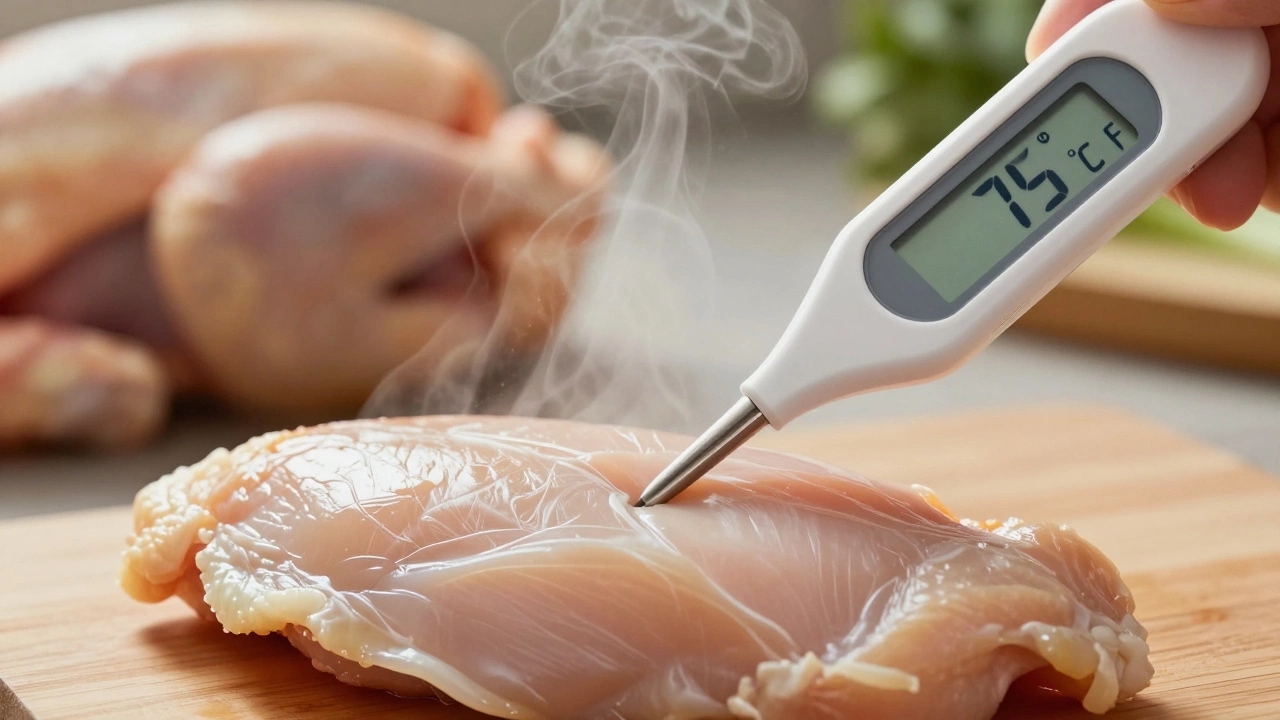
When you bite into undercooked chicken, poultry that hasn’t reached a safe internal temperature to kill harmful bacteria. Also known as raw chicken, it’s one of the most dangerous food mistakes in home kitchens. The Centers for Disease Control and Prevention says undercooked chicken causes over 1 million illnesses in the U.S. every year—mostly from salmonella, a bacteria found in raw poultry that causes severe vomiting, diarrhea, and fever. It’s not just about taste—it’s about survival.
Most people think they can tell if chicken is done by looking at the color or juices, but that’s a myth. Pink meat doesn’t always mean undercooked, and clear juices don’t guarantee safety. The only reliable way? A meat thermometer. Chicken needs to hit 165°F (74°C), the temperature that instantly kills salmonella and other dangerous pathogens. If you’re cooking a whole bird, check the thickest part of the thigh—not the breast—because that’s where bacteria hide longest. Slow cookers, grills, and ovens can all give false signals. A chicken breast might look done on the outside but still be raw inside. That’s why you can’t rely on time, smell, or sight.
What if you realize you’ve served undercooked chicken? Don’t panic, but don’t ignore it either. If someone ate it and starts feeling sick within 6 to 48 hours, they might have food poisoning. Keep them hydrated. Call a doctor if symptoms are severe—high fever, bloody stool, or lasting more than three days. For future meals, always use a thermometer. Keep one near your stove. Check every piece. Even if it’s just a small chicken breast for a salad, treat it like it’s a whole roast. And never rinse raw chicken before cooking—it spreads bacteria around your sink and counters. Just cook it straight.
There’s no shortcut here. You can’t save time by guessing. You can’t trust your eyes. You can’t assume the recipe got it right. The only thing that keeps your family safe is knowing the exact temperature inside the meat. That’s why every post in this collection—from slow cooker timing to marinade safety to how long meat can sit in a crockpot—comes back to one thing: cooking chicken right. Whether you’re using a grill, oven, or slow cooker, the rules don’t change. And if you’ve ever wondered why your chicken turns out dry or rubbery, it’s probably because you’re overcooking it trying to avoid undercooking it. The solution isn’t more time—it’s better measurement.