
Chicken Safety Thermometer Calculator
The most feared dish in the culinary world isn't exotic—it's undercooked chicken. At 74°C (165°F), Salmonella and Campylobacter bacteria are killed. This calculator verifies if your chicken is safe to eat.
Why temperature matters: Undercooked chicken doesn't smell or look bad. Only a thermometer tells you if it's safe. The USDA, CDC, and FSANZ require 74°C (165°F) to kill harmful bacteria.
There’s a dish that haunts kitchens, terrifies home cooks, and shows up in every food safety warning ever printed. It’s not fugu, not raw oysters, not even wild mushrooms. It’s chicken. Specifically, undercooked chicken. It’s the most feared dish in the culinary world-not because it’s exotic or hard to make, but because it kills quietly, often without warning.
Why Chicken Is the Silent Killer
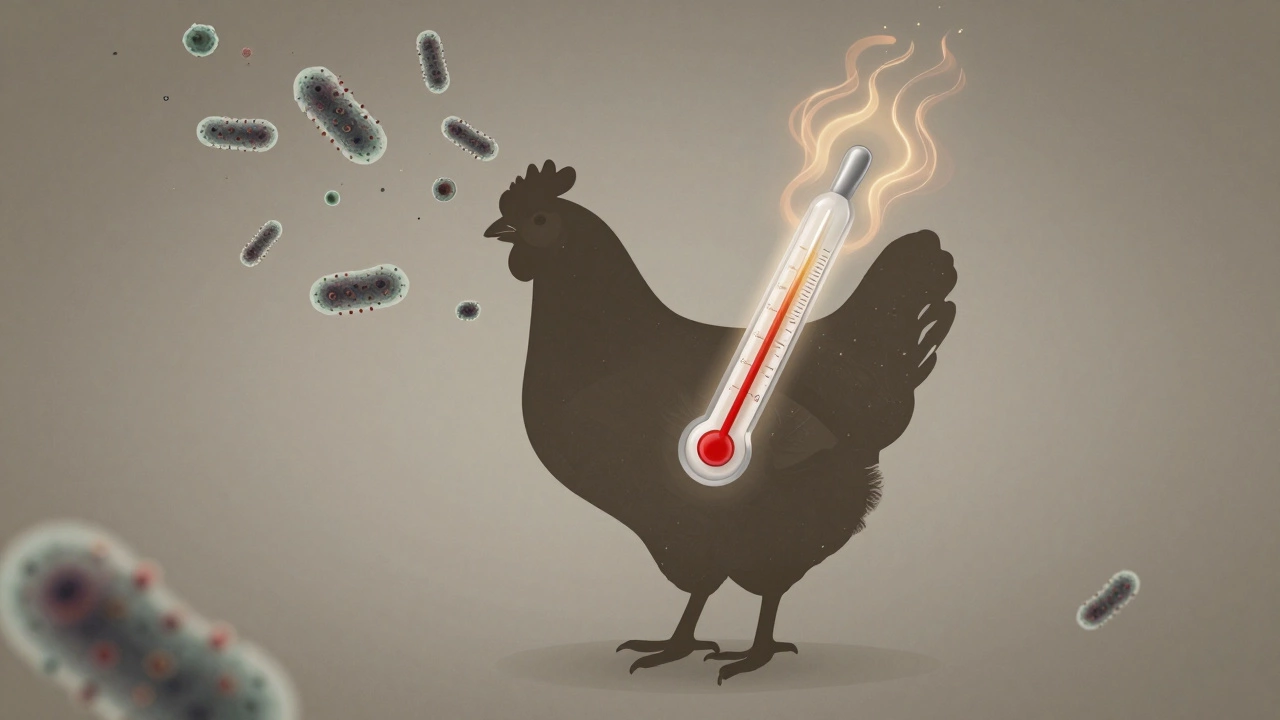
Every year, around 1 in 25 people in the U.S. gets sick from eating contaminated chicken, according to the CDC. That’s over 1 million cases annually. In Australia, where I live, Food Standards Australia New Zealand (FSANZ) reports chicken as the top source of foodborne illness. The culprit? Salmonella and Campylobacter. These bacteria live naturally in chickens. They don’t make the bird sick. But they turn deadly when you eat undercooked meat.
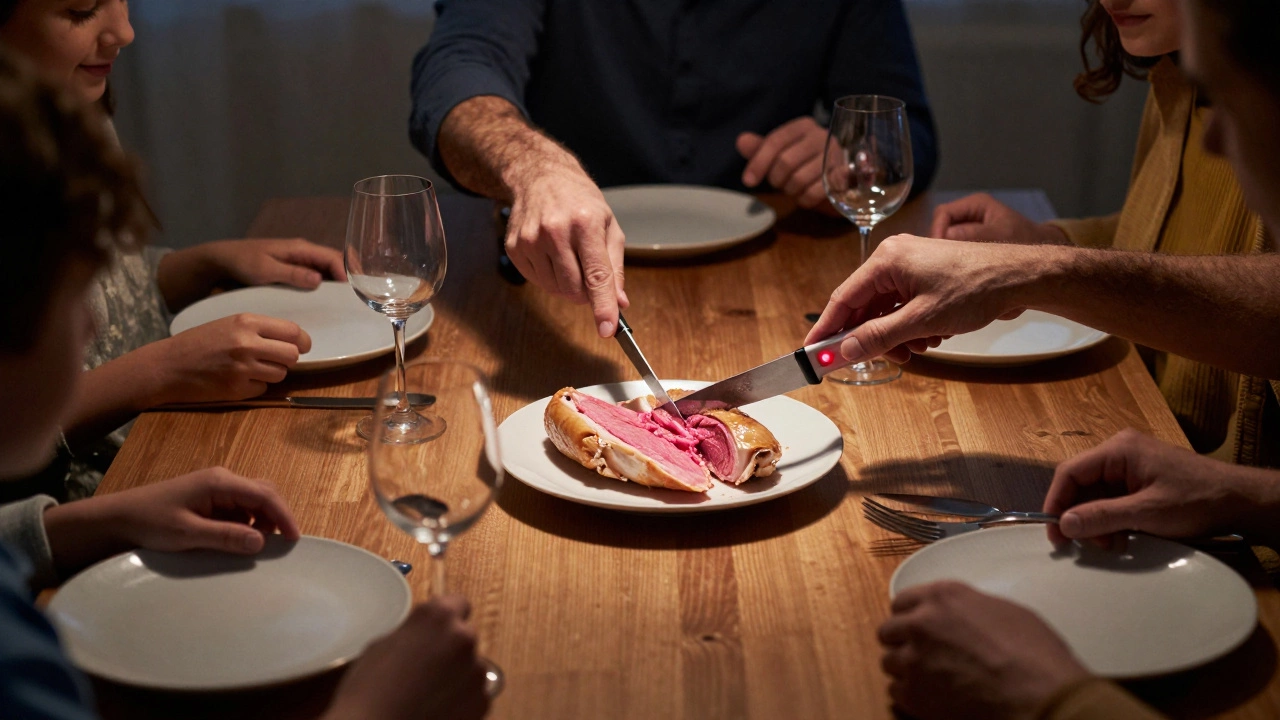
Unlike spoiled milk or moldy bread, undercooked chicken doesn’t smell bad. It doesn’t look obviously wrong. A piece can look juicy, browned on the outside, and still be raw inside. People think they’re safe because the skin is crisp. They’re wrong.
The Real Danger: It’s Not About Taste, It’s About Temperature
There’s a myth that chicken needs to be cooked until it’s dry and stringy to be safe. That’s not true. You don’t need to overcook it. You just need to hit the right temperature. The USDA, EFSA, and FSANZ all agree: chicken must reach an internal temperature of 74°C (165°F) throughout. That’s it.
That number isn’t arbitrary. At 74°C, Salmonella and Campylobacter die in under a second. It’s science, not tradition. A thermometer is the only reliable way to know. Relying on color or juice clarity? That’s how people get sick. I’ve seen home cooks cut into a chicken breast and say, “It’s fine, the juices are clear.” But clear juices can come from meat that’s still at 60°C-danger zone territory.
Here’s what happens when you eat undercooked chicken:
- Within 6 to 48 hours: Severe diarrhea, stomach cramps, fever
- After 2-5 days: Dehydration, hospitalization
- Long-term: Reactive arthritis, Guillain-Barré syndrome (a rare nerve disorder triggered by Campylobacter)
One study from the University of Melbourne tracked 127 cases of Campylobacter illness linked to home-cooked chicken. In 89% of those cases, the person used the “cut and check” method. Not a single one used a thermometer.
How People Get It Wrong
There are three big mistakes people make with chicken:
- Guessing doneness by color - Pink near the bone? Doesn’t matter. White meat can stay slightly pink even at 74°C if it’s from a young bird.
- Thawing on the counter - Bacteria multiply fast at room temperature. Thaw chicken in the fridge, in cold water, or in the microwave.
- Washing chicken before cooking - This spreads bacteria around your sink, counters, and utensils. Water doesn’t kill germs. Heat does.
Washing chicken is one of the oldest kitchen myths. It’s been debunked by the FDA, WHO, and every public health agency in the world. Yet, 70% of home cooks still do it. Why? Because their mom did it. Because they saw it on TV. Because it feels like it should work.
Real Stories, Real Consequences
In 2023, a family in Sydney ate grilled chicken at a weekend barbecue. The dad, a 42-year-old accountant, thought the chicken was done because it was “charred on the outside.” His daughter, 8, got sick first. By day three, both were in the hospital. The dad developed Guillain-Barré syndrome. He spent six weeks in rehab. He still walks with a slight limp.
Another case: a 68-year-old woman in Adelaide cooked a whole chicken for her grandchildren. She checked the leg-juices ran clear. She served it. Three days later, she was in intensive care with septic shock. She didn’t survive. The coroner’s report listed “Campylobacter from undercooked chicken” as the cause.
These aren’t rare. They’re predictable. And they’re preventable.
How to Cook Chicken Safely (No Guesswork)
Here’s how to never have to worry again:
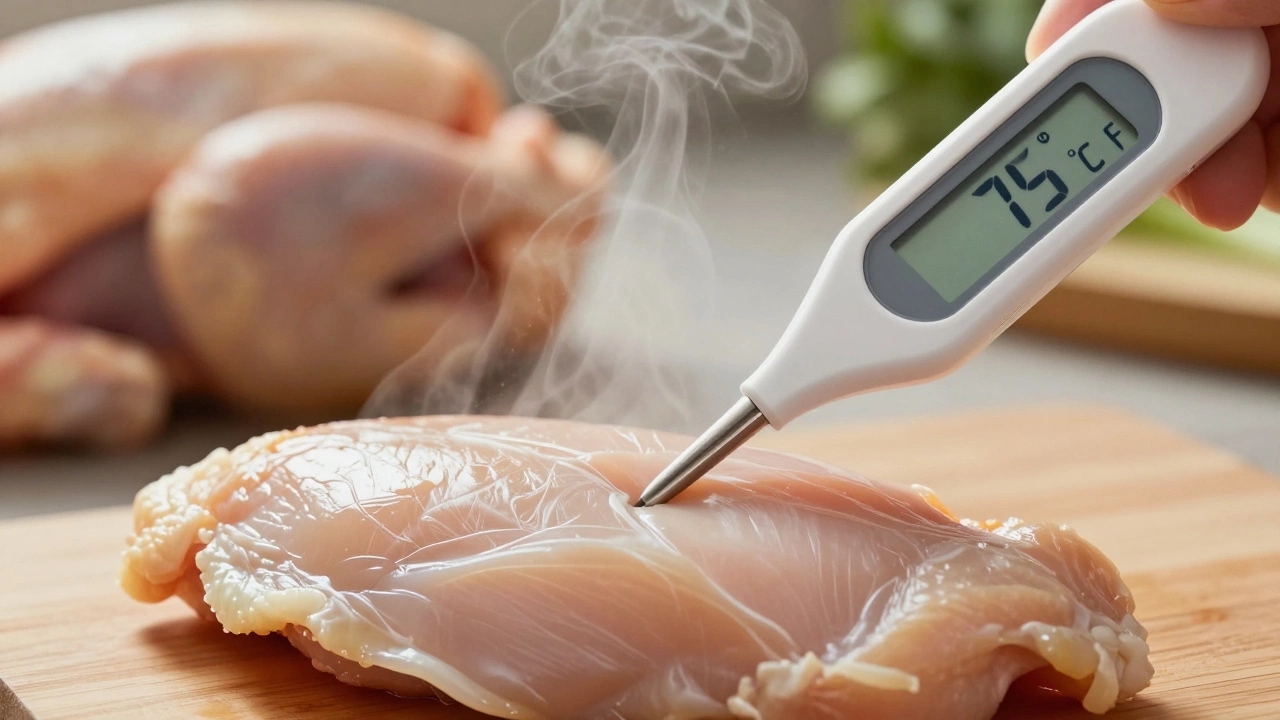
- Buy a $15 digital thermometer. Not the kind with a dial. A digital one that beeps.
- Insert the probe into the thickest part of the meat, avoiding bone.
- Wait for the beep. If it reads 74°C (165°F), it’s safe.
- Let it rest for 5 minutes. The temperature will stay high and finish killing any lingering bacteria.
For whole chickens, check the thickest part of the breast and the innermost part of the thigh. Both must hit 74°C. For chicken breasts, thighs, or drumsticks, same rule.
And if you’re using a slow cooker? Yes, it’s safe-but only if the chicken reaches 74°C within the first 4 hours. If it sits in the danger zone (4°C to 60°C) too long, bacteria can multiply faster than they’re killed. Pre-sear chicken before adding it to the slow cooker if you’re unsure.
What About Organic, Free-Range, or “No Antibiotics” Chicken?
It doesn’t matter. Organic chicken isn’t germ-free. Free-range chickens carry just as much Salmonella as factory-farmed ones. Labels like “no antibiotics” or “air-chilled” don’t change the biology. The bacteria are still there. Cooking temperature is the only thing that saves you.
Even if you buy from a local farm, even if the farmer says his chickens are “clean,” you still need to cook them to 74°C. Nature doesn’t care about your values. Germs don’t read labels.
What If You’ve Already Eaten Undercooked Chicken?
If you suspect you’ve eaten undercooked chicken, don’t panic. But don’t ignore it either. Watch for symptoms: diarrhea, fever, vomiting, cramps. If they show up within 2 days, see a doctor. Don’t wait for it to “pass.”
Antibiotics aren’t always needed. Most cases clear up on their own in 4-7 days. But dehydration is the real danger. Drink water. Electrolytes. Don’t take anti-diarrhea meds unless a doctor says so-they can trap the bacteria inside.
If you’re pregnant, over 65, have a weak immune system, or have a young child who ate it-get checked immediately. The risk is higher.
Final Truth: Chicken Isn’t Dangerous. Ignorance Is.
The most feared dish in the culinary world isn’t scary because it’s hard to cook. It’s scary because we’ve been taught to trust our eyes instead of science. We’ve been lied to by TV chefs, old wives’ tales, and the false comfort of a browned surface.
Chicken is safe. When cooked right. And cooking it right isn’t about talent. It’s about using a tool you can buy for less than the price of a coffee.
Stop guessing. Start measuring. Your family’s health isn’t worth the risk of a quick glance.