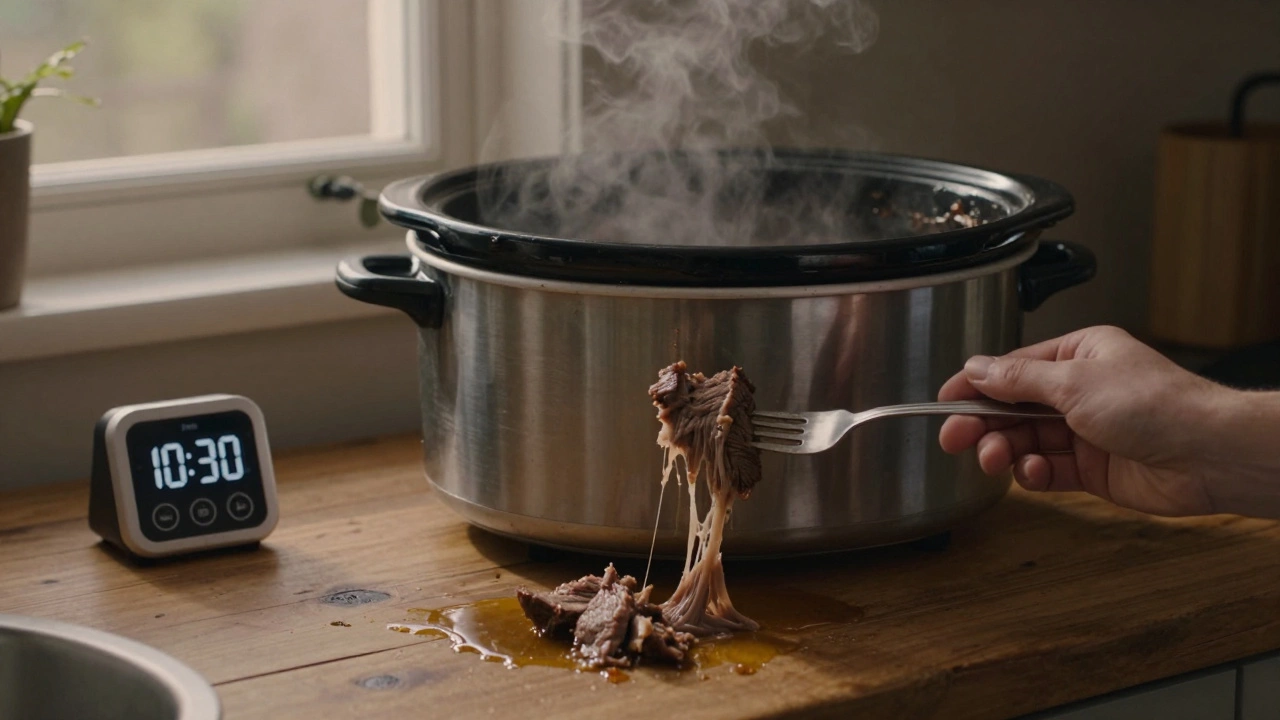
When you use a slow cooker, a kitchen appliance designed to cook food at low temperatures over long periods, often called a crockpot. Also known as crockpot, it’s not just about dumping ingredients in and walking away—you need to understand how heat moves, how food reacts, and what safety rules actually matter. Too short, and your meat is tough. Too long, and your veggies turn to mush. The magic isn’t in the timer—it’s in the timing.
The slow cooker settings, the low and high heat options that control how quickly the internal temperature rises aren’t interchangeable. Three hours on high doesn’t equal six on low. High heat brings food up to temperature fast, which can toughen proteins if left too long. Low heat moves slowly, letting collagen break down gently into gelatin—that’s what makes pulled pork melt in your mouth. Then there’s the slow cooker fill level, how much food you put inside, which affects heat circulation and cooking safety. Most manufacturers say at least half full. Why? If it’s too empty, the heat concentrates and can overcook or even damage the pot. Too full, and steam can’t escape, leading to soggy food or, worse, undercooked centers. And don’t forget the slow cooker layering, the order you stack ingredients, which determines how evenly everything cooks. Root veggies like potatoes and carrots need to go at the bottom, where it’s hottest. Meat goes on top, and delicate things like herbs or dairy? Add them in the last hour.
Food safety is part of the equation too. The USDA says your slow cooker needs to hit 140°F within four hours to stay out of the danger zone. That’s why you shouldn’t start with frozen meat unless the recipe specifically says it’s safe. And while you can leave a stew on low for 8 hours, leaving it for 12? That’s asking for trouble. The tea towel trick, a simple hack where you place a clean towel between the lid and pot to absorb excess moisture, isn’t just for fancy cooks—it’s a game-changer for thickening sauces without cornstarch. You’ll find posts here that break down exactly when to add each vegetable, how long meat can safely sit on low, and why you should never rinse off a marinade before cooking. This isn’t guesswork. It’s science, tested by home cooks who learned the hard way. Below, you’ll find real answers to the questions people actually ask—no fluff, no myths, just what works.