
Slow Cooker Meat Timing Calculator
Calculate Your Cooking Time
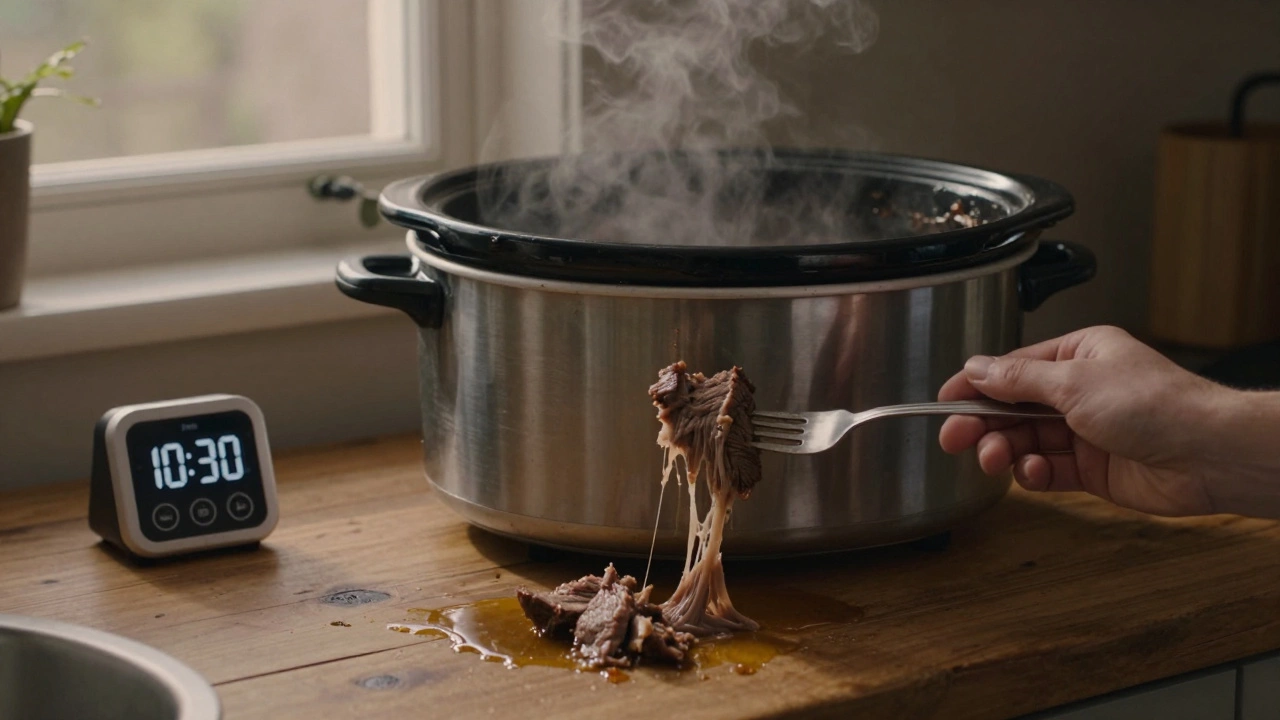
Ever tossed a chunk of beef into the slow cooker at 7 a.m., figured you’d come home to a tender, fall-apart meal, and ended up with mushy, dry meat by 7 p.m.? You’re not alone. Leaving meat in the slow cooker too long is one of the most common mistakes people make - and it’s not always obvious when things go wrong until you take that first bite.
Why Slow Cookers Are Great (Until They’re Not)
Slow cookers work by using low, steady heat over many hours. That’s perfect for breaking down tough cuts like chuck roast, pork shoulder, or beef shank. The collagen melts into gelatin, turning chewy meat into something silky and rich. But that same process can flip from magic to mess if you leave it running past its sweet spot.Most recipes suggest 6-8 hours on low or 3-4 hours on high. That’s the window where the meat transforms. Go beyond that, and you’re not helping - you’re hurting.
What Actually Happens to the Meat
It’s not just about dryness. Overcooking meat in a slow cooker changes its structure in three key ways:- Texture turns to mush: The muscle fibers break down so much they lose their shape. Instead of pulling apart in nice shreds, the meat falls apart into a stringy, slimy mess.
- Moisture evaporates: Even in a sealed pot, water slowly escapes. If the lid isn’t tight or you’ve added too much liquid, the meat starts to steam itself dry.
- Flavor gets dull: The natural juices and fats that give meat its richness start to disperse into the broth. What’s left behind tastes bland, almost watery.
Chicken is especially fragile. A chicken breast cooked for 10 hours on low will shred into fibers so fine they practically dissolve. It’s not tender - it’s gone.
Which Cuts Can Handle More Time?
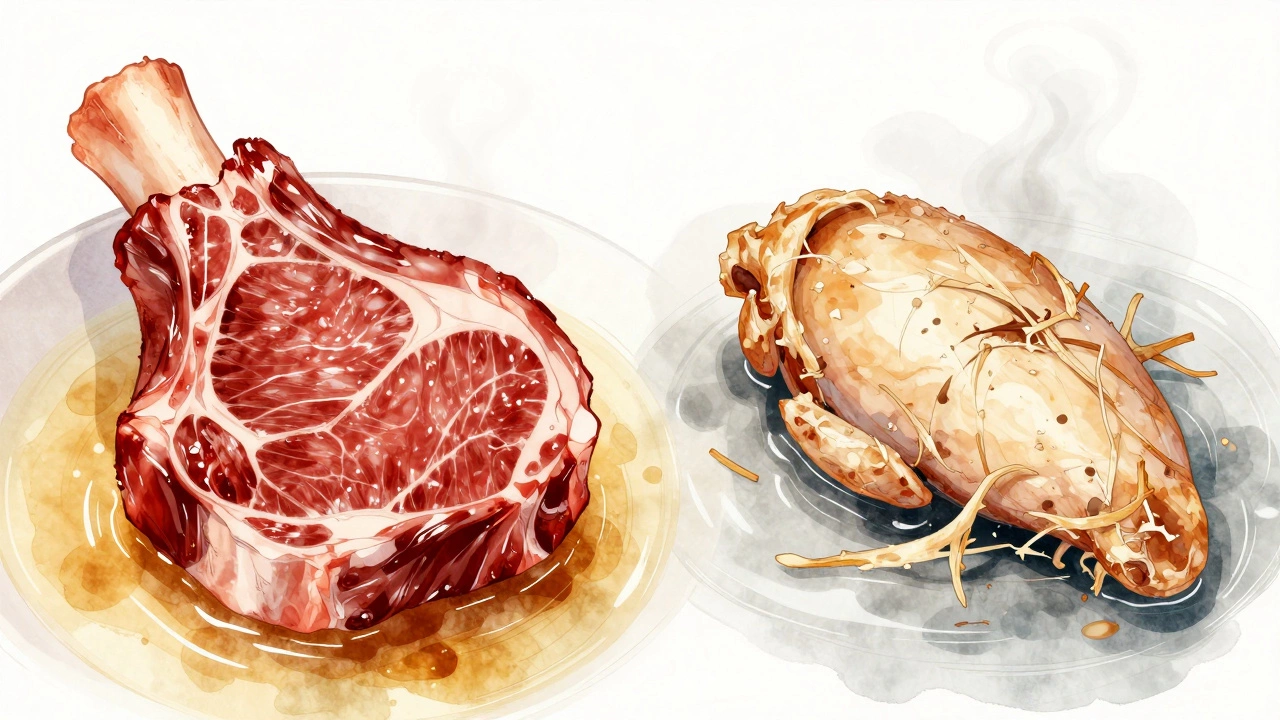
Not all meat reacts the same. Tougher cuts with more connective tissue - like brisket, oxtail, or lamb shanks - can handle longer cooking times because they have more collagen to convert. Some recipes even call for 10-12 hours. But even those have limits.Lean cuts? Don’t even try it. Chicken breast, pork tenderloin, steak, or fish will turn to rubber or dust if left too long. They don’t have enough fat or collagen to protect them. If you’re cooking these, stick to the recipe’s max time - no more than 4-5 hours on low.
How to Tell If Your Meat’s Gone Too Far
You don’t need a timer to know when it’s over. Here’s what to look for:- Looks like wet cotton: If the meat looks stringy and falls apart with zero resistance, it’s overdone.
- No juiciness: Press it with a fork. If no moisture comes out, it’s dry inside.
- Smells flat: Good slow-cooked meat smells rich and deep. Overcooked meat smells like boiled water with a hint of old meat.
- Texture feels slippery: Not tender - just slimy. That’s the sign of protein breakdown gone too far.
Trust your senses. If it looks or feels weird, it probably is.
How to Fix (or Salvage) Overcooked Meat
If you’ve already left it too long, don’t toss it. Here’s how to make it usable:- Shred and rehydrate: Pull the meat apart, then mix it back into the sauce. Add a splash of broth, a spoonful of tomato paste, or even a dash of soy sauce to boost flavor.
- Use it in soups or stews: Overcooked meat works fine as a flavor base. Simmer it with fresh veggies and herbs to rebuild the dish.
- Turn it into a filling: Mix it with mashed potatoes, cheese, or beans for shepherd’s pie or empanadas. The texture won’t matter as much when it’s bound together.
It won’t be perfect - but it won’t be wasted, either.
How to Avoid This in the First Place
Prevention is easier than repair. Here’s how to nail your slow cooker timing every time:- Use a timer: Set your phone or kitchen timer for the recipe’s maximum time. Don’t rely on "I’ll check it later."
- Check early: Start testing the meat 30 minutes before the end of the cook time. A fork should slide in easily and the meat should pull apart with gentle pressure.
- Switch to warm: Once done, switch the setting to "warm" instead of leaving it on low. Most slow cookers keep food safe at this setting for up to 4 hours without further breakdown.
- Don’t overfill: If your pot is too full, heat won’t circulate evenly. Fill it no more than two-thirds full.
- Use the right lid: A tight-fitting lid prevents steam loss. If yours is loose or cracked, replace it.
Pro Tip: Freeze Before Overcooking
If you’re going to be out longer than planned, freeze your meat in portions before cooking. That way, you can thaw and cook just what you need. No more guessing how long you’ll be gone.Another trick? Cook the meat until it’s perfect, then chill it overnight. Reheat it gently the next day. Many chefs say this actually improves flavor - and you’re not risking overcooking it twice.
When It’s Okay to Go Past the Time
There are exceptions. If you’re making bone broth or a stock-based stew with bones, cartilage, or skin, longer cooking (12-24 hours) helps extract collagen and minerals. That’s not the same as cooking a steak or chicken breast - it’s a different game entirely.Same goes for some ethnic recipes, like Korean braised short ribs (galbi jjim) or Indian lamb curries. These often call for 8+ hours because the sauce and spices are designed to hold up. But even then, the meat should still hold its shape.
Bottom Line
Slow cookers are forgiving - but not magic. Meat doesn’t get better the longer it sits. It gets worse. The sweet spot is narrow. Miss it by an hour, and you might not notice. Miss it by three, and you’re eating soup with bits of meat floating in it.Respect the timer. Know your cuts. And if you’re unsure, check early. Better to pull it out a little early and reheat it than to serve a plate of meat mush.
Can you leave meat in a slow cooker overnight?
Yes - but only if you’re using a tough cut like brisket or pork shoulder and your slow cooker has a "warm" setting. Once the meat is done (usually after 8-10 hours), switch to warm. This keeps it safe without further breakdown. Don’t leave lean meats like chicken breast or pork tenderloin on for more than 6 hours - they’ll turn to mush.
Does meat get more tender the longer it cooks in a slow cooker?
Only up to a point. Tough cuts with lots of connective tissue become more tender as collagen breaks down into gelatin - that’s the goal. But after 10-12 hours, the muscle fibers themselves start to disintegrate. The meat loses structure and turns mushy. It’s not more tender - it’s ruined.
Why is my slow cooker meat dry even though there’s liquid?
Because the meat cooked too long. Even with liquid present, the fibers break down and can’t hold onto moisture. The liquid might look plenty, but the meat itself has lost its ability to retain juices. This is common with lean cuts like chicken breast or pork loin. Always match the cut to the cook time.
Can you reheat overcooked meat in a slow cooker?
It’s not recommended. Reheating already overcooked meat in the slow cooker will only make it worse. Instead, reheat it gently on the stovetop or in the oven with a splash of broth or sauce to add moisture back. Use it in dishes where texture doesn’t matter - like casseroles, tacos, or soups.
What’s the best way to store slow cooker meat after cooking?
Cool it quickly - within two hours - then store it in an airtight container in the fridge for up to 4 days. For longer storage, freeze it in portions with some of the cooking liquid. This keeps it moist and prevents freezer burn. Never leave cooked meat sitting in the slow cooker on warm for more than 4 hours.