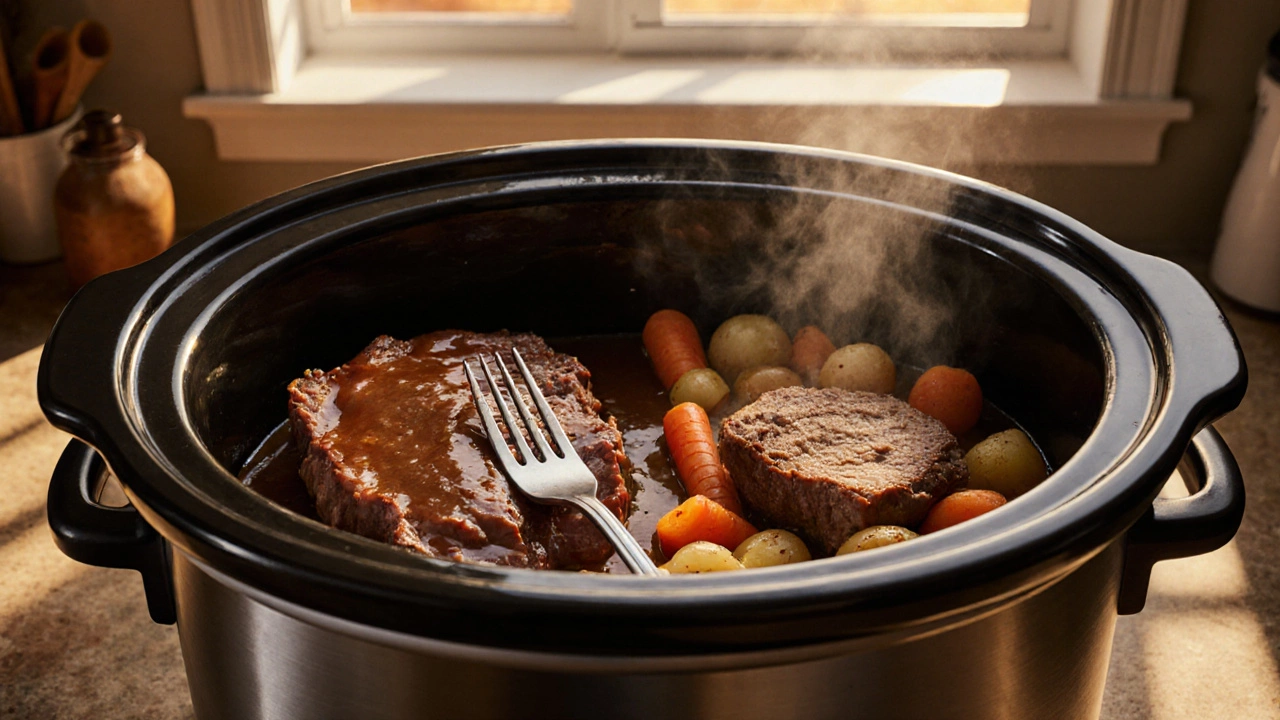
When you're using a slow cooker, a countertop appliance that cooks food slowly at low temperatures over several hours. Also known as a crockpot, it's one of the easiest ways to make tender meals with minimal effort. But here’s the problem: most recipes don’t tell you how to switch between high and low settings. If you only have 4 hours instead of 8, should you just crank it up? The answer isn’t simple—and getting it wrong means dry meat or mushy veggies.
The key is understanding how slow cooker time conversion, the process of adjusting cooking duration when switching between high and low heat settings actually works. It’s not a 1:1 swap. Cooking on high for 4 hours doesn’t equal low for 8 hours exactly. Most experts agree that 2 hours on high is roughly equal to 4–6 hours on low, depending on the food. Meat needs time to break down connective tissue, so rushing it on high can make it tough. Vegetables like potatoes and carrots? Add them too early on low and they turn to paste. That’s why timing isn’t just about heat—it’s about food layering, the strategic placement of ingredients in a slow cooker to ensure even cooking and moisture control, managing liquid levels to avoid watery sauces or dried-out dishes.
You’ll find that the best slow cooker meals don’t just rely on time—they rely on knowing when to add ingredients. Potatoes and carrots go in halfway through. Tough cuts of beef need longer, while chicken thighs can handle a shorter window. The tea towel trick, a simple hack where you place a clean kitchen towel between the lid and the crockpot to absorb excess steam isn’t just a party trick—it helps thicken sauces so you don’t have to rely on cornstarch or flour. And if you’ve ever left meat in the slow cooker too long? You’re not alone. The USDA says 4–10 hours on low is safe, but beyond that, texture starts to suffer.
This collection of posts cuts through the noise. You’ll find exact timing charts for common dishes, tips for converting recipes from stovetop to slow cooker, and why some foods just won’t cooperate no matter how long you cook them. Whether you’re swapping a 10-hour recipe into a 6-hour window or trying to rescue a meal that’s been on for too long, these guides give you the real-world rules—not guesswork. No fluff. No theory. Just what works in your kitchen.