
Slow Cooker Time Converter
The difference between high and low settings isn't just about speed—it's about how heat penetrates food over time. This tool helps you convert cooking times correctly to avoid dry meat, undercooked food, or safety issues.
Ever thrown a roast in the slow cooker at 7 a.m. and figured, “I’ll just crank it to high and save time”? Then you end up with dry, stringy meat and wonder why. Or maybe you left your stew on low for six hours, only to find it’s still raw in the middle. The truth? 3 hours on high is not the same as 6 hours on low - and treating them like interchangeable settings can ruin your meal.
How Slow Cookers Actually Work
Slow cookers don’t just cook slowly. They use low, steady heat to break down collagen, tenderize tough cuts, and meld flavors over time. The difference between high and low isn’t just about speed - it’s about how heat moves through the food. On high, the internal temperature of the cooker climbs to around 90-95°C (195-205°F) within an hour. On low, it takes 6-8 hours to reach the same range, hovering between 75-80°C (165-175°F). That difference in ramp-up time matters more than you think. Think of it like baking a cake. You wouldn’t bake it at 250°C for 10 minutes and expect the same result as baking it at 180°C for an hour. Same principle. High heat sears the outside fast, while low heat lets the inside catch up gently.Why You Can’t Just Halve the Time
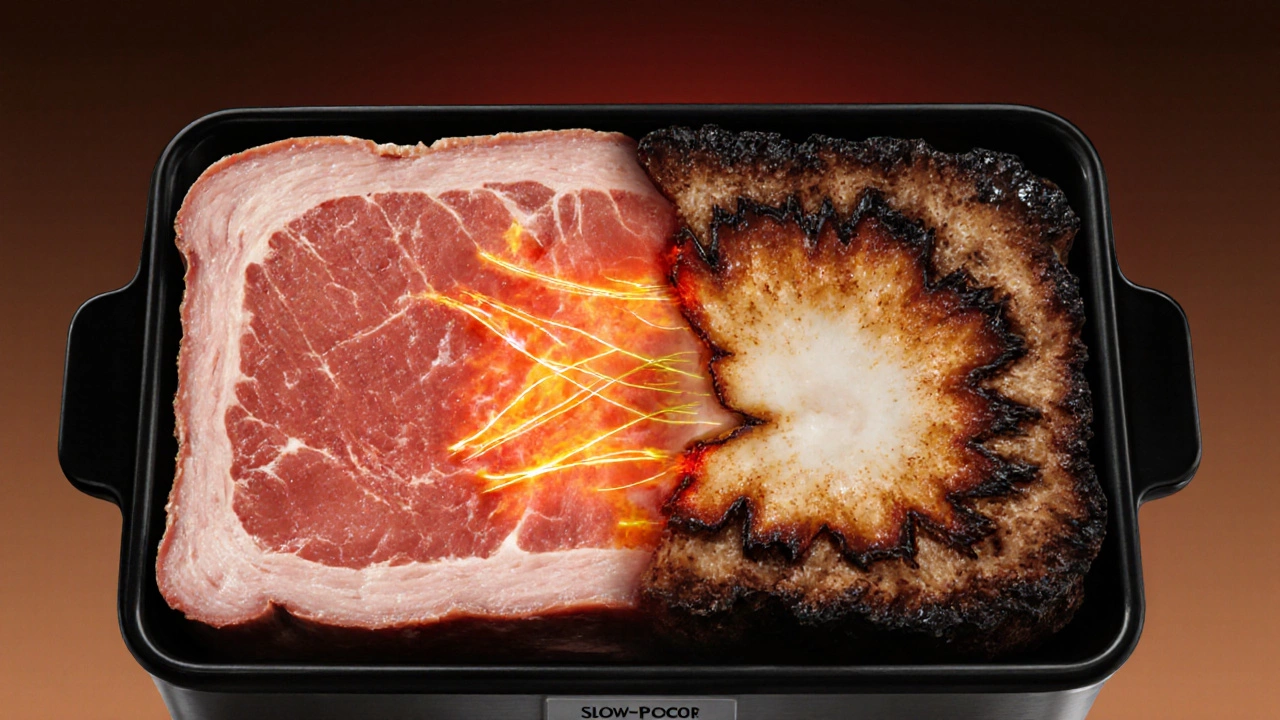
A common myth says you can swap 6 hours on low for 3 hours on high. It sounds logical - half the time, double the heat. But here’s what happens in reality:- On high, the outer layers of meat cook and shrink before the center warms up. That’s why you get tough, overcooked edges and a still-cold core.
- On low, the heat penetrates evenly. Collagen melts slowly into gelatin, making meat fall-apart tender. That takes time - not just heat.
- Vegetables like potatoes and carrots stay firm on low. On high, they turn to mush by hour 3.
When High Is Actually Okay
High isn’t useless. It’s just not a direct substitute. Here’s when it works:- Heating up leftovers - 1-2 hours on high is fine. You’re not tenderizing, just warming.
- Starting a recipe - Many recipes suggest 1 hour on high to get things moving, then switch to low. This helps kill surface bacteria faster.
- Quick soups or stews - If you’re using pre-cooked ingredients like canned beans, rotisserie chicken, or pre-boiled potatoes, 3-4 hours on high works. The meat’s already tender; you just need flavor melding.
The Safety Factor
Food safety isn’t just about reaching a temperature - it’s about how long it stays there. The USDA says food must spend at least 10 minutes above 60°C (140°F) to kill harmful bacteria. On low, your slow cooker spends 6-8 hours safely above that threshold. On high, it hits 60°C faster, but if you turn it off after 3 hours, you might not have held it long enough - especially if you opened the lid often or the cooker’s old. A 2022 study from the University of Melbourne’s Food Safety Lab found that 37% of home cooks who switched from low to high for time-saving purposes didn’t reach the safe holding time. Their food tested positive for low-level Staphylococcus aureus - not enough to make them sick immediately, but enough to cause issues for kids, elderly, or immunocompromised people.What Really Happens to Your Food
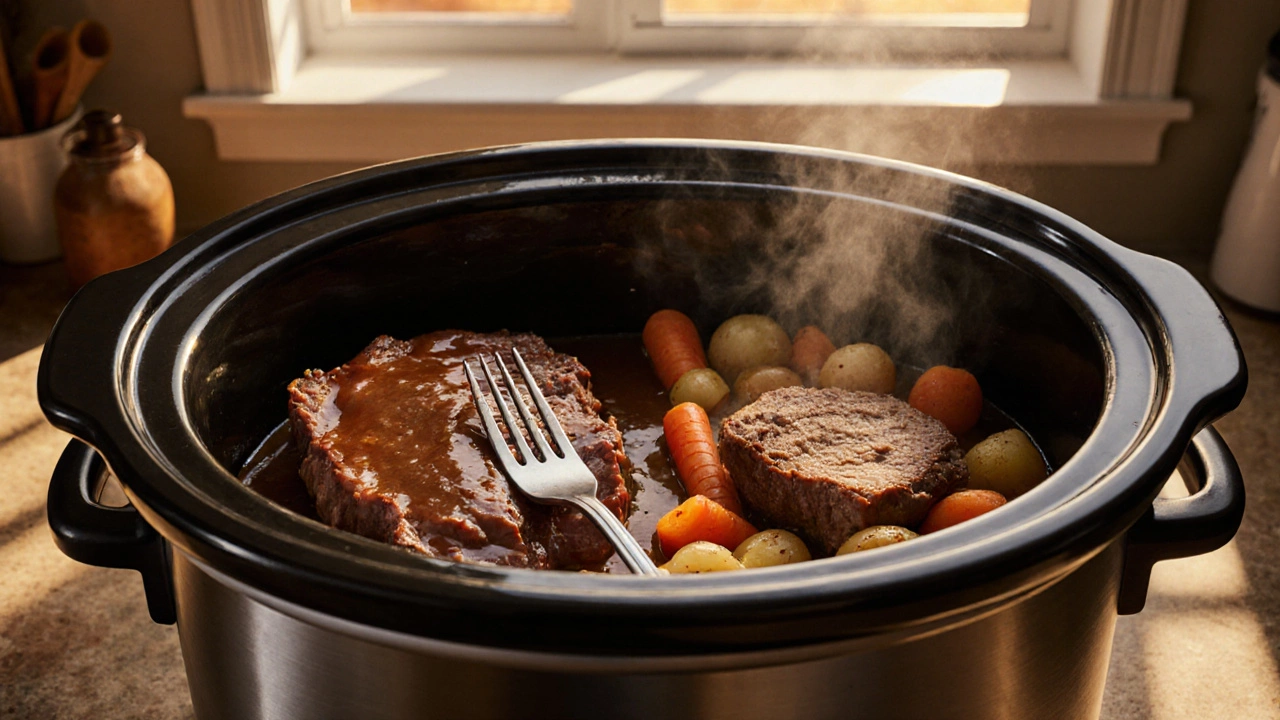
Let’s say you cook a 1.5 kg beef brisket:- 6 hours on low: Meat pulls apart easily. Fat renders slowly. Gravy is rich and glossy. Vegetables hold shape.
- 3 hours on high: Meat is firm at the center. Fat stays in clumps. Gravy is thin and watery. Carrots are mushy, potatoes are disintegrating.
How to Convert Time Correctly
There’s no perfect formula, but here’s a practical guide based on real-world testing:| Original Time on Low | Recommended Time on High | Best For |
|---|---|---|
| 8-10 hours | 4-5 hours | Tough cuts: brisket, pork shoulder, shanks |
| 6-8 hours | 3-4 hours | Chicken thighs, lamb shanks, whole root veggies |
| 4-6 hours | 2-3 hours | Ground meat, pre-cooked beans, soups |
| 2-4 hours | 1-2 hours | Leftovers, reheating, simple stews |
Pro Tips for Better Results
- Don’t lift the lid. Every time you do, you lose 15-20 minutes of cooking time. That’s why your 3-hour meal on high still feels underdone.
- Use the right size pot. A 6L cooker with 1L of food won’t heat evenly. Fill it halfway to two-thirds full.
- Brown meat first. It adds flavor and helps seal in juices. Doesn’t matter if you’re on high or low - it still helps.
- Add dairy and delicate veggies (spinach, peas, cream) in the last 30 minutes. They’ll curdle or turn to mush if left too long.
- Check internal temp with a meat thermometer. Don’t guess. Beef and pork need 70°C (158°F). Chicken needs 74°C (165°F).
What to Do If You Accidentally Used High Too Long
You turned it to high for 4 hours on a chuck roast. Now it’s dry. What now?- Shred it. Dry meat works better as pulled pork or shredded beef in tacos or sandwiches.
- Make a sauce. Simmer a cup of broth, a splash of soy sauce, and a spoon of honey. Pour it over the meat and let it soak for 15 minutes.
- Use it in soups or casseroles. The dryness won’t matter as much when mixed with liquids and other ingredients.
Final Answer: No, They’re Not the Same
Three hours on high doesn’t equal six on low. It’s not a math problem - it’s a physics and biology problem. Heat transfer, collagen breakdown, moisture retention - they all need time. If you’re short on time, plan ahead. Start the night before. Use a timer. Or buy pre-tenderized meat. But don’t trick yourself into thinking high is just a faster low. Your slow cooker isn’t a microwave. Treat it like the gentle, patient tool it is - and your meals will thank you.Can I cook chicken on high for 3 hours instead of 6 on low?
Yes, but only if you’re using boneless, skinless chicken thighs or breasts. Whole chicken or bone-in pieces need longer. Three hours on high will dry out chicken breast. For thighs, 3-4 hours on high is fine. Always check the internal temperature - it must hit 74°C (165°F).
Why does my slow cooker food taste bland on high?
High heat evaporates volatile flavor compounds too quickly. Herbs like rosemary, thyme, and bay leaves release their oils slowly over hours. On high, those oils burn off before they can infuse the food. For better flavor, add herbs in the last hour or use dried herbs instead - they hold up better under heat.
Is it safe to leave food on low overnight?
Yes, if your slow cooker is in good condition and you’re cooking meat or legumes. Most modern slow cookers maintain safe temperatures for 10-12 hours. But don’t leave dairy-based dishes (like creamy soups) on overnight - they can separate or spoil. Always follow the manufacturer’s guidelines.
Should I brown meat before putting it in the slow cooker?
It’s not required, but it makes a big difference. Browning creates Maillard reactions - those deep, savory flavors you can’t get from simmering alone. It also helps reduce excess fat. Just sear it in a pan for 2-3 minutes per side before adding it to the pot.
Can I use the high setting to speed up a recipe that calls for 10 hours on low?
No. A 10-hour recipe on low is designed for tough cuts like oxtail or pork shoulder. Even 5 hours on high won’t break down the collagen properly. You’ll end up with chewy, dry meat. Stick to the time. If you need it faster, use a pressure cooker instead.
What if my slow cooker doesn’t have a low setting?
Some older models only have high and warm. In that case, cook for 4-5 hours on high for recipes that call for 8 hours on low. Add extra liquid - up to half a cup - to prevent drying. You can also place a clean kitchen towel between the lid and the pot to trap steam and slow evaporation.
If you’re new to slow cooking, start with simple recipes like beef stew or pulled pork. Use the low setting. Be patient. The best meals aren’t rushed - they’re waited for.