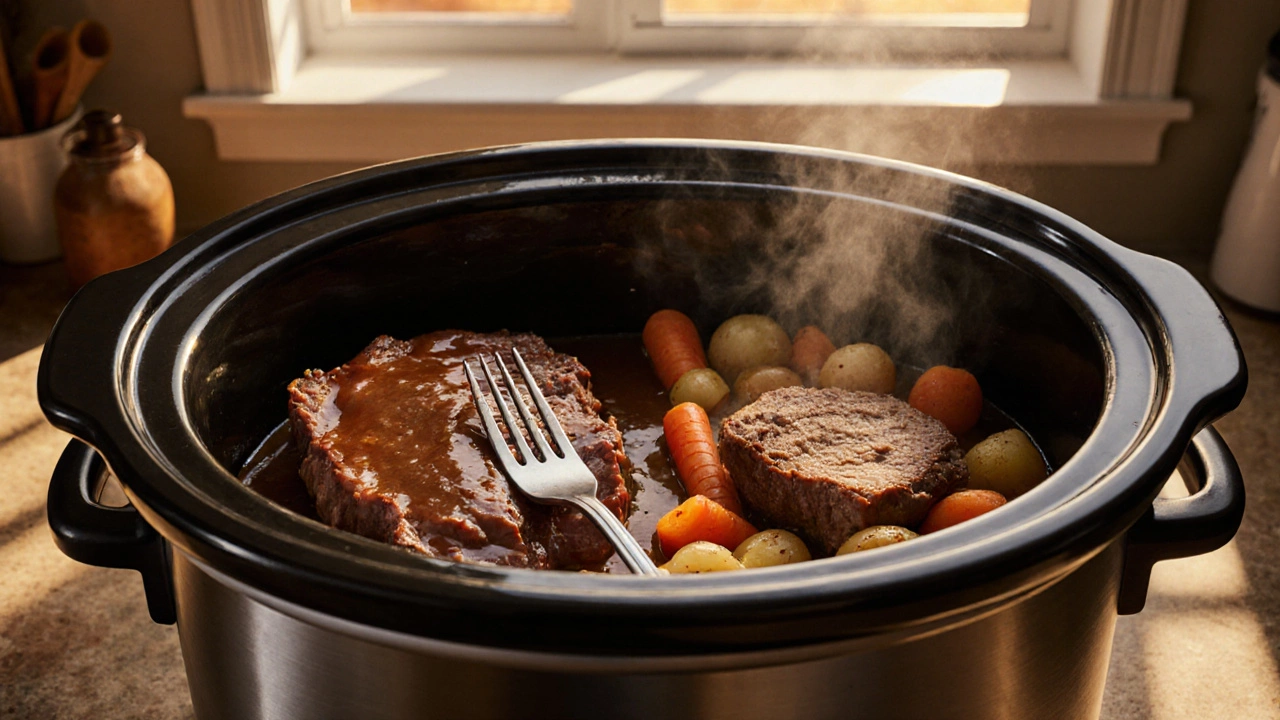
When you set your slow cooker settings, the temperature and time options that control how food cooks over hours. Also known as crockpot settings, it's not just about leaving food to sit—it’s about matching the right heat level to the ingredients you’re using. Too low and your stew tastes flat. Too high and your chicken turns to dust. The key isn’t just time—it’s understanding how heat moves through meat, vegetables, and liquids over hours.
Most people think "low" means slow and "high" means fast, but that’s not the whole story. The slow cooker low setting, typically around 190–200°F, gently breaks down tough cuts of meat over 8–10 hours. That’s why beef chuck or pork shoulder needs this gentle heat—it melts collagen into gelatin without drying out. On the other hand, the slow cooker high setting, usually 280–300°F, gets food to a safe temperature faster but can overcook delicate items like potatoes or beans if left too long. That’s why timing matters more than you think. Add carrots too early? They’ll dissolve. Add them too late? They’ll stay crunchy. The same goes for potatoes, tomatoes, and even dairy.
Then there are the tricks nobody talks about. The tea towel trick, a simple hack where you drape a clean kitchen towel under the lid to absorb steam and thicken sauces. It’s not magic—it’s physics. Less moisture means richer flavor, no cornstarch needed. And then there’s slow cooker layering, the order you stack ingredients to control how heat reaches each component. Put root veggies on the bottom, meat in the middle, and delicate herbs on top. Heat rises. Density matters. You wouldn’t put a tomato next to a roast and expect it to stay firm. Yet most people do.
It’s not about following recipes blindly. It’s about knowing why you’re choosing low over high, when to add garlic, and how to keep your food from turning into soup. You don’t need a fancy model. You just need to understand what’s happening inside that pot. The best slow cooker meals aren’t the ones with the most ingredients—they’re the ones where every element has been placed with purpose.
Below, you’ll find real fixes from real cooks: how to time your vegetables, why you shouldn’t rinse marinade off before slow cooking, how long meat can safely stay on low, and the one towel trick that turns bland stews into restaurant-quality dishes. No fluff. No guesswork. Just what works.