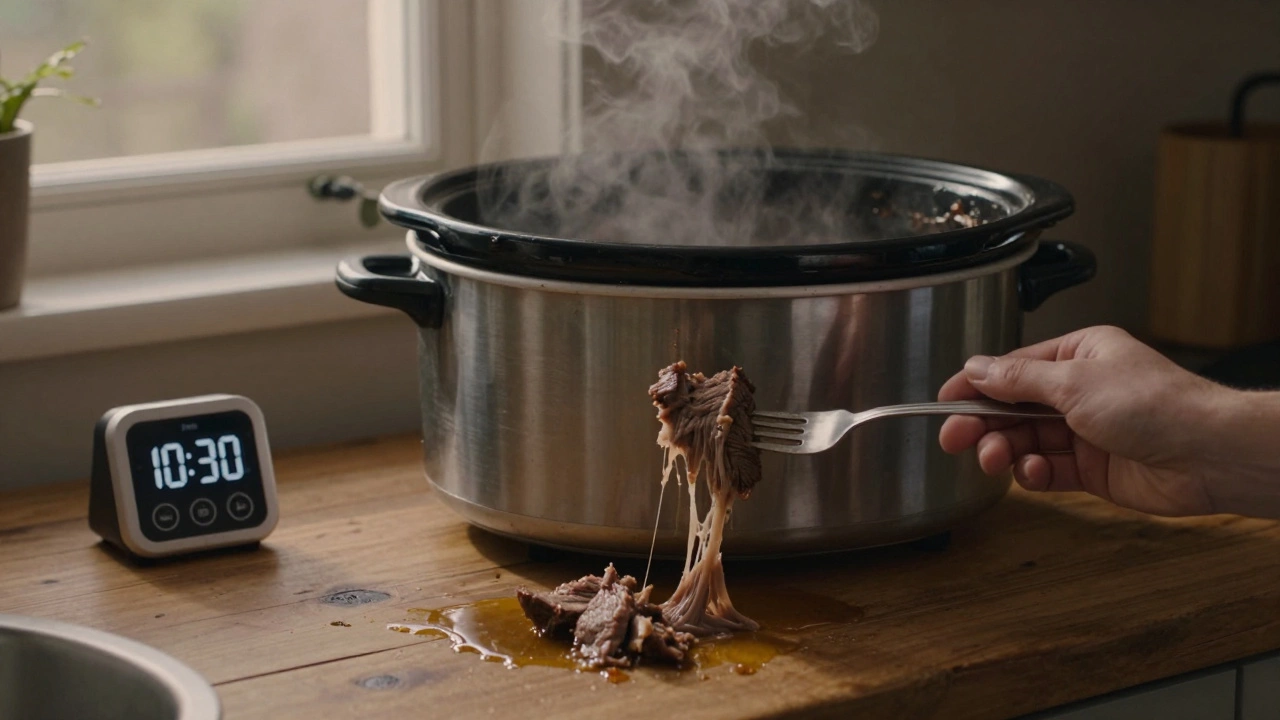
When you toss meat into a slow cooker, a countertop appliance that cooks food slowly over several hours using low, even heat. Also known as a crockpot, it’s one of the most reliable tools for turning tough cuts into melt-in-your-mouth meals without standing over the stove. You don’t need fancy skills—just time and the right meat. Whether it’s beef chuck, pork shoulder, or chicken thighs, slow cooking breaks down connective tissue so your meat stays juicy instead of drying out.
What makes slow cooker meat work isn’t just the appliance—it’s how you use it. Layering, the order you place ingredients in the pot matters. Put root vegetables like potatoes and carrots on the bottom, where the heat is strongest, so they cook through without turning to mush. Add meat on top, then pour in liquid just enough to cover half the ingredients. Too much water? You’ll end up with bland, watery sauce. Too little? The meat might not get tender. And here’s a real trick: the tea towel trick, a simple hack where you place a clean kitchen towel between the lid and the pot to absorb excess steam. It thickens sauces naturally and deepens flavor without adding flour or cornstarch.
Don’t guess the time. 3 hours on high, is not the same as 6 hours on low. High heats the pot faster but can make meat tough if left too long. Low lets collagen dissolve slowly, giving you that fall-apart texture. And never leave meat in the slow cooker for more than 10 hours on low—USDA says it’s a food safety risk. Your meat should hit at least 145°F for beef and pork, and 165°F for chicken. Use a thermometer. Don’t rely on guesswork.
You’ll find plenty of recipes here that cut through the noise. No fluff. No fake gourmet labels. Just real advice: when to add potatoes, how much liquid to use, why you shouldn’t rinse marinade off before cooking, and how to fix a too-thin sauce without turning your meal into a science project. Whether you’re feeding a family on a tight budget, recovering from a long day, or just tired of the same old dinners, slow cooker meat gives you back time without sacrificing taste.
Below, you’ll see real posts from people who’ve tried these methods—some nailed it on the first try, others learned the hard way. You’ll find the mistakes to avoid, the shortcuts that actually work, and the simple rules that make every batch better than the last. No theory. Just what happens when you put meat in a pot, turn it on, and walk away.