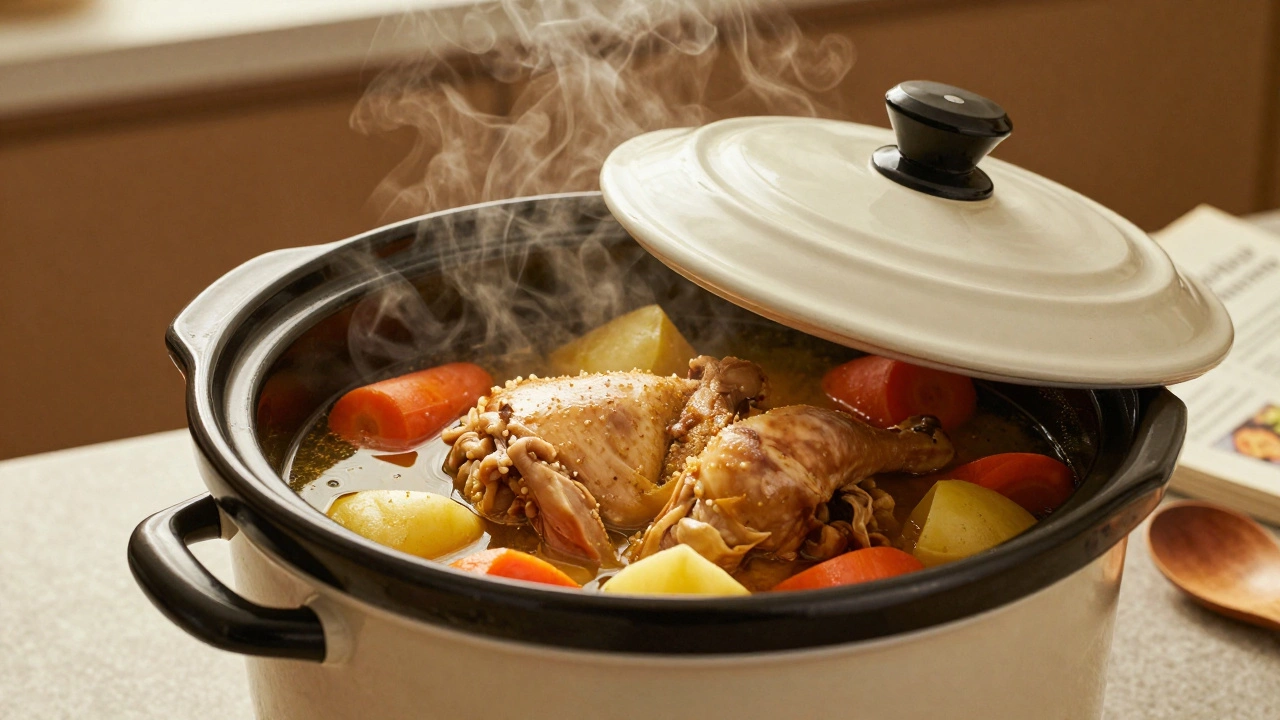
When you use a slow cooker, an electric countertop appliance that cooks food slowly at low temperatures over several hours. Also known as a crockpot, it’s designed to make tender meals with minimal effort—but only if you fill it right. Too little, and your food dries out. Too much, and it overflows, steams instead of simmers, or takes forever to reach a safe temperature. The sweet spot? Between half and two-thirds full. That’s not a guess—it’s what the USDA and slow cooker manufacturers recommend to ensure even heat distribution and food safety.
Why does this matter? Because slow cooker layering, the order and placement of ingredients inside the pot affects how heat travels. Root vegetables like potatoes and carrots sit at the bottom because they take longer to cook. Meat goes on top of them, not floating in liquid. Liquids? Keep them to just enough to cover the bottom third of the meat. Too much broth turns your stew into soup. Too little, and you risk burning the bottom or drying out the meat. And don’t forget the tea towel trick, a simple hack where you place a clean kitchen towel between the lid and the pot to absorb excess steam. It helps thicken sauces without changing your recipe—but it only works if your cooker isn’t overfilled.
People often think more food means more flavor. But in a slow cooker, overcrowding traps moisture and lowers the internal temperature. That’s dangerous. The USDA says food must reach 140°F within four hours to avoid bacteria growth. If your pot is stuffed to the brim, it can take much longer—and that’s when food poisoning risks rise. That’s why crockpot meat safety, the practice of cooking meat at safe temperatures and times in a slow cooker depends so heavily on fill level. A 6-quart pot with 4 pounds of chicken and 2 cups of liquid? Perfect. A 6-quart pot with 8 pounds of beef, 4 cups of sauce, and three bags of frozen veggies? That’s asking for trouble.
It’s not just about safety—it’s about texture. Overfilled slow cookers produce soggy vegetables and mushy meat. You’ve probably had that dish where the carrots are gone and the beef is stringy. That’s not slow cooking. That’s overcooking caused by poor fill levels. The right amount lets steam circulate, flavors meld, and collagen break down slowly into gelatin. That’s what makes your pulled pork melt-in-your-mouth, not gluey.
Think of your slow cooker like a pressure cooker without the lid seal. It needs space to breathe. Fill it halfway for soups and stews. Two-thirds for roasts and whole chickens. Never go past the max line inside the pot—most have one. And if you’re making a big batch? Cook in two batches. Better two great meals than one overcooked disaster.
Below, you’ll find real advice from people who’ve been there—overfilled pots, watery sauces, dry meat, and the fixes that actually work. Whether you’re new to slow cooking or just tired of guessing, these posts give you the exact rules, timing tricks, and layering secrets to get it right every time.