
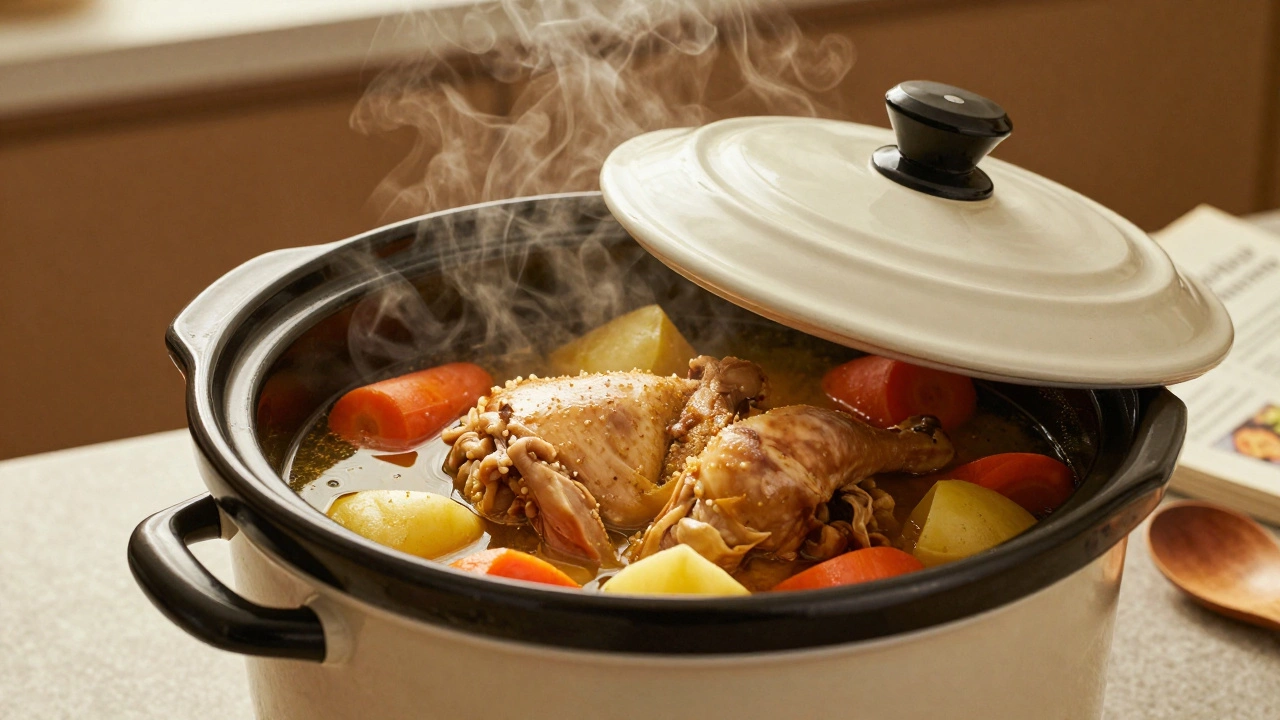
Slow Cooker Fill Level Calculator
You’ve tossed your chicken, veggies, and broth into the slow cooker, but now you’re staring at it wondering-does a slow cooker have to be half full? You’ve heard the rule. You’ve seen the warning labels. But is it really that simple? The truth is, it’s not just about safety-it’s about flavor, texture, and whether your dinner turns out tender or tough.
Why the Half-Full Rule Exists
The half-full guideline isn’t arbitrary. It’s built into how slow cookers work. These appliances rely on trapped steam and even heat circulation to cook food slowly over hours. If the pot is too empty, there’s not enough liquid to create that steamy environment. The heat concentrates in the empty space, and your food can dry out, scorch, or cook unevenly. On the flip side, if you overfill it past the two-thirds mark, the steam has nowhere to go. The lid can’t seal properly, moisture escapes, and the cooking time stretches out-sometimes by hours.Most manufacturers, including Crock-Pot and Instant Pot, recommend filling the stoneware between half and two-thirds full. That’s not a suggestion. It’s a design limit. The heating elements are calibrated to work with that volume of food and liquid. Go outside that range, and you’re working against the appliance, not with it.
What Happens If You Underfill?
Let’s say you’re making a small batch of pulled pork for just two people. You toss in 1.5 pounds of pork shoulder, a cup of BBQ sauce, and a splash of apple cider. The pot looks barely half full. You set it on low and walk away. Four hours later, the meat is dry, the sauce is thick as paste, and the edges are sticking to the pot. What went wrong?You didn’t have enough liquid to generate consistent steam. Slow cookers don’t use direct heat like stovetops. They rely on convection and moisture. Without enough liquid, the temperature rises too high in the upper layers, and the food cooks from the top down instead of evenly. That’s why you end up with rubbery edges and dry centers.
Even if you’re cooking something with natural moisture-like chicken thighs or beef chuck-you still need at least a cup of liquid. The meat releases juices, but not enough to compensate for the lack of starting moisture. That’s why recipes always say “add broth, water, or sauce.” It’s not just for flavor-it’s for physics.
What Happens If You Overfill?
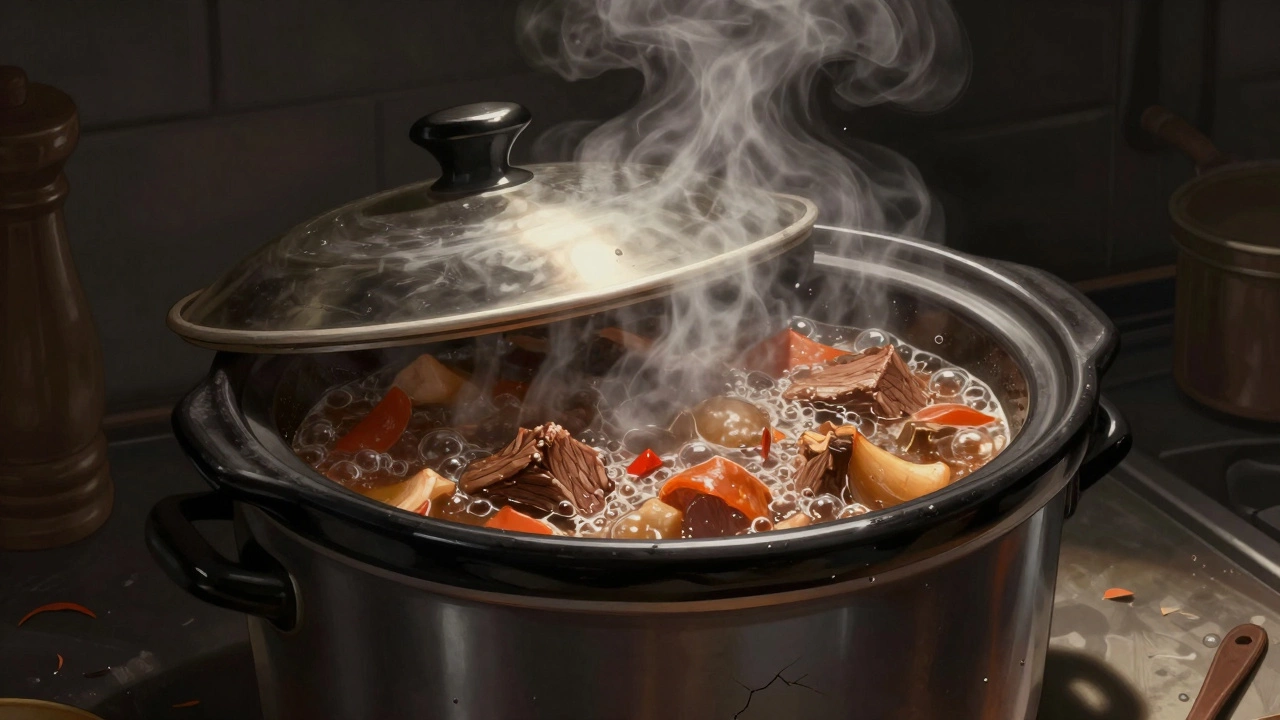
Now imagine you’re cooking for a crowd. You pile in six pounds of beef, a whole bag of potatoes, three cans of beans, and a full bottle of salsa. The slow cooker is bulging. You think, “More food = more value.” But here’s what really happens: the lid rattles. Steam escapes. The temperature drops. And your “one-pot wonder” takes eight hours instead of six. The beans are mushy, the meat is still tough, and the sauce is watery.Overfilling also makes it harder for the lid to seal. Most slow cookers have a slight gap under the lid to allow steam to escape safely. If the pot is too full, food bubbles up and blocks that gap. That causes pressure to build, which can lead to messy spills, uneven cooking, or even cracked stoneware over time.
There’s also a safety angle. If the slow cooker is too full, it can’t maintain a consistent internal temperature. The USDA recommends that food reach 140°F within four hours to prevent bacterial growth. An overfilled slow cooker might take longer to get there-especially on low. That’s a food safety risk you don’t need.
Exceptions to the Rule
There are a few cases where the half-full rule doesn’t apply strictly.Recipes with very little liquid-like no-bake cheesecake or bread pudding-use eggs, cream, and sugar as the base. These don’t need steam to cook. They rely on gentle heat to set. In those cases, you can fill the pot closer to three-quarters full because the ingredients themselves retain moisture.
Thick stews and sauces that start with minimal liquid can be okay if you’re using a smaller slow cooker. For example, a 2-quart pot with 1.5 quarts of thick chili might work fine because the density of the food holds in heat better. But even then, you shouldn’t go over two-thirds full.
Reheating leftovers is another exception. You can safely reheat a small amount of food in a large slow cooker because you’re not trying to cook raw ingredients. Just add a splash of water or broth to keep things moist, and set it to low for 1-2 hours.
How to Tell If Your Slow Cooker Is at the Right Level
You don’t need a measuring cup every time. Here’s a simple trick:- Look at the inside of your slow cooker. The stoneware usually has markings for “min” and “max.” If it doesn’t, use the halfway point as your guide.
- After adding your ingredients, the liquid should come up to about the middle of the food pile. If the liquid is pooling at the bottom and the food is sticking out, you need more.
- When you put the lid on, you should see a light mist of steam escape from the edges-not a steady stream. If steam is pouring out, you’ve overfilled it.
Also, avoid packing ingredients too tightly. Leave a little space between chunks of meat and vegetables. That lets steam circulate. Crowding the pot is just as bad as underfilling it.
What to Do If You’ve Already Overfilled or Underfilled
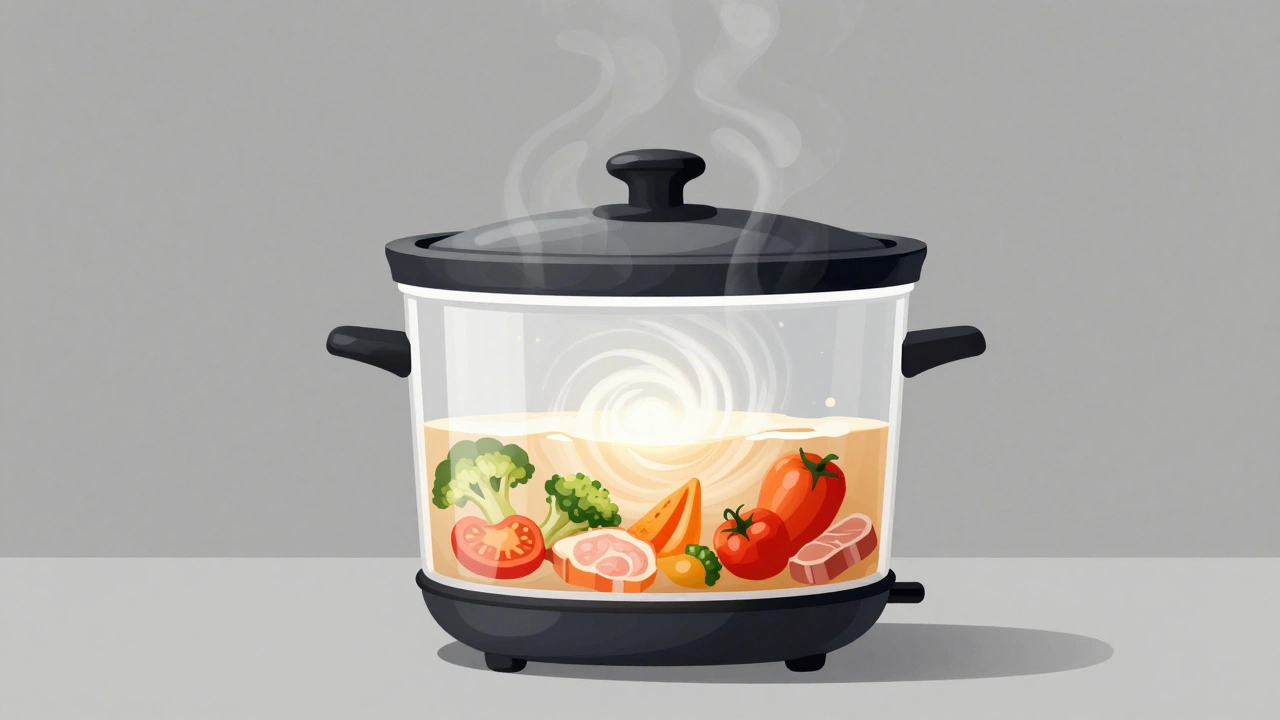
You made a mistake. The pot’s too full-or too empty. What now?If it’s underfilled: Add ½ to 1 cup of hot broth, water, or sauce. Don’t add cold liquid-it can shock the stoneware and crack it. Stir gently, replace the lid, and extend the cooking time by 30-60 minutes. Check the internal temperature of the meat with a thermometer. It should hit 145°F for poultry and 160°F for beef.
If it’s overfilled: Carefully remove some of the food and liquid using a ladle. Don’t lift the lid fully-just crack it open and scoop out a cup or two. Put the lid back on and expect the cooking time to be longer than usual. You might need to switch to high for the last hour to finish cooking properly.
And if you’re in a rush? Transfer the contents to a pot on the stove and simmer for 30 minutes. It’s not the same as slow cooking, but it’ll get the job done safely.
Pro Tips for Perfect Slow Cooker Results
- Always brown meat before adding it to the slow cooker. It adds depth of flavor and helps seal in juices.
- Place root vegetables (carrots, potatoes) at the bottom. They take longer to cook than meat and will absorb more heat.
- Use the low setting for 8-10 hours, high for 4-6. Don’t switch settings mid-cook unless you’re trying to speed things up near the end.
- Never lift the lid during the first two hours. Every time you do, you lose 15-20 minutes of cooking time.
- Use a thermometer. Don’t guess doneness. Chicken should hit 165°F, beef 145°F for medium.
Final Answer: Yes, It Does-But Here’s the Nuance
Yes, a slow cooker should be at least half full. That’s the sweet spot for safety, flavor, and efficiency. But it’s not a rigid rule. It’s a guideline based on how heat and moisture interact in a sealed environment. If you’re cooking a small batch, go slightly under half full-but only if you add enough liquid. If you’re cooking for a crowd, don’t cram it full. Leave room for steam to breathe.The best slow cooker meals aren’t about filling the pot to the brim. They’re about balance. Enough liquid to create steam. Enough space for heat to move. Enough time for flavors to meld. Get that right, and your food will turn out tender, juicy, and full of flavor-every time.
Can I cook a single chicken breast in a slow cooker?
Yes, but you need to add at least ½ cup of liquid-broth, sauce, or water-to prevent it from drying out. Place it on top of vegetables or a bed of onions for extra moisture. Cook on low for 4-5 hours. Use a thermometer to check it hits 165°F.
Is it safe to leave a slow cooker on all day?
Yes, modern slow cookers are designed to be left unattended. But only if the pot is filled between half and two-thirds full. An underfilled pot can overheat, and an overfilled one can leak or cook unevenly. Always use the correct setting and avoid lifting the lid frequently.
Can I use a slow cooker without any liquid?
No. Even foods that release moisture-like chicken or pork-need a minimum of ½ cup of liquid to start. Without it, the heating elements can overheat, the food will dry out, and you risk damaging the stoneware. The liquid creates the steam that cooks the food evenly.
Why does my slow cooker food taste bland?
Blandness usually comes from too much liquid or not enough seasoning. Slow cookers dilute flavors over time. Always season generously before cooking, and add herbs like thyme or rosemary early. Save salt for the end-it can make meats tough if added too soon.
Can I reheat food in a slow cooker?
Yes, but only if you add a splash of water or broth to keep it moist. Reheat on low for 1-2 hours. Never use the slow cooker to cook raw food from cold-it doesn’t heat fast enough to be safe. Always reheat leftovers to 165°F.