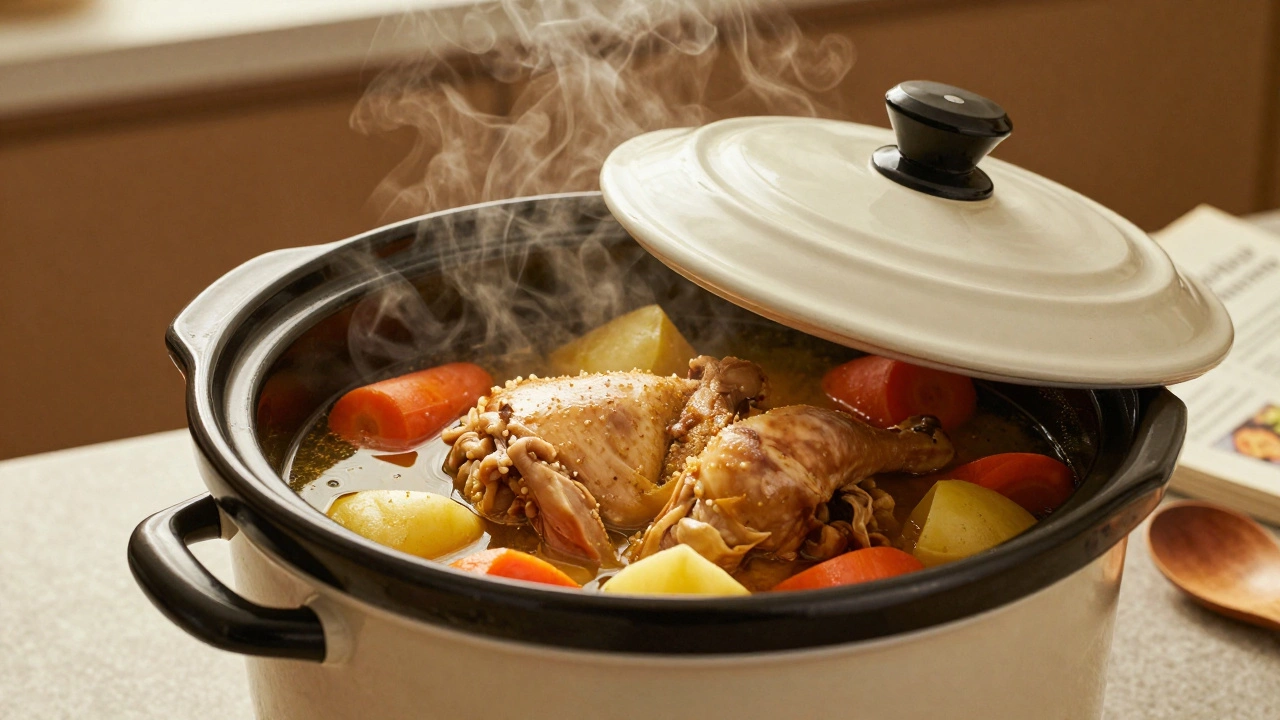
When you buy a slow cooker, a countertop appliance designed to cook food slowly at low temperatures over several hours. Also known as a crockpot, it’s meant to make tough cuts of meat tender and sauces rich without constant attention. But here’s the thing: just because it’s big doesn’t mean you should fill it to the brim. Slow cooker capacity isn’t just about volume—it’s about heat flow, steam escape, and food safety. Overfill it, and you’re not saving time, you’re risking mushy meat and uneven cooking.
Most slow cookers work best when they’re two-thirds to three-quarters full, the ideal fill level for even heat distribution and proper moisture retention. Fill it less than half, and the food dries out. Fill it past the max line, and the lid can’t seal right, steam escapes, and your sauce stays watery. That’s why recipes always say "for a 6-quart pot"—it’s not a suggestion, it’s a rule. A 4-quart model? Perfect for two people. An 8-quart? Great for family meals or meal prep. But if you toss in 10 cups of liquid and a whole chicken plus five pounds of potatoes into a 5-quart pot, you’re not being clever—you’re fighting physics.
And it’s not just about how much you add—it’s what you add and where. slow cooker layering, the practice of arranging ingredients in order of cooking time and density matters just as much as capacity. Root veggies like potatoes and carrots sit at the bottom because they take longer. Meat goes on top so it doesn’t get crushed. Liquids go in last to avoid diluting flavor too early. Skip this, and even the right-sized pot won’t save you from soggy carrots and dry chicken. You’ve seen those posts about the tea towel trick? That’s another fix for slow cooker capacity issues—absorbing excess steam so sauces thicken naturally instead of turning into soup.
People often confuse slow cooker capacity with cooking time. No, a bigger pot doesn’t mean you can leave meat in for 12 hours. slow cooker timing, the precise duration needed to break down collagen without turning protein to chalk stays the same whether you’re cooking for two or six. A 3-pound roast in a 6-quart pot needs the same 8 hours as that same roast in a 4-quart pot. The size just lets you add more sides without crowding. And don’t forget: meat expands as it cooks. A 2-pound chicken might look fine in the pot cold, but once it releases juices and the skin loosens, it takes up way more space.
So what’s the takeaway? Don’t buy a slow cooker based on looks or price. Buy it based on your family size and what you actually cook. If you make chili for five people every Sunday, a 7-quart is your sweet spot. If you’re cooking for one or two, stick with 4 or 5 quarts. And always leave room for steam. Your future self will thank you when your pulled pork isn’t a wet mess and your beans aren’t undercooked because the pot was too full to heat through.
Below, you’ll find real advice from people who’ve been there—overfilled, undercooked, and finally figured it out. From when to add potatoes to how long meat can safely stay on low, these posts cut through the noise and give you exactly what works. No fluff. Just results.