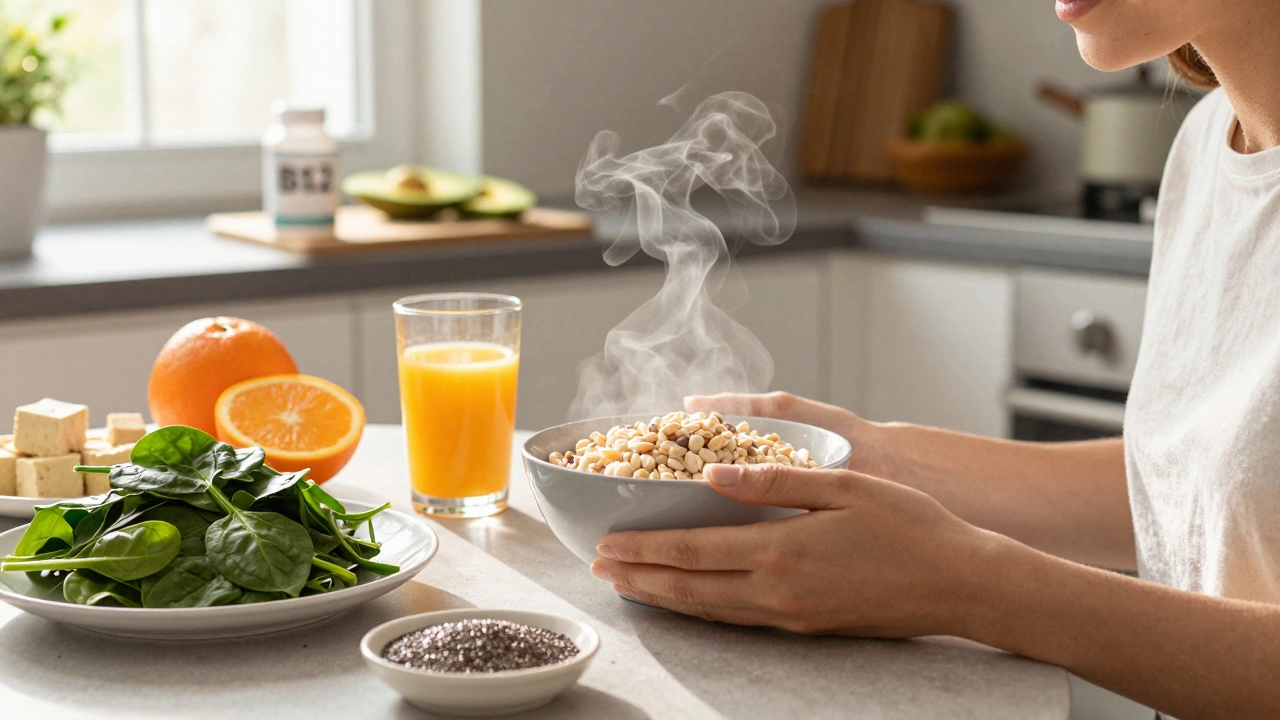
When people talk about plant-based nutrition, a way of eating centered on whole plant foods like beans, grains, vegetables, and fruits, without requiring strict veganism. Also known as whole-food, plant-forward eating, it’s not about cutting out meat because it’s trendy—it’s about what actually keeps you strong, energized, and healthy over time. You don’t need to be perfect. You just need to know what works.
People who eat this way don’t rely on fake meats or protein powders. They use beans, a dense source of protein, fiber, and iron that cooks easily and stretches far in meals. They use lentils, a fast-cooking legume that holds its shape and adds heartiness to soups, stews, and grain bowls. And they use tofu, a soy-based food that soaks up flavors and gives texture without needing to mimic meat. These aren’t substitutes—they’re the main event. Studies show that diets built around these foods lower cholesterol, reduce inflammation, and help manage weight without counting calories.
It’s not about avoiding animal products. It’s about what you’re putting in their place. If you swap a burger for fries, you’re not eating plant-based nutrition—you’re just eating different junk food. But if you swap it for a bowl of black beans, brown rice, roasted peppers, and avocado? That’s real change. The people who stick with this way of eating don’t do it for Instagram. They do it because they feel better. More energy. Better digestion. Fewer cravings. And yes, they still eat delicious food.
What you’ll find in these posts isn’t theory. It’s what real people use. You’ll see how vegetarians replace meat with simple, affordable ingredients. You’ll learn what vegans actually eat when they’re tired, broke, or short on time. You’ll get straight answers about protein, iron, and whether you need supplements. And you’ll see how these foods fit into everyday meals—not just fancy salads or expensive superfoods.