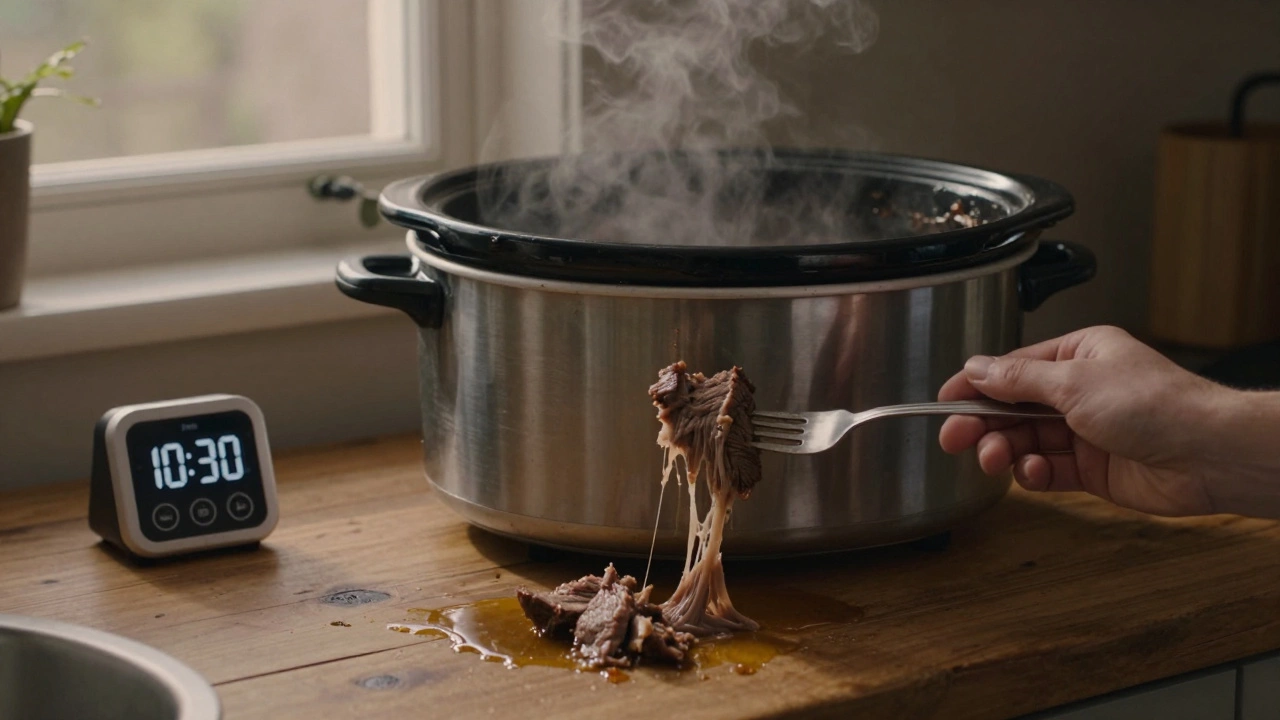
When you bite into meat and it falls apart softly, that’s not luck—it’s meat texture, the physical feel of cooked meat influenced by muscle structure, fat content, and cooking method. Also known as mouthfeel, it’s what separates a bland, rubbery chicken breast from one that’s juicy and rich. Most people think it’s about cooking time alone, but it’s really about matching the cut to the method. Tough cuts like chuck or shank need long, slow heat to break down collagen into gelatin. Lean cuts like chicken breast or pork loin? Too much time and they dry out fast.
That’s why slow cooker, a low-heat appliance designed to transform tough cuts into tender meals over hours works so well for certain meats. It’s not magic—it’s science. Collagen melts at around 160°F, and slow cookers hold steady right there for hours. But if you throw a lean steak in there for six hours? You’ll get something that tastes like cardboard. On the flip side, meat doneness, the internal temperature that determines how cooked meat is matters just as much. A pork shoulder at 195°F will shred like butter. A chicken breast at 165°F is safe. Hit 170°F? It’s dry. No exceptions.
And it’s not just about the heat. Layering matters—putting root veggies on the bottom of a slow cooker protects the meat from direct heat and lets steam circulate. Rinsing off marinades? That washes away flavor and can spread bacteria. The tea towel trick? It soaks up excess moisture so your sauce thickens naturally. Even how you slice the meat after cooking changes texture—cutting against the grain shortens tough muscle fibers, making each bite easier to chew.
You’ll find posts here that cut through the noise. No vague advice like "cook it until it’s tender." Just real answers: when to add potatoes so they don’t turn to mush, how long meat can safely stay on low, why 3 hours on high isn’t the same as 6 on low, and how to fix meat that came out tough. Whether you’re working with chicken, beef, or pork, the same rules apply—understand the cut, control the heat, respect the time. The goal isn’t just to cook meat. It’s to make it feel good in your mouth. That’s what meat texture is really about.