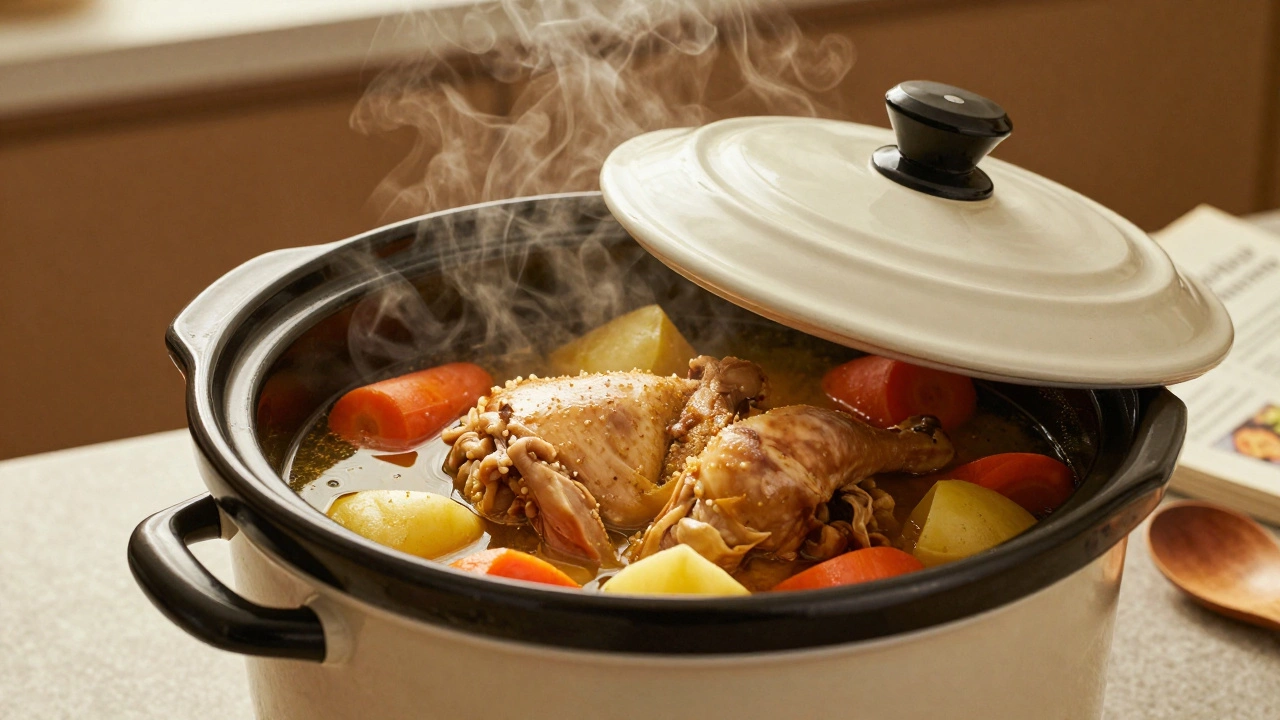
When you use a slow cooker, a kitchen appliance designed to cook food slowly over several hours at low temperatures. Also known as a crockpot, it’s one of the most reliable tools for tender meals with minimal effort—but only if you fill it right. Too little, and your food dries out. Too much, and it won’t cook evenly, leaks, or worse—creates unsafe pressure. The sweet spot? Between half and two-thirds full. That’s the rule most manufacturers and food safety experts agree on. It gives room for steam to circulate, liquids to simmer, and ingredients to expand without overflowing.
Why does this matter? A slow cooker works by trapping heat and moisture. If you pack it to the brim, the steam has nowhere to go. That can cause the lid to rattle, food to bubble over, or even crack the ceramic insert. On the flip side, if you only put in a cup of stew, the heat won’t distribute properly. The bottom might scorch while the top stays cold. This isn’t just about mess—it’s about safety. The USDA warns that food must reach 140°F within two hours to avoid bacterial growth. A too-empty slow cooker can take longer to hit that temperature, especially with meat.
Here’s what works in real kitchens: For stews, soups, and braises, aim for liquid volume, the amount of broth, sauce, or water added to the cooker to cover about 70% of your solids. If you’re cooking chicken or beef, layer it at the bottom, then add veggies and liquid. Don’t crush the ingredients—leave space. Potatoes and carrots? Add them halfway through if you want them firm. And if you’re using the tea towel trick, a simple hack where you place a clean kitchen towel between the lid and the cooker to absorb excess moisture, you’re already thinking about moisture control—so don’t drown your food in the first place.
Think of your slow cooker like a pressure cooker without the lid seal. It needs breathing room. Most 6-quart models handle 3–4 quarts of food perfectly. Smaller ones? Stick to 1.5–2.5 quarts. And never fill past the max line—if your pot has one. If it doesn’t, eyeball it: when you close the lid, you should still see a gap of at least an inch between the food and the top. That’s your safety margin.
You’ll find plenty of posts below that dig into related tricks—like how long meat can safely stay in there, when to add vegetables, and why high and low settings aren’t just about speed. But none of that matters if you start with the wrong fill level. Get that right, and everything else falls into place. No more soggy veggies, no more dry chicken, no more cleaning spilled sauce off your stove. Just simple, safe, delicious meals—every time.