When you handle chicken poisoning, illness caused by consuming contaminated chicken, often due to bacteria like Salmonella or Campylobacter. Also known as poultry-related food poisoning, it's not about spicy heat—it's about careless handling. Every year, millions get sick from chicken that looked fine but wasn't safe. It doesn't take much: a dirty knife, a damp sponge, or rinsing chicken before cooking can spread germs across your kitchen.
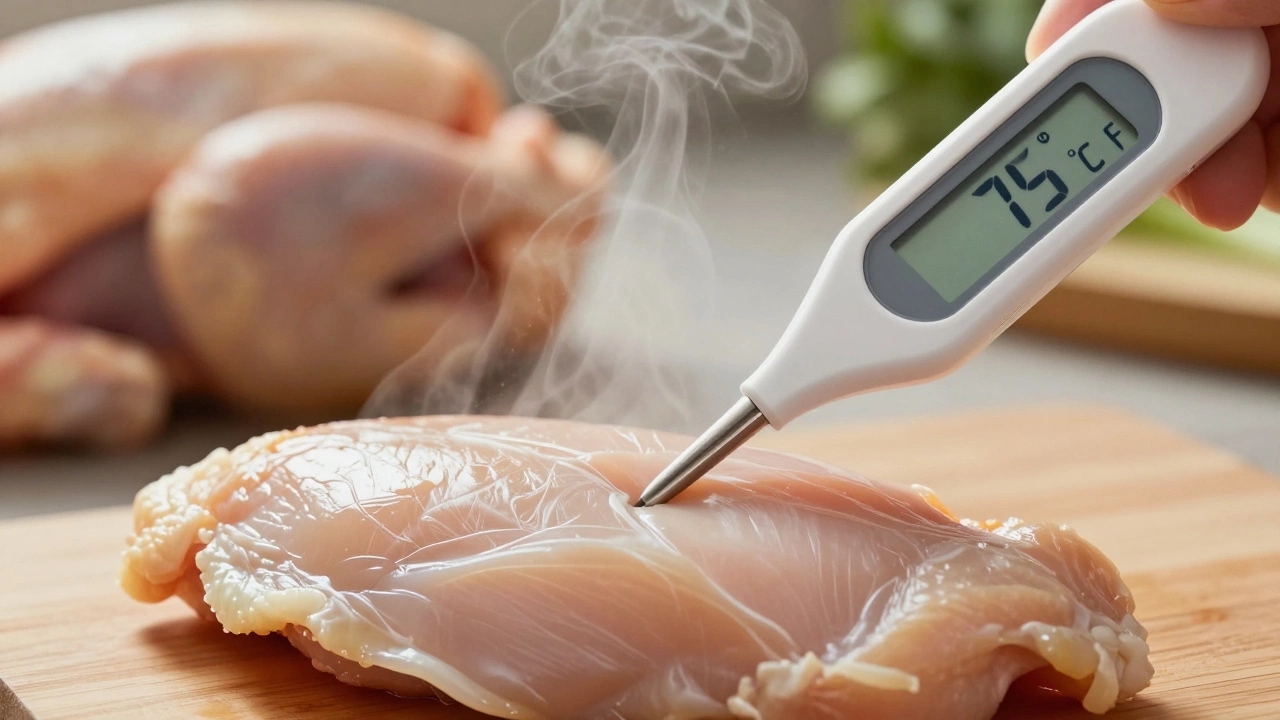
Salmonella from chicken, a common bacterium found in raw poultry that causes fever, diarrhea, and stomach cramps is the usual suspect. But it’s not the meat itself that’s the problem—it’s how it’s treated. Washing chicken? That’s a myth. All it does is splash bacteria onto your sink, counters, and clothes. The only thing that kills it? Heat. Chicken needs to hit 165°F (74°C) inside, not just look done on the outside. Use a thermometer. Don’t guess. And never let raw chicken touch your salad, bread, or cooked food—even for a second.
Undercooked chicken, chicken that hasn’t reached a safe internal temperature, can harbor dangerous bacteria that survive and make you sick is a silent risk. People think if it’s not pink, it’s safe. Wrong. Juices can run clear while the center stays raw. That’s why slow cookers and sous vide setups need careful timing—leaving chicken in the pot too long doesn’t fix undercooking, it just dries it out. And if you’re marinating? Don’t reuse that sauce. It’s contaminated. Toss it. Or boil it hard for a full minute before using it again.
Chicken cross-contamination, the transfer of harmful bacteria from raw chicken to other foods, surfaces, or utensils is the hidden trap. Cutting boards, knives, even your hands can carry germs. Clean everything with hot soapy water after touching raw chicken. Use one cutting board for meat, another for veggies. Wash your hands for 20 seconds—long enough to sing "Happy Birthday" twice. And if you’re using a slow cooker, don’t overload it. If it’s not half full, the heat won’t circulate right. That’s when bacteria hang around.
You don’t need fancy gear or a chef’s degree to avoid chicken poisoning. You just need to stop assuming. Stop rinsing. Stop guessing. Stop letting raw chicken touch anything else. The science is clear. The rules are simple. And the consequences? They’re real. People end up in the hospital over this. Not because they ate spicy food. But because they didn’t treat chicken like the potential hazard it is.
Below, you’ll find real posts that break down exactly how to handle chicken safely—from marinating without spreading germs, to knowing when your slow cooker is working right, to what happens if you skip the basics. No fluff. No myths. Just what works.