
Pasta Cooking Calculator
Pasta Preparation Calculator
Calculate your perfect pasta water and salt amounts for restaurant-quality results.
Why This Matters
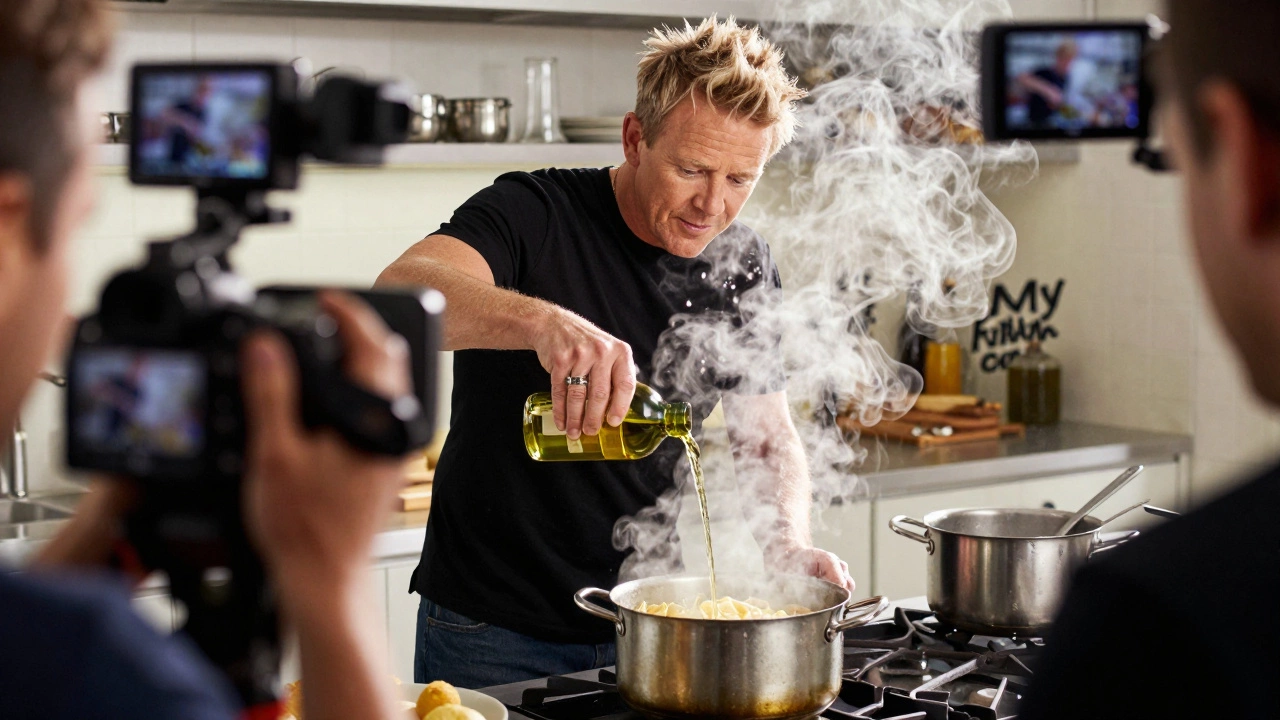
Adding oil to pasta water is a common mistake that ruins sauce adhesion. As Gordon Ramsay explains:
Oil coats the pasta noodles and prevents sauce from clinging. Instead, use the right water-to-pasta ratio and stir immediately after cooking.
Results
Water Requirements
Use of water for
Salt Amount
For of water, add
Pasta Water to Save
Reserve for sauce emulsification
Ever watched Gordon Ramsay toss a splash of oil into a pot of boiling water before adding pasta? You’re not alone if you’ve copied him-only to end up with slippery, sauce-less noodles. The truth? He’s not doing it to stop the pasta from sticking. And if you’re still adding oil to your pasta water, you’re making a common mistake that ruins flavor and texture.
What Gordon Ramsay Actually Does
Gordon Ramsay adds oil to pasta water not because he thinks it helps, but because he’s filming. On camera, the oil creates a little foam and visual drama. It looks like he’s doing something expert. In reality, he’s done it for TV. In his own kitchen, he doesn’t use oil. He uses salt. Lots of it.
There’s a video from his MasterClass where he says plainly: “Never put oil in pasta water. It makes the sauce slide off.” He’s not being dramatic. He’s being scientific. Oil floats. It coats the surface of the water, and when the pasta cooks, it also coats the noodles. That thin film blocks the sauce from clinging. No oil means better sauce adhesion. Simple.
Why People Think Oil Stops Sticking
The oil-in-pasta-water myth is everywhere. Grandmas say it. Cooking shows say it. Even some recipe blogs still repeat it. The logic seems sound: oil is slippery, so it should keep pasta from sticking together. But it doesn’t work that way.
Sticking happens when pasta releases starch into the water and the noodles clump before they’re fully separated. The real fix? Use enough water-about 4 to 6 quarts per pound of pasta-and stir the first 30 seconds after adding the pasta. That’s it. The water acts as a buffer. The stirring breaks up the sticky starch clusters. Oil doesn’t help here. It just sits on top.
Think of it like this: if you pour oil on a crowded sidewalk, people still bump into each other. The oil doesn’t make them move apart. Same with pasta. The noodles are moving in a dense, starchy environment. Oil doesn’t change that physics.
What Actually Prevents Pasta from Sticking
There are three real tricks to keep pasta from sticking:
- Use plenty of water. A small pot with too little water turns into a starch soup. The pasta sticks because there’s no room to move. Use a large pot-preferably 5 to 6 quarts for 1 pound of pasta.
- Stir in the first minute. The first 30 to 60 seconds after adding pasta are critical. Give it a good stir with a wooden spoon or tongs to separate the strands before the starch starts to activate.
- Salt the water well. Salt doesn’t prevent sticking, but it seasons the pasta from the inside out. Use at least 1 tablespoon of kosher salt per 4 quarts of water. It’s the only flavor boost the pasta gets before sauce hits it.
That’s it. No oil. No tricks. Just water, salt, and stirring.
What Happens When You Add Oil
Adding oil doesn’t just do nothing-it actively hurts your pasta.
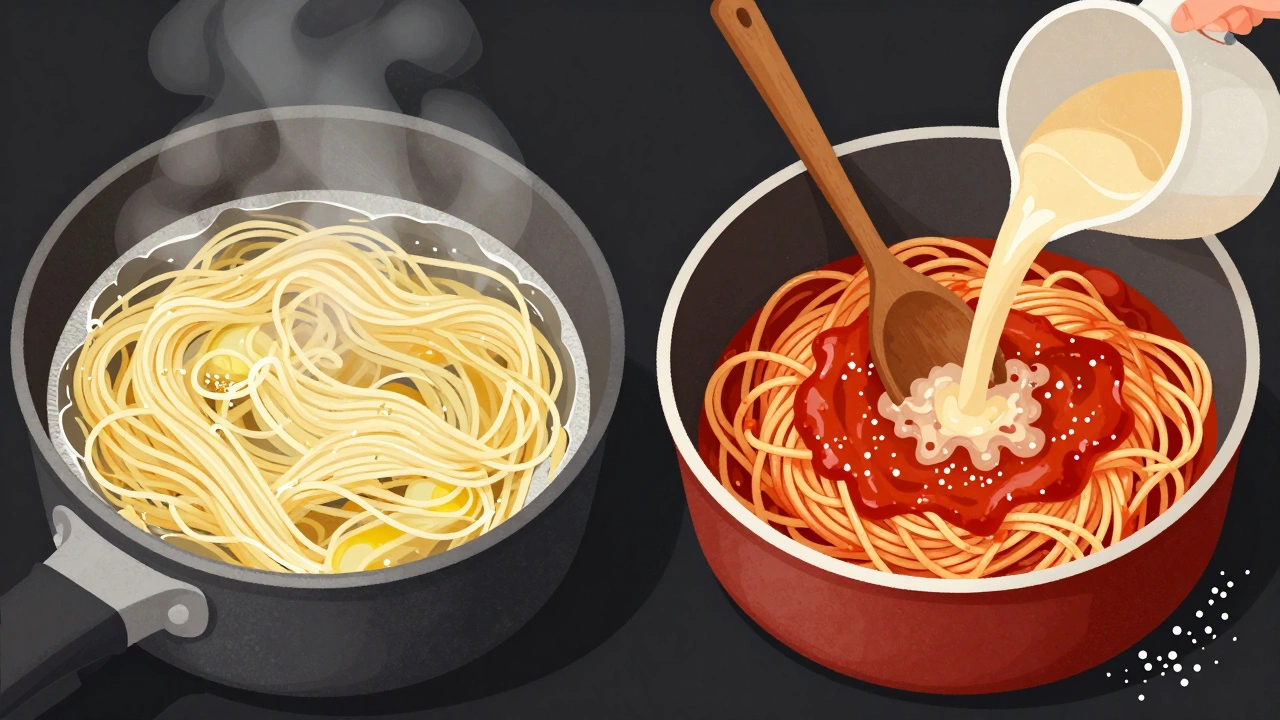
First, it makes the noodles slippery. That’s great if you’re making a cold pasta salad and want to avoid clumping. But if you’re serving hot pasta with marinara, pesto, or carbonara? The sauce won’t stick. You’ll end up with a bowl of pasta swimming in sauce that pools at the bottom.
Second, oil reduces the effectiveness of the pasta water. Chefs save a cup of starchy pasta water to help thicken and bind sauces. Oil in the water means that starchy liquid is now oily. It won’t emulsify with butter or cheese. Your sauce breaks. It separates. It looks greasy instead of creamy.
Third, oil is a waste. A tablespoon of olive oil costs more than a pinch of salt. You’re spending money on something that doesn’t help-and actually makes your dish worse.
What to Do Instead
Here’s how to cook perfect pasta every time:
- Fill a large pot with cold water-4 to 6 quarts for 1 pound of pasta.
- Add salt: 1 to 2 tablespoons of kosher salt. Taste the water-it should taste like the sea.
- Bring to a full, rolling boil. Don’t lower the heat after adding pasta.
- Add pasta and stir immediately for the first 30 seconds.
- Cook until al dente. Check the package time, then taste 1 minute early.
- Reserve 1 cup of pasta water before draining.
- Drain pasta, but don’t rinse. Rinsing washes away the starch that helps sauce cling.
- Toss pasta immediately with sauce and a splash of reserved pasta water.
That last step is the secret. The starchy water helps the sauce cling, thicken, and become glossy. Oil has no place in that process.
Why This Myth Persists
Why do so many people still believe oil prevents sticking? Because it feels like it should work. It’s a simple fix for a visible problem. And when you see oil floating on top of boiling water, it looks like it’s doing something. It’s visual. It’s satisfying.
But cooking isn’t about what looks good. It’s about what works. And the science is clear: oil doesn’t help pasta. Salt and stirring do.
Even the Italian culinary school, Alba, teaches that oil in pasta water is a mistake. Traditional Italian cooks never use it. They rely on technique, not additives. And their pasta clings to sauce beautifully.
What About Non-Stick Pots?
Some people say, “But I have a non-stick pot, so I don’t need to stir.” Wrong. Non-stick pots help with cleanup, not cooking. Pasta still releases starch. It still clumps. Stirring is non-negotiable, even with the fanciest pot.
Same goes for “anti-stick” pasta brands. They might claim to be easier to cook, but they still need salted water and stirring. No brand can replace technique.
Final Thought: Taste Over Tradition
If you’ve been adding oil to your pasta water for years, you’re not wrong-you’re just missing out. The difference between oily, sauce-sliding pasta and perfectly coated, restaurant-quality pasta is stark. Once you stop using oil, you’ll notice how much more flavorful your sauces become.
Try it next time. Skip the oil. Salt the water. Stir. Save the pasta water. Toss with sauce. You’ll taste the difference.
Should I add oil to pasta water to prevent sticking?
No. Adding oil to pasta water doesn’t prevent sticking and makes sauces slide off. Stirring the pasta in the first minute and using enough water are the real solutions.
Why does Gordon Ramsay add oil on TV?
He adds oil for visual effect on camera-it creates foam and looks dramatic. In his own kitchen, he doesn’t use oil and says it makes sauce cling poorly.
Does oil help pasta cook faster?
No. Oil doesn’t raise the boiling point of water or speed up cooking. It only floats on top and coats the noodles.
Can I use oil if I’m making cold pasta salad?
Yes. For cold dishes, a light toss with oil after draining helps prevent clumping. But never add oil to the boiling water-add it after cooking and draining.
What’s the best way to save pasta water?
Before draining, use a measuring cup to scoop out about 1 cup of the starchy water. Add it a little at a time to your sauce while tossing the pasta. It helps the sauce emulsify and cling.