
Italian Pasta & Sauce Pairing Calculator
Discover the authentic Italian pasta shape traditionally paired with your sauce. Based on regional cooking traditions and culinary science from Italy.
When you think of Italian food, pasta is usually the first thing that comes to mind. But not all pasta is created equal. In Italy, there’s no single "national pasta"-instead, there are dozens of shapes, each tied to a region, a tradition, and a specific sauce. So which pasta do Italians actually love the most? It’s not about what’s popular overseas. It’s about what shows up on dinner tables every day, from rural kitchens in Sicily to bustling trattorias in Bologna.
Penne: The Everyday Workhorse
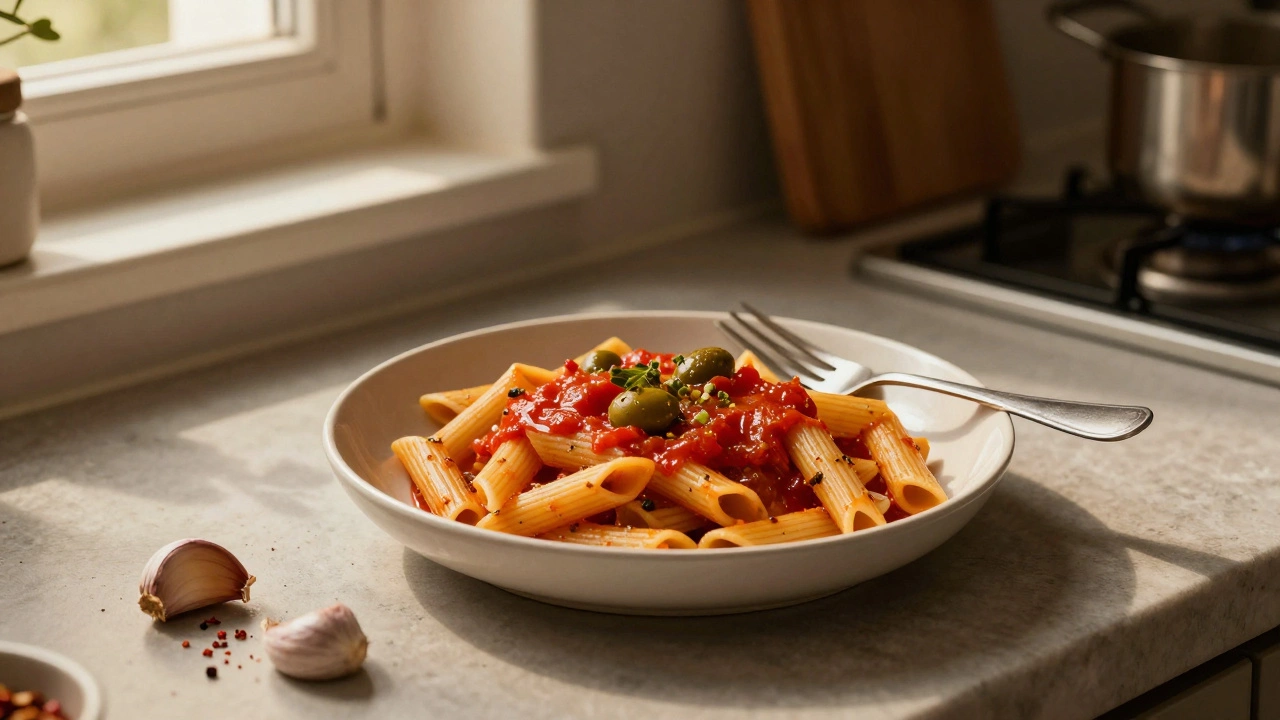
If you walked into a typical Italian home on any given Tuesday night, you’d likely find penne on the table. It’s not flashy, but it’s reliable. The ridges hold sauce like a charm, and its tube shape works equally well with creamy tomato sauces, arrabbiata, or even simple olive oil and garlic. Unlike spaghetti, which requires twirling, penne is easy to eat with a fork-no technique needed. In fact, a 2023 survey of 1,200 Italian households found that penne was the most frequently purchased pasta shape in 18 out of 20 regions. It’s the pasta you grab when you’re tired, short on time, or just don’t feel like cooking something fancy.
Spaghetti: The Classic, But Not the Favorite
Spaghetti is what most people outside Italy picture when they think of Italian pasta. But inside Italy? It’s more of a weekend dish. You’ll find it served with carbonara in Rome, aglio e olio in Naples, or clam sauce along the coast-but rarely as a weeknight meal. Why? Because spaghetti requires more attention. The sauce needs to cling just right, the noodles must be cooked perfectly al dente, and it’s harder to serve to kids or eat on the go. Italians respect spaghetti, but they don’t rely on it like they do penne or rigatoni.
Rigatoni: The Sauce Magnet
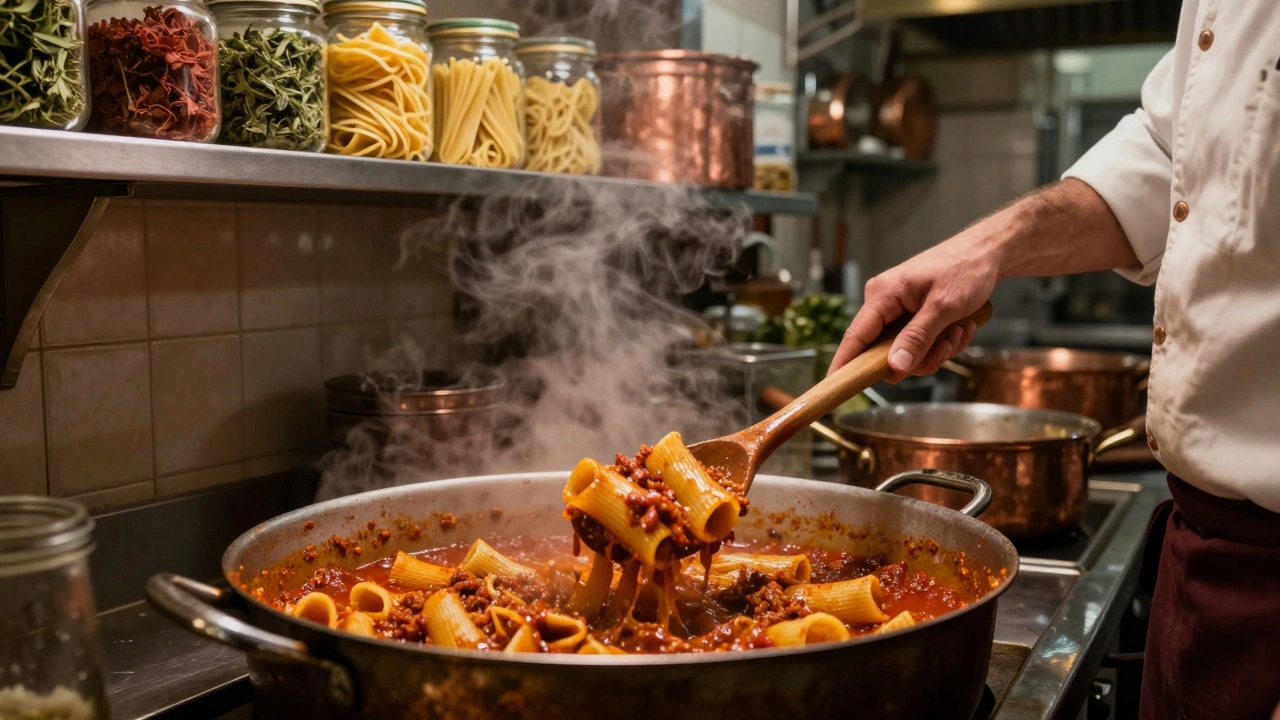
If you’ve ever had a hearty ragù in central Italy, you’ve probably eaten it with rigatoni. Its wide, ridged tubes are built for thick, chunky sauces. The inside of the tube traps bits of meat and vegetables, while the ridges hold onto oil and herbs. In Emilia-Romagna, where meat sauces are sacred, rigatoni is often the default choice. It’s also common in southern Italy, where it’s baked into casseroles with eggplant, cheese, and tomato. Unlike penne, rigatoni has more surface area and a chewier texture, making it feel more substantial. Many Italians say rigatoni is the only pasta that truly satisfies when you’re hungry enough to need a full meal, not just a snack.
Farfalle: The Kids’ Pick
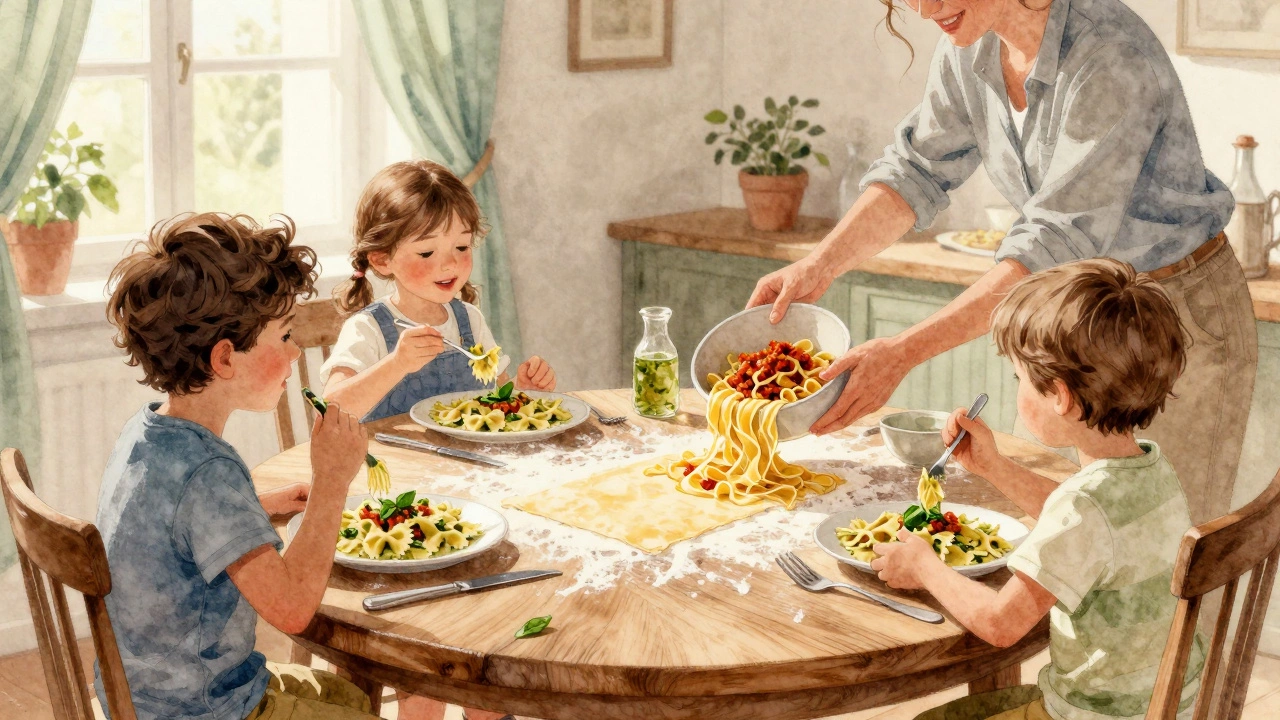
Butterfly-shaped farfalle (bowtie pasta) might look playful, but it’s serious business in Italian homes. It’s the go-to for children, easy to pick up, and works beautifully with light cream or pesto sauces. Parents love it because it’s fun to eat, and it holds onto small ingredients like peas or diced chicken. You won’t find it in fancy restaurants, but you’ll see it in school lunches, family picnics, and Sunday leftovers. A 2024 study from the University of Bologna found that farfalle was the top choice for families with children under 12-surpassing even penne in households with young kids.
Tagliatelle: The Bologna Standard
Tagliatelle is where tradition meets texture. This flat, ribbon-like pasta is the official partner of ragù alla bolognese. In Bologna, it’s not a choice-it’s a rule. You won’t find anyone serving ragù with spaghetti. The width of tagliatelle (about 7-10 mm) is designed to carry the rich, slow-cooked meat sauce without overwhelming it. In fact, the Bolognese government even has a standard: tagliatelle must be made with egg and flour, no water, and the thickness must match the width of a 19th-century ruler. Outside of Emilia-Romagna, tagliatelle is less common, but within it, it’s non-negotiable. If you want to eat like a true Bolognese, this is the pasta.
Why Shape Matters More Than You Think
In Italy, pasta shape isn’t just about looks. It’s physics. A smooth noodle like spaghetti works with oil-based sauces because the sauce slides along the surface. But a thick, meaty ragù needs ridges and hollows to cling to. Short shapes like maccheroni or ziti trap sauce inside, making every bite flavorful. Long shapes are for light sauces or egg-based ones. Italians don’t mix shapes randomly. If you serve a chunky sauce with angel hair, you’re doing it wrong. And they’ll know.
The Real Answer: It Depends on Where You Are
There’s no single "most loved" pasta in Italy. It’s regional. In Naples, it’s maccheroni alla chitarra. In Liguria, it’s trofie with pesto. In Sicily, it’s busiate with almond sauce. In the north, you’ll find pappardelle with wild boar. Even in the same city, the pasta changes by season. In summer, it’s fresh linguine with cherry tomatoes. In winter, it’s gnocchi with sage butter.
But if you had to pick one shape that shows up in the most homes, across the most regions, and on the most weeknights? It’s penne. It’s versatile, easy to cook, holds sauce well, and doesn’t require a recipe. It’s the pasta Italians reach for when they don’t have time to think-because they know it won’t let them down.
What Italians Don’t Do
They don’t use pasta as a blank canvas. No, they don’t pile on five different sauces. No, they don’t drown it in cheese. And they rarely serve it with meatballs on top-that’s an American invention. In Italy, the pasta and sauce are a team. One doesn’t overpower the other. The sauce is made to fit the shape, not the other way around.
What You Can Learn From Italians
If you want to cook pasta like an Italian, stop chasing exotic shapes. Start with penne or rigatoni. Use a simple sauce-garlic, olive oil, chili flakes, a splash of pasta water. Don’t overcook it. Drain it, toss it with the sauce in the pan, and serve it hot. No grated Parmesan on the table unless it’s a real, aged one. And never, ever serve it with a fork and spoon.
Is penne really the most popular pasta in Italy?
Yes, according to national sales data and household surveys from 2023 and 2024, penne is the most commonly purchased and consumed pasta shape across Italy. It’s favored for its versatility, ease of use, and ability to hold both thick and light sauces. While regional favorites exist, penne is the everyday choice in homes from Milan to Palermo.
Why don’t Italians use spaghetti with meat sauce?
Spaghetti is too thin and smooth to hold thick meat sauces like ragù. The sauce slides right off. Italians use flat, wide pastas like tagliatelle or tubular shapes like rigatoni because they trap the sauce inside and around the noodle. Spaghetti is reserved for lighter sauces like carbonara, aglio e olio, or seafood.
Do Italians eat pasta every day?
Not every day, but often. Most Italians eat pasta 3-5 times a week, usually as a first course (primo) before the main protein dish. It’s not seen as a heavy meal, but as a satisfying starter. In some regions, like Emilia-Romagna, pasta is eaten more frequently, even daily. In others, it’s more of a weekend treat.
Is there a "best" Italian pasta brand?
Many Italians swear by De Cecco or Barilla, especially for dried pasta. But the real secret is in the texture: look for pasta made with bronze dies, which create a rougher surface that holds sauce better. High-quality dried pasta should feel slightly grainy, not slick. Fresh pasta, made with eggs and flour, is another category entirely-and usually homemade.
What’s the biggest mistake Americans make with Italian pasta?
Overcooking it. Italians cook pasta al dente-firm to the bite. They also rinse it with pasta water, not cold water, to help the sauce cling. And they never serve pasta with a huge mound of cheese on top. The sauce is meant to be the star, not the cheese. Finally, mixing shapes with sauces that don’t match-like using angel hair with a chunky ragù-is considered a culinary faux pas.
Next Steps: Try This at Home
Next time you cook pasta, skip the fancy ingredients. Grab penne. Heat olive oil with a clove of garlic and a pinch of chili flakes. Add a splash of pasta water after draining. Toss in the pasta, stir for 30 seconds, and top with a little salt and fresh parsley. That’s it. That’s how Italians do it.