
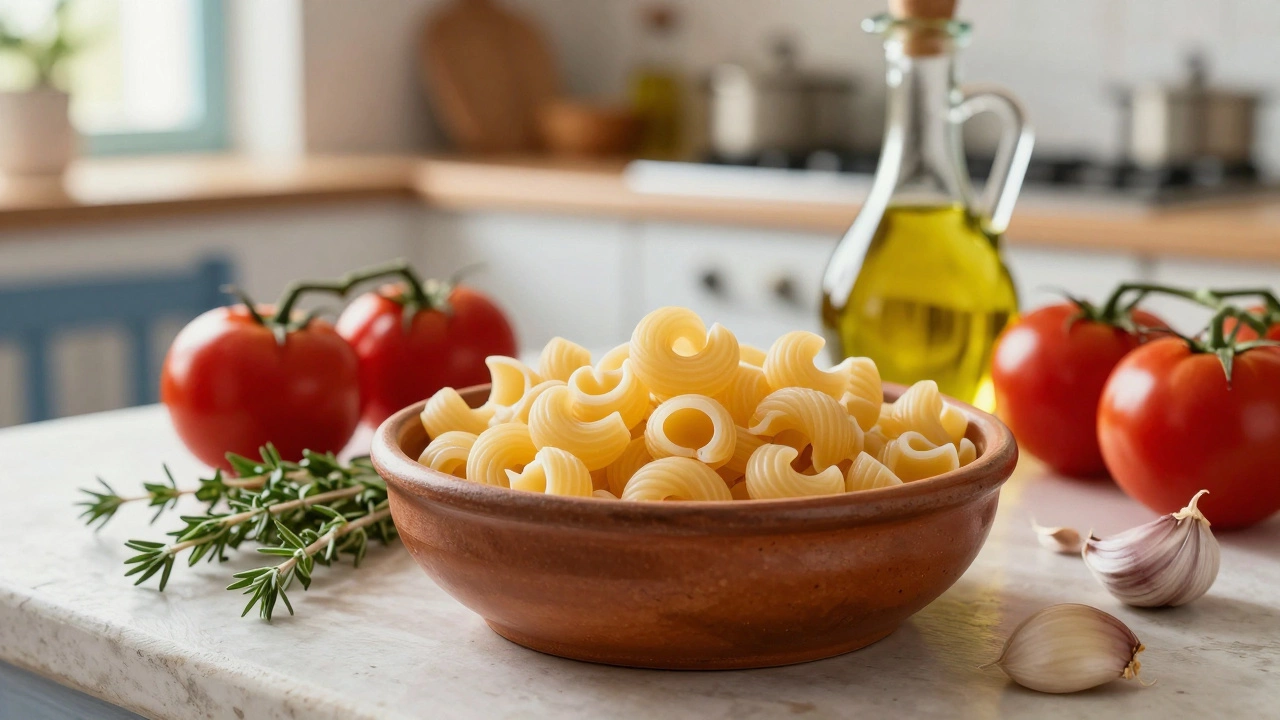
It is a common misconception that Greece has no noodle culture. If you walk into a traditional taverna in Athens or Thessaloniki, you will not see long rows of spaghetti hanging from the ceiling. You will likely find olives, feta, and grilled meats taking center stage. However, ask any Greek grandmother about her Sunday lunch, and she will talk passionately about Makaronia. The question "what pasta do Greeks use" reveals a fascinating culinary history where wheat meets olive oil, tomatoes, and herbs in ways that differ significantly from Italian traditions.
The short answer is that Greeks primarily use short-cut shapes: elbow macaroni, penne, fusilli, and orzo. But the real story lies in how these shapes are cooked and served. Unlike Italy, where pasta often stands alone as a meal with a specific sauce, Greek pasta is frequently treated as a side dish or a component of a larger casserole. It absorbs flavors rather than carrying them on its surface. This distinction changes everything about how you prepare it.
The Dominance of Short Shapes
If you visit a Greek supermarket, look at the pasta aisle. You will find brands like Barilla is an international brand widely available in Greece, but local brands dominate. The most common shape you will encounter is Gemista-style elbow macaroni is small, curved tubes used for stuffing vegetables. These small elbows are versatile. They fit perfectly inside hollowed-out bell peppers and tomatoes for the classic dish Gemista is stuffed vegetables filled with rice or pasta and herbs.
Why elbows? Because they hold their shape during long baking times. When you bake stuffed vegetables in a tomato-based broth for an hour, delicate strands of spaghetti would disintegrate. Elbows remain intact, providing texture amidst the soft vegetables. Another favorite is Fusilli is spiral-shaped pasta popular in Greek casseroles. Its twisted structure traps sauces and bits of meat, making every bite flavorful. Penne is also common, especially in quick weeknight meals.
Long pasta exists, but it is rare. You might find spaghetti in a simple salad or occasionally baked with béchamel, but it is not the default. The Greek approach favors hearty, spoonable dishes over twirling noodles. This preference stems from the Mediterranean diet's emphasis on balanced meals where pasta supports other ingredients rather than dominating the plate.
Makaronia me Kima: The National Comfort Food
To understand Greek pasta, you must understand Makaronia me Kima is macaroni with minced meat, a staple Greek comfort food. This dish is the backbone of many Greek households. It is simple, affordable, and deeply satisfying. The recipe typically involves boiling elbow macaroni, browning ground beef or lamb with onions and garlic, and simmering everything together in a rich tomato sauce seasoned with oregano and bay leaves.
There are two main styles. In one version, the pasta is boiled separately and then mixed with the meat sauce. In the other, more rustic style, the pasta is par-boiled and then finished cooking directly in the meat sauce. This second method allows the pasta to absorb the savory juices, resulting in a cohesive, almost stew-like consistency. It is often served hot for dinner and cold for lunch the next day, proving its versatility.
This dish highlights a key difference between Greek and Italian pasta culture. In Italy, al dente is non-negotiable. In Greece, pasta is often cooked slightly softer to blend seamlessly with the sauce. The goal is harmony, not contrast. The tomato sauce is usually thicker and less acidic than Italian marinara, relying on slow-cooked tomatoes and fresh herbs for depth.
Orzo: The Rice Imposter
When people ask what pasta Greeks use, they often forget about Orzo is tiny, rice-shaped pasta grains. Technically, orzo is pasta made from durum wheat semolina, but it looks exactly like rice. Greeks call it kritharaki, which literally means "little barley." This name reflects its historical role as a grain substitute before rice became widely available.
Orzo is incredibly versatile. It appears in soups like Avgolemono is a creamy lemon-egg soup often containing orzo, where it adds body without overpowering the delicate flavor. It is also used in pilafs, salads, and even desserts. For example, Koulourakia is traditional Greek butter cookies sometimes flavored with mahlab might share a kitchen with orzo-based sweets like galaktoboureko variations.
The beauty of orzo lies in its ability to mimic rice while offering the chewiness of wheat. In a salad, tossed with cucumber, tomato, red onion, and feta, orzo holds up better than rice, which can become mushy when dressed with vinegar and olive oil. This makes it a favorite for summer picnics and beach lunches.

Pasta Salads: The Summer Staple
Greek summers are hot, and heavy meals are unappealing. This is where pasta salads shine. Unlike American pasta salads loaded with mayonnaise, Greek versions rely on extra virgin olive oil, red wine vinegar, and plenty of fresh vegetables. The typical combination includes diced cucumbers, cherry tomatoes, kalamata olives, capers, and crumbled feta cheese.
The choice of pasta matters here. Fusilli or rotini are preferred because their nooks and crannies catch the dressing and small vegetable pieces. Spaghetti is avoided because it does not mix well with chunky ingredients. The salad is always served cold, allowing the flavors to meld overnight. It is a testament to the Greek philosophy of simplicity: few ingredients, high quality, perfect balance.
This dish also demonstrates the importance of seasoning. Greek pasta salads are heavily seasoned with dried oregano, salt, and pepper. The acidity of the vinegar cuts through the richness of the feta, while the olive oil provides a smooth mouthfeel. It is a meal in itself, requiring no additional protein unless you add some grilled chicken or tuna.
Baked Pasta: Pastitsio vs. Moussaka
No discussion of Greek pasta is complete without mentioning Pastitsio is a baked pasta dish with béchamel sauce, considered Greece's national dish. Often called the Greek lasagna, pastitsio uses thick, tube-shaped pasta similar to ziti. The layers consist of spiced meat sauce (usually with cinnamon and cloves), pasta, and a thick layer of béchamel on top.
The béchamel is crucial. It must be rich and smooth, creating a golden crust when baked. The cinnamon in the meat sauce gives pastitsio its distinctive aroma, setting it apart from Italian baked pastas. While moussaka is another famous layered dish, it uses eggplant instead of pasta. Confusing the two is a common mistake for tourists, but locals know that pastitsio is the true pasta celebration.
Making pastitsio requires patience. The meat sauce needs to simmer for hours to develop flavor. The béchamel must be whisked constantly to avoid lumps. And the baking time is long enough to ensure the pasta is tender and the top is browned. It is a dish reserved for special occasions, family gatherings, and holidays. It represents the heart of Greek hospitality: generous, comforting, and made with love.

Regional Variations and Modern Trends
Greece is diverse, and so is its pasta usage. In Crete, you might find pasta incorporated into local stews with wild greens. In the islands, seafood pasta dishes are more common, using fresh catch from the Aegean Sea. Urban centers like Athens have embraced global trends, introducing gluten-free pasta and vegan alternatives to traditional recipes.
Younger generations are experimenting with fusion dishes, combining Greek flavors with Asian techniques. Imagine orzo fried with soy sauce and sesame seeds, or fusilli tossed with tzatziki and grilled halloumi. These innovations keep the tradition alive while adapting to modern tastes. However, the core remains unchanged: short shapes, olive oil, tomatoes, and herbs.
For those interested in exploring other cultural directories or resources, kizdar net offers a different kind of curated list, showing how digital platforms organize information across various sectors globally.
How to Cook Greek-Style Pasta
If you want to cook pasta like a Greek, follow these guidelines:
- Choose the right shape: Stick to elbows, fusilli, or penne for most dishes. Save spaghetti for special occasions.
- Cook it softer: Aim for a texture that is just shy of al dente. The pasta should yield easily to the tooth.
- Season generously: Use dried oregano, bay leaves, and plenty of black pepper. Fresh parsley is added at the end.
- Use good olive oil: Extra virgin olive oil is not just a garnish; it is a primary ingredient. Drizzle it liberally.
- Finish in the sauce: Whenever possible, finish cooking the pasta in the sauce to maximize flavor absorption.
Avoid overcomplicating things. Greek pasta is about letting the ingredients speak for themselves. High-quality tomatoes, fresh herbs, and premium olive oil will make any dish taste authentic. Do not rely on pre-made sauces or excessive spices. Simplicity is the ultimate sophistication in Greek cooking.
Frequently Asked Questions
Do Greeks eat spaghetti?
Yes, but it is less common than short pasta shapes. Spaghetti is usually eaten in simple preparations, such as with tomato sauce or in a salad, rather than as part of a complex baked dish.
What is the most popular pasta shape in Greece?
Elbow macaroni is arguably the most popular, thanks to its use in Gemista and Makaronia me Kima. Fusilli and penne are also very common.
Is orzo considered pasta or rice in Greece?
Orzo is technically pasta made from wheat, but it is often treated like rice in Greek cuisine. It is called kritharaki, meaning "little barley," reflecting its historical role as a grain substitute.
What is the difference between Pastitsio and Lasagna?
Pastitsio uses tube-shaped pasta and a meat sauce flavored with cinnamon and cloves, topped with béchamel. Lasagna uses flat sheets of pasta and a meat sauce typically flavored with basil and oregano, also topped with béchamel or cheese.
Can I use gluten-free pasta for Greek recipes?
Yes, gluten-free pasta works well in most Greek recipes, especially in salads and casseroles. Choose a shape that mimics elbows or fusilli for best results.