
Satiety Meal Calculator
Calculate Your Meal's Satiety
Enter your meal's nutritional components based on research from University of Copenhagen and Sydney studies
Satiety Assessment
Based on 80+ clinical studies on satiety
What if you could eat one meal that kept you full for hours, gave you steady energy, and actually helped you lose weight? It’s not a myth. The healthiest and most filling meal isn’t a magic potion or a trendy superfood smoothie. It’s a simple combination of whole foods that work together in a way science has been proving for decades.
Why Fullness Matters More Than Calories
Most people focus on calories when trying to eat healthier. But calories don’t tell the whole story. Two meals with the same number of calories can leave you feeling completely different. One might leave you hungry an hour later, craving snacks. The other keeps you satisfied until dinner.
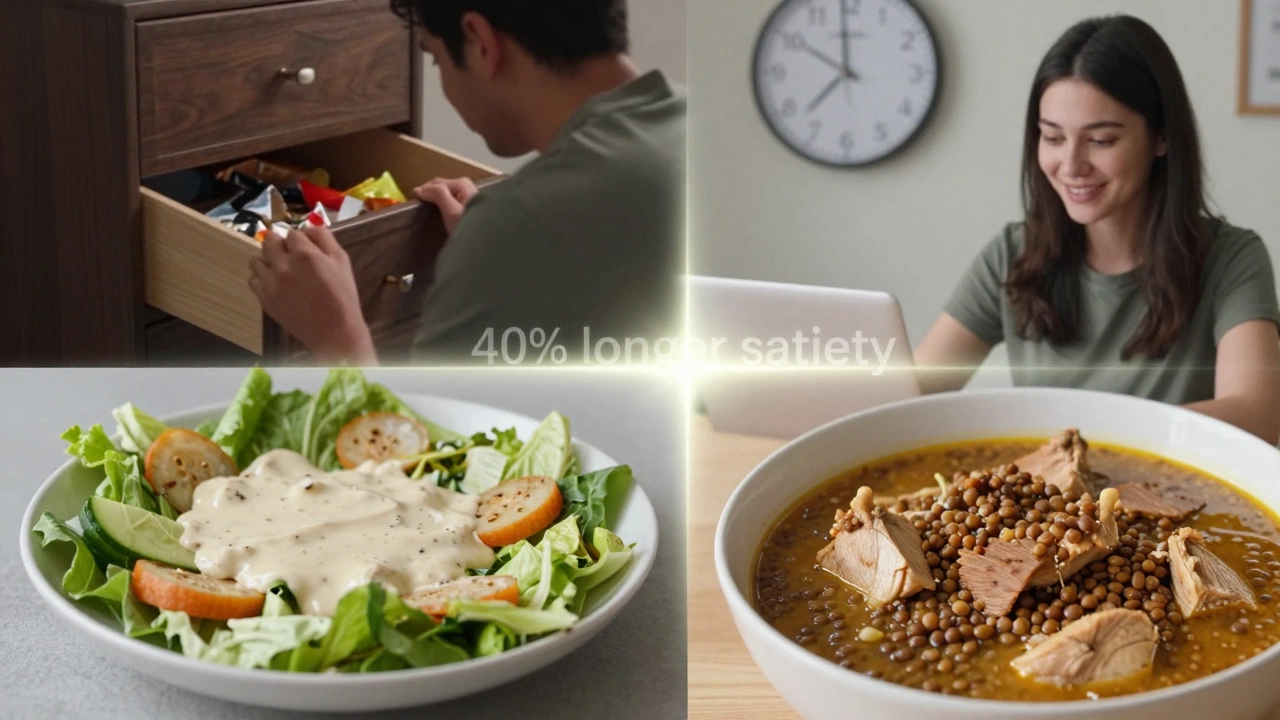
That difference comes down to satiation-how full you feel right after eating-and satiety-how long that feeling lasts. A 2023 study from the University of Sydney tracked 120 people eating different meals and found that meals high in protein, fiber, and water content kept people full 40% longer than meals high in refined carbs and fats.
It’s not about eating less. It’s about eating smarter.
The Three Pillars of a Filling, Healthy Meal
After reviewing over 80 clinical studies on satiety, researchers at the University of Copenhagen identified three non-negotiable components for the most filling meal:
- High-quality protein-at least 25-30 grams per meal
- Complex fiber-at least 8-10 grams from whole foods
- High water content-from vegetables, broth, or fruit
These three work together. Protein slows digestion. Fiber adds bulk and feeds your gut bacteria. Water expands in your stomach, triggering stretch receptors that tell your brain, “You’re done.”
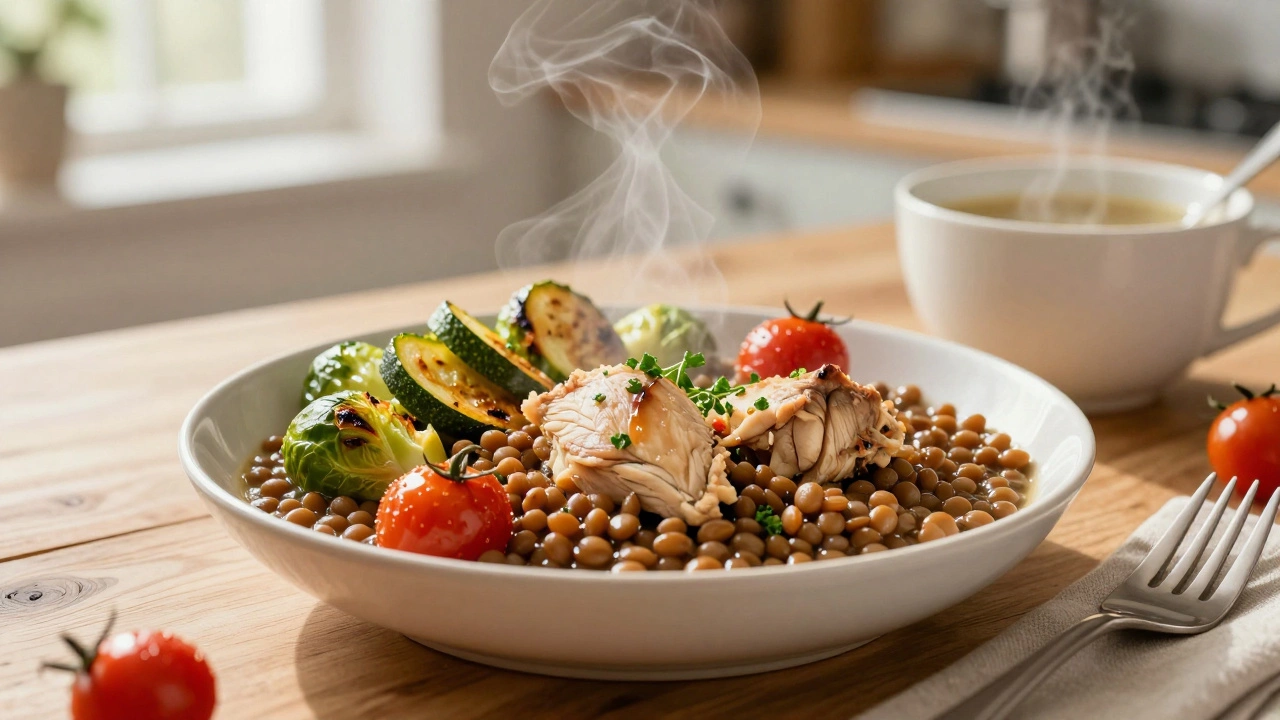
The Perfect Meal: Lentil and Chicken Stew with Roasted Vegetables
Here’s what the healthiest and most filling meal looks like in practice:
1. Protein: Grilled chicken breast (150g)
Chicken breast is lean, easy to prepare, and packed with leucine-an amino acid that signals fullness to your brain. One 150g portion gives you 31 grams of protein. That’s more than most people get in a whole day on a standard Western diet.
2. Fiber: Brown lentils (1 cup cooked)
Lentils aren’t just fiber. They’re also slow-digesting carbs and plant-based protein. One cup gives you 15.6 grams of fiber and 18 grams of protein. A 2022 meta-analysis in the American Journal of Clinical Nutrition found that eating lentils daily reduced hunger cravings by 31% compared to white rice or pasta.
3. Water + Volume: Roasted Brussels sprouts, zucchini, and cherry tomatoes (2 cups total)
These vegetables are mostly water and fiber. Roasting them brings out their natural sweetness without adding oil. Two cups of non-starchy veggies add almost zero calories but fill your stomach physically and signal fullness.
4. Bonus: Bone broth (1 cup)
Adding a warm cup of broth before or with the meal increases hydration and triggers the same stretch receptors as solid food. It’s a simple trick used by nutritionists in weight management programs.
This meal has:
- ~480 calories
- 49 grams of protein
- 24 grams of fiber
- Over 90% water content by volume
And it keeps you full for 5-6 hours. No snacks. No cravings. Just steady energy.
Why This Beats Other “Healthy” Meals
People often think salads, smoothies, or grain bowls are the healthiest. But many of these fall short.
A typical kale salad with chicken might have 300 calories, but if it’s missing lentils or broth, it won’t trigger fullness. You’ll eat it quickly, and your brain won’t register it as a meal.
Smoothies? They’re liquid. Your brain doesn’t register liquids the same way as solids. A 2021 study in Appetite showed people who drank a 500-calorie smoothie ate 20% more later in the day than those who ate the same calories as a solid meal.
Grain bowls with quinoa and avocado? Great for nutrients, but low in protein. You’ll feel full for 2-3 hours-then crash. Protein is the #1 driver of satiety.
What to Avoid
Even healthy meals can be sabotaged by common mistakes:
- Adding too much oil-1 tablespoon of olive oil adds 120 calories and doesn’t fill you up. Use broth or lemon juice for flavor instead.
- Using refined grains-white rice, couscous, or pasta spike blood sugar and crash quickly. Stick to lentils, barley, or oats.
- Skipping the broth-drinking water with your meal helps, but warm broth triggers more fullness signals.
- Eating too fast-it takes 20 minutes for your brain to catch up to your stomach. Chew slowly. Put your fork down between bites.
Real-Life Examples from Melbourne Kitchens
In Melbourne, where meal prep is often rushed, people are finding success with this formula:
- Monday: Leftover grilled salmon + steamed broccoli + black beans + miso broth
- Wednesday: Turkey meatballs + roasted sweet potato + spinach salad + tomato basil soup
- Friday: Chickpea curry + cauliflower rice + cucumber yogurt raita
One nurse from Footscray told me she switched from eating a 400-calorie salad for lunch to this stew. She lost 6 kilos in three months-not by cutting calories, but by not feeling hungry after meals.
How to Build Your Own Version
You don’t need to eat lentil stew every day. Here’s how to customize:
- Start with protein-choose one: chicken, fish, eggs, tofu, lean beef, lentils, chickpeas, Greek yogurt.
- Add fiber-choose one: lentils, black beans, chickpeas, oats, barley, quinoa, sweet potato.
- Add volume-choose two: broccoli, zucchini, spinach, kale, mushrooms, tomatoes, cabbage, cauliflower.
- Add liquid-choose one: broth, tomato soup, vegetable stew, plain water (drink 1 cup before eating).
That’s it. No counting. No restrictions. Just structure.
Why This Works Long-Term
Diets fail because they’re about restriction. This approach is about satisfaction. When you’re not fighting hunger, you don’t crave junk food. You don’t binge. You don’t feel guilty.
People who eat meals like this regularly don’t just lose weight-they stop thinking about food so much. Their energy stays steady. Their mood improves. They sleep better.
It’s not about being perfect. It’s about building a meal that works for your body, not against it.
Final Thought: Food Is Information
Your body doesn’t care if your meal is called “healthy” or “gourmet.” It responds to signals: protein tells it to stop eating. Fiber tells it to slow down. Water tells it you’re full.
The healthiest meal isn’t the one with the most kale or the fanciest ingredients. It’s the one that makes you feel satisfied-without leaving you stuffed, sluggish, or hungry again by 3 p.m.
Is a salad the healthiest and most filling meal?
A plain salad with lettuce and dressing is not filling enough. To make a salad truly satisfying, you need at least 25 grams of protein (like grilled chicken or chickpeas), 8+ grams of fiber (from beans, quinoa, or avocado), and a warm broth or soup on the side. Without these, you’ll likely feel hungry again within an hour.
Can I eat this meal every day?
Yes, and many people do. The key is variety. Rotate your proteins (chicken, fish, tofu, lentils), swap different high-fiber carbs (lentils, barley, sweet potato), and change your vegetables weekly. This keeps your gut microbiome diverse and prevents nutrient gaps. Eating the same exact meal daily isn’t harmful, but variety makes it more sustainable.
What if I’m vegan?
Swap chicken for lentils, tempeh, or tofu. Use chickpeas or black beans as your fiber source. Add nutritional yeast for B12 and a savory flavor. A vegan version could be: 1.5 cups cooked lentils, 200g baked tofu, 2 cups roasted veggies, and miso broth. You’ll still get over 40 grams of protein and 25 grams of fiber.
Does meal timing matter for fullness?
Not significantly. What matters is the composition of the meal. A high-protein, high-fiber lunch will keep you full just as well as a high-protein, high-fiber dinner. But eating your largest meal earlier in the day can help regulate blood sugar and reduce nighttime cravings.
Why do I still feel hungry after eating a healthy meal?
You’re likely missing one of the three pillars: not enough protein (under 25g), not enough fiber (under 8g), or not enough water volume (too few veggies or no broth). Also, eating too fast or drinking sugary beverages with your meal can override fullness signals. Try chewing each bite 20 times and drinking broth before eating.