
American Comfort Food Quiz
Loading question...
Quiz Complete!
Let's see how well you know your way around an American kitchen.
There is a specific feeling that hits you when you are stressed, tired, or just need a break from the world. It’s not hunger in the traditional sense. It’s a craving for something warm, familiar, and undeniably rich. In the United States, this craving has a name: American comfort food. But what exactly qualifies as comfort food in a country as vast and diverse as America? Is it just greasy fast food, or is there more to it?
The answer is complicated because America isn’t one single culture. It’s a patchwork of immigrant traditions, regional histories, and industrial innovations. When you ask someone in Georgia what their go-to meal is, they might say shrimp and grits. Ask someone in New York, and they’ll point to a slice of pizza. The core idea remains the same, though: these dishes provide emotional satisfaction. They taste like home, even if your home changes depending on which state you grew up in.
The Heavy Hitters: National Staples
If you had to pick three dishes that represent American comfort food on a national level, the list would likely stay consistent across most polls. These aren't just meals; they are cultural touchstones.
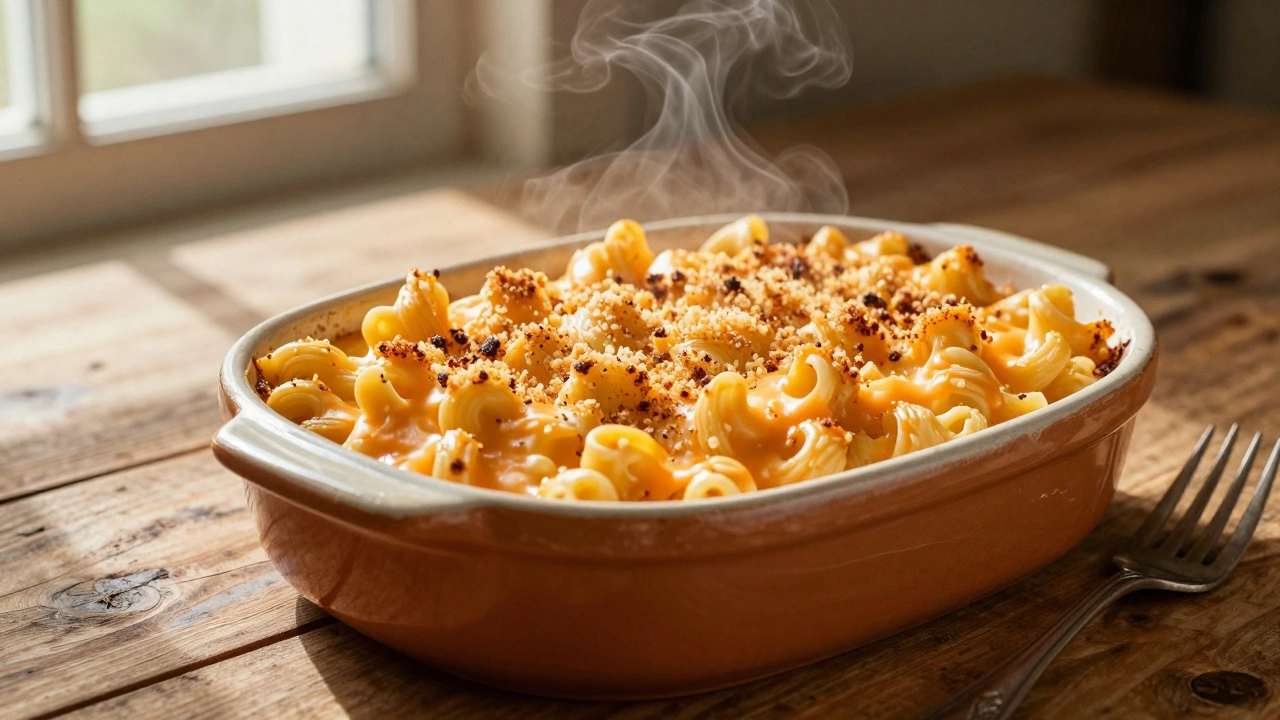
Macaroni and Cheese is perhaps the undisputed king of American comfort food. It is a baked dish consisting of elbow macaroni pasta coated in a thick, creamy cheese sauce, often topped with breadcrumbs and baked until golden. While the concept of cheese and pasta exists globally, the American version-popularized by boxed mixes in the mid-20th century and elevated by gourmet chefs today-is distinct. It relies heavily on sharp cheddar, sometimes mixed with American cheese for that iconic orange hue and smooth meltability. For many Americans, this dish is linked directly to childhood memories of school cafeterias or Sunday dinners.
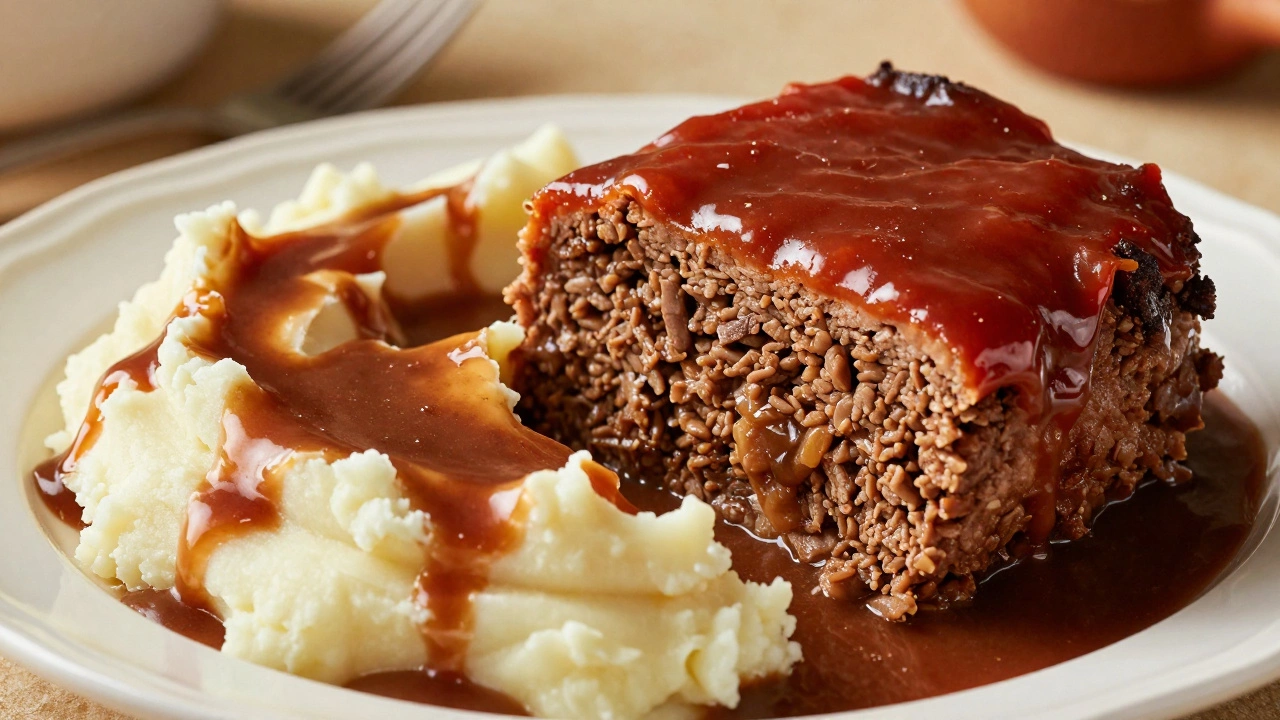
Next on the list is Meatloaf, a savory loaf made from ground beef (or pork), mixed with breadcrumbs, onions, eggs, and seasonings, then baked until firm. Meatloaf peaked in popularity during the mid-20th century when ground beef became affordable and accessible to the average household. It represents efficiency and care. You take cheaper cuts of meat, bind them together, and create a hearty, filling meal that stretches far. It’s almost always served with mashed potatoes and gravy, creating a cohesive plate of soft textures and savory flavors.
Then there is Fried Chicken, chicken pieces coated in seasoned flour or batter and deep-fried until crispy and golden brown. This dish bridges the gap between Southern heritage and national obsession. While its roots are deeply embedded in African American culinary history in the South, it has become a universal symbol of celebration and solace across the entire country. Whether it’s from a local church fundraiser or a major fast-food chain, the crunch of the skin and the juiciness of the meat offer an immediate sensory reward.
Regional Variations: Where You Live Matters
To understand American comfort food fully, you have to look at the map. Geography dictates ingredients, and ingredients dictate tradition. What feels like "home" in Maine feels alien in Florida.
| Region | Dish | Key Ingredients | Why It Comforts |
|---|---|---|---|
| Southeast | Grits and Shrimp | Stone-ground cornmeal, Gulf shrimp, butter, cream | Creamy texture, coastal freshness, slow-cooked warmth |
| Northeast | New England Clam Chowder | Clams, potatoes, bacon, heavy cream, saltines | Hearty soup for cold winters, salty-savory balance |
| Midwest | Hotdish (Casserole) | Tater Tots, ground beef, cream of mushroom soup, vegetables | One-pot efficiency, nostalgic 1950s vibe, filling |
| Southwest | Breakfast Burrito | Flour tortilla, scrambled eggs, chorizo, cheese, salsa | Portable energy, spicy kick, customizable fillings |
| Pacific Northwest | Salmon Chowder | Smoked salmon, potatoes, leeks, cream | Local seafood abundance, smoky depth, warming spices |
In the Northeast, particularly New England, Clam Chowder is a thick, creamy soup made with clams, diced potatoes, onions, and sometimes smoked bacon, finished with heavy cream. Unlike the tomato-based Manhattan clam chowder, the white chowder is strictly a regional preference that defines winter dining. It’s dense, salty, and usually eaten with oyster crackers. It’s the kind of food you eat when the wind is howling off the Atlantic Ocean.
Move to the Midwest, and the concept of comfort shifts toward casseroles. The Hotdish is a generic term used in Minnesota and surrounding states for any casserole that combines protein, starch, and vegetables, often bound by condensed soup. The classic combination involves Tater Tots on top, ground beef, peas, and cream of mushroom soup inside. It sounds simple, maybe even cheap, but it represents community potlucks and family gatherings where feeding a large group efficiently was paramount.
The Sweet Side: Desserts as Medicine
You cannot talk about American comfort food without addressing dessert. In the U.S., the meal isn’t truly complete until sugar enters the picture. These desserts are rarely light or airy; they are dense, sweet, and often involve baking.
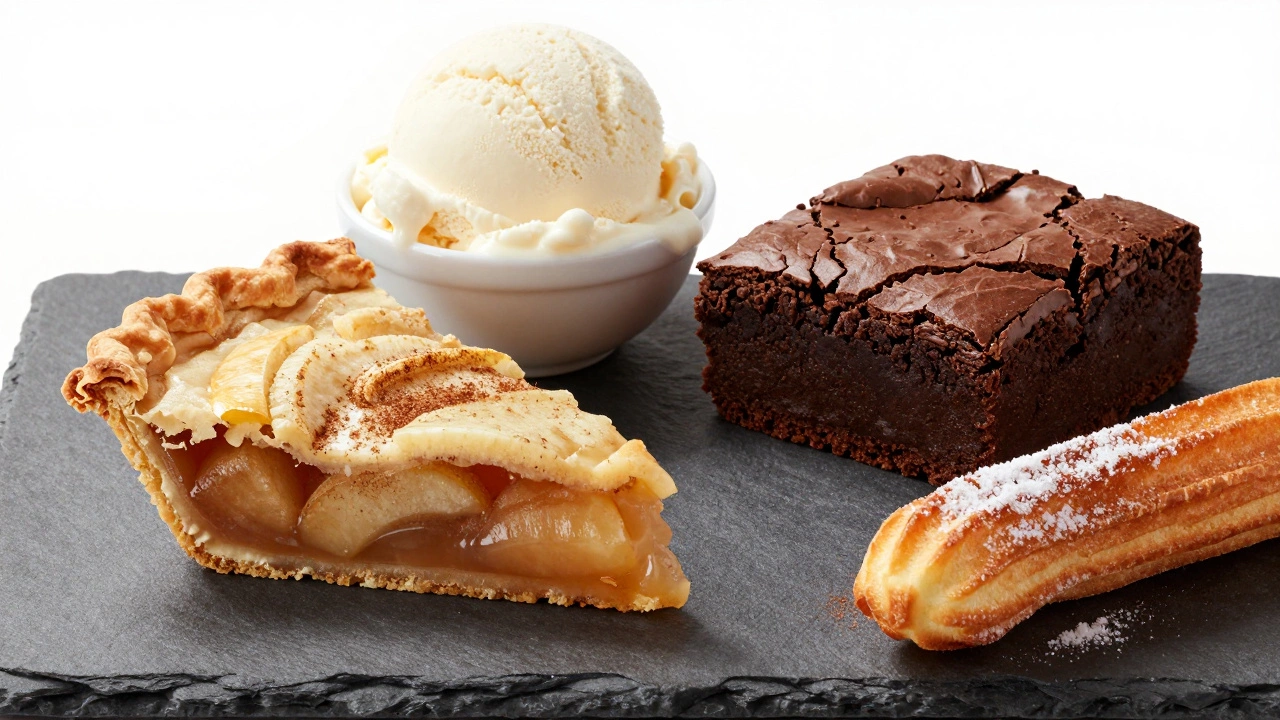
Apple Pie is a baked dessert featuring a crust filled with sliced apples, cinnamon, sugar, and lemon juice, often served with vanilla ice cream. The phrase "as American as apple pie" exists for a reason. Apples were one of the first crops cultivated by European settlers, making the fruit historically significant. The pie itself is versatile. You can make it rustic and messy for a backyard barbecue or precise and flaky for a holiday dinner. The addition of vanilla ice cream-a technique known as à la mode-adds a temperature contrast that heightens the experience.
Another contender is Brownies, a square-cut chocolate bar cookie, characterized by a rich, moist, and fudgy texture. Brownies originated in Chicago in the early 20th century. They are less formal than cake and easier to share. A warm brownie, slightly underbaked in the center, offers a psychological reset button. It’s indulgent without requiring a full sit-down course.
Don’t overlook Churros, fried dough pastry dusted with cinnamon sugar, often served with chocolate dipping sauce. While Spanish in origin, churros have been fully adopted into American culture, particularly in Texas and California due to Mexican influence. They are crispy on the outside, soft on the inside, and incredibly portable. They bridge the gap between snack and dessert perfectly.
Why Do We Crave These Specific Foods?
It’s not just nostalgia. There is science behind why we reach for mac and cheese or fried chicken when we’re down. These foods typically share three characteristics: high fat, high carbohydrate content, and soft textures.
Fat and carbs trigger the release of dopamine in the brain, the neurotransmitter associated with pleasure and reward. Soft textures require less effort to chew, which can be soothing when you are emotionally exhausted. Think about it: when you’re sick, you don’t want a steak that requires work. You want chicken noodle soup or mashed potatoes. The body seeks efficiency in digestion when energy levels are low.
Furthermore, many American comfort foods are "processed" in a way that creates consistency. Boxed mac and cheese tastes the same whether you buy it in Seattle or Miami. This predictability is comforting in a chaotic world. You know exactly what you are getting. There is no surprise, no risk. Just reliable flavor.
Modern Twists on Classic Comfort
In 2026, the definition of comfort food is evolving. Health consciousness and dietary restrictions have forced chefs and home cooks to reimagine these classics. Does vegan mac and cheese still count as comfort food? Absolutely.
Plant-based alternatives have improved drastically. Cashew-based cheese sauces now mimic the creaminess of dairy without the heaviness. Jackfruit pulled "pork" sandwiches offer the textural satisfaction of BBQ without the animal product. Even gluten-free versions of meatloaf and pies exist, using almond flour or oat blends to replicate traditional textures.
This evolution doesn’t dilute the concept; it expands it. Comfort is subjective. If a gluten-free brownie makes you feel safe and happy, it is comfort food. The goal hasn’t changed-only the ingredients have adapted to modern lifestyles.
How to Make Your Own Comfort Food
You don’t need a professional kitchen to recreate these feelings. Here is how to approach cooking comfort food at home:
- Embrace Imperfection: Comfort food isn’t about plating aesthetics. It’s about flavor and texture. A lumpy meatloaf is still delicious. A broken pie crust still holds the filling.
- Use Quality Fats: Butter, cream, and oil are not enemies here. They carry flavor and provide mouthfeel. Don’t skimp on the butter in your mashed potatoes.
- Layer Flavors: Simple ingredients need depth. Sauté your onions until they are caramelized. Toast your breadcrumbs. Season your water when boiling pasta. These small steps elevate basic dishes.
- Batch Cook: Many comfort foods, like chili, stew, and lasagna, taste better the next day. Plan ahead so you have leftovers ready for those tough evenings.
Whether you are craving the cheesy pull of mac and cheese or the savory hit of a hotdish, American comfort food is about connection. It connects us to our past, our regions, and our own need for care. So, turn on the oven, boil some water, and feed yourself well.
What is the number one comfort food in America?
While preferences vary by region, macaroni and cheese consistently ranks as the top comfort food in national surveys. Its combination of creamy cheese, soft pasta, and nostalgic associations with childhood makes it a universal favorite across all demographics.
Is pizza considered American comfort food?
Yes, absolutely. Although pizza originated in Italy, New York-style pizza and Detroit-style deep-dish pizza are distinctly American variations. Pizza is widely consumed as a casual, satisfying meal that fits the criteria of comfort food due to its cheesy, carb-heavy nature and social sharing aspect.
What are healthy alternatives to traditional comfort food?
You can swap heavy cream for Greek yogurt in sauces, use cauliflower instead of potatoes for mash, and choose whole-grain pasta for mac and cheese. Additionally, baking chicken instead of frying it reduces fat while maintaining protein content. These swaps keep the comforting textures and flavors without the excessive calories.
Why do people crave comfort food when they are stressed?
Stress triggers cortisol production, which can increase appetite for high-energy foods. High-fat and high-carb foods stimulate dopamine release in the brain, providing temporary relief and a sense of reward. Psychologically, these foods are also linked to positive memories, offering emotional security during difficult times.
What is the difference between soul food and comfort food?
Soul food is a specific cuisine originating from African American communities in the Southern United States, featuring dishes like collard greens, black-eyed peas, and fried chicken. While soul food is a type of comfort food for many, "comfort food" is a broader term that includes any dish providing emotional satisfaction, regardless of cultural origin.