
Low-Carb Swap Calculator
Carb Savings
By switching to the low-carb alternative
Ever stared at a bowl of white rice or a stack of fluffy pancakes and felt that familiar post-meal slump? You aren't alone. For years, we were told carbohydrates were the foundation of every meal. But if you're looking to stabilize your energy, manage your weight, or simply feel less bloated, cutting back on refined carbs is often the first step. The real question isn't whether you can do it-it's what you eat instead. Replacing carbs doesn't mean starving yourself; it means swapping empty calories for nutrient-dense foods that keep you full.
Quick Summary: Top Carb Swaps
- Rice & Pasta: Swap with cauliflower rice, zucchini noodles (zoodles), or shirataki noodles.
- Bread & Wraps: Use lettuce wraps, portobello mushroom caps, or almond flour tortillas.
- Potatoes: Try roasted radishes, mashed cauliflower, or spaghetti squash.
- Sugar & Sweets: Opt for stevia, erythritol, or fresh berries instead of candy or pastries.
- Cereal & Oats: Choose chia pudding, hemp seeds, or nuts for breakfast crunch.
The Problem with Refined Carbs
Before we jump into the swaps, let's talk about why you might want to make this change in the first place. Not all carbs are created equal. Whole grains and vegetables have fiber and nutrients. But refined carbohydrates-like white bread, sugary cereals, and pastries-are stripped of their nutritional value during processing. When you eat them, your body breaks them down into glucose rapidly. This causes a spike in blood sugar, followed by a crash. That crash is what leaves you craving more food an hour later.
By replacing these refined sources with low-carb alternatives, you aim to keep your blood sugar levels steady. This approach is central to diets like the ketogenic diet, Atkins, or general low-carb eating. The goal is to shift your body’s fuel source from quick-burning glucose to slower-burning fats and proteins. It’s not about eliminating carbs entirely unless you’re doing strict keto; it’s about choosing quality over quantity.
Replacing Grains: Rice and Pasta Alternatives
If pasta and rice are staples in your kitchen, cutting them out feels like losing a best friend. Fortunately, nature provides excellent stand-ins that mimic the texture and satisfaction of these grains without the carb load.
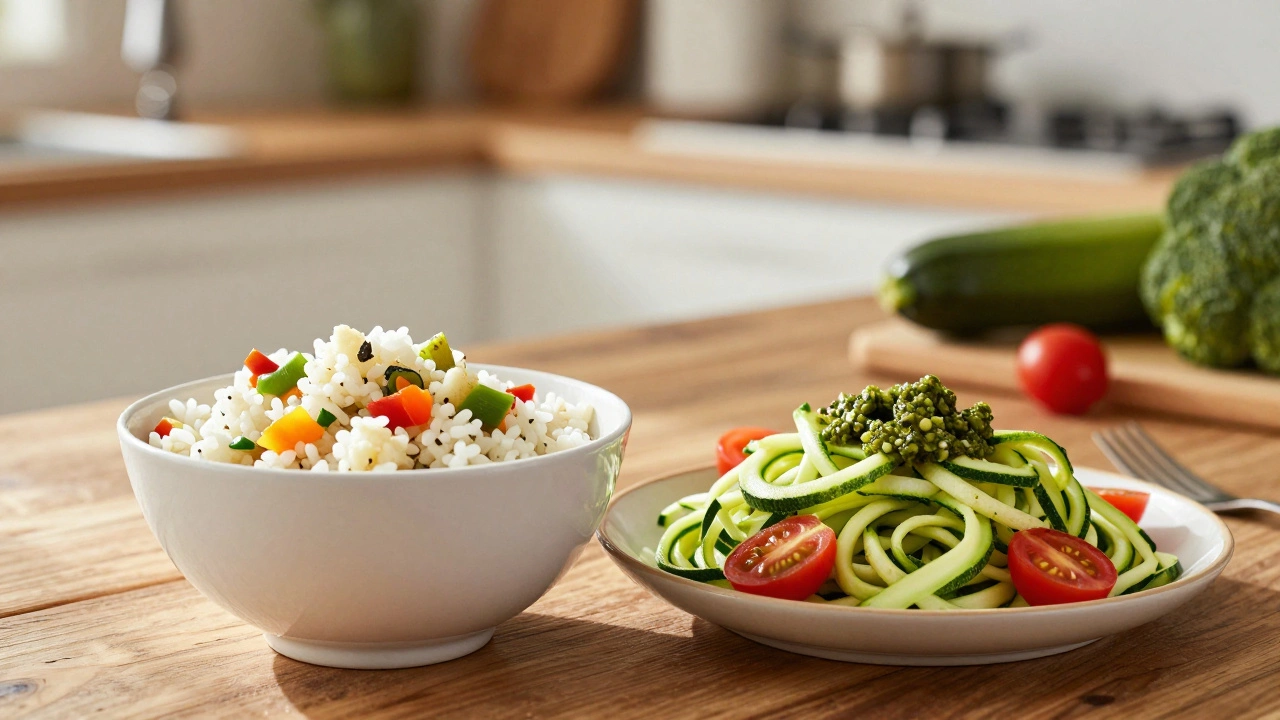
Cauliflower Rice is the gold standard for rice replacements. You just pulse florets in a food processor until they resemble grains. It absorbs sauces beautifully, making it perfect for stir-fries or burrito bowls. One cup of riced cauliflower has only about 5 grams of net carbs, compared to 45 grams in a cup of cooked white rice. It’s a massive difference.
For pasta lovers, Zucchini Noodles, also known as Zoodles, are a game-changer. Use a spiralizer to turn medium zucchini into long, noodle-like strands. They cook in minutes and pair well with marinara or pesto. Just be careful not to overcook them, or they become mushy. Another option is Shirataki Noodles. Made from konjac yam, these noodles are nearly zero-calorie and zero-carb. They have a chewy texture that mimics wheat pasta surprisingly well, especially when sautéed briefly to remove excess moisture.
| Traditional Food | Low-Carb Alternative | Net Carbs (per cup) | Fiber Content |
|---|---|---|---|
| White Rice | Cauliflower Rice | 45g vs. 3g | 0.6g vs. 2g |
| Spaghetti Pasta | Zucchini Noodles | 43g vs. 3g | 2.5g vs. 1g |
| Mashed Potatoes | Mashed Cauliflower | 37g vs. 5g | 4g vs. 2g |
| Bread Slice | Lettuce Wrap | 12g vs. 1g | 2g vs. 1g |
Starchy Vegetables: Potato Substitutes
Potatoes are comforting, but they are dense in starch. If you miss the creamy texture of mashed potatoes or the crispiness of fries, there are clever tricks to satisfy that craving.
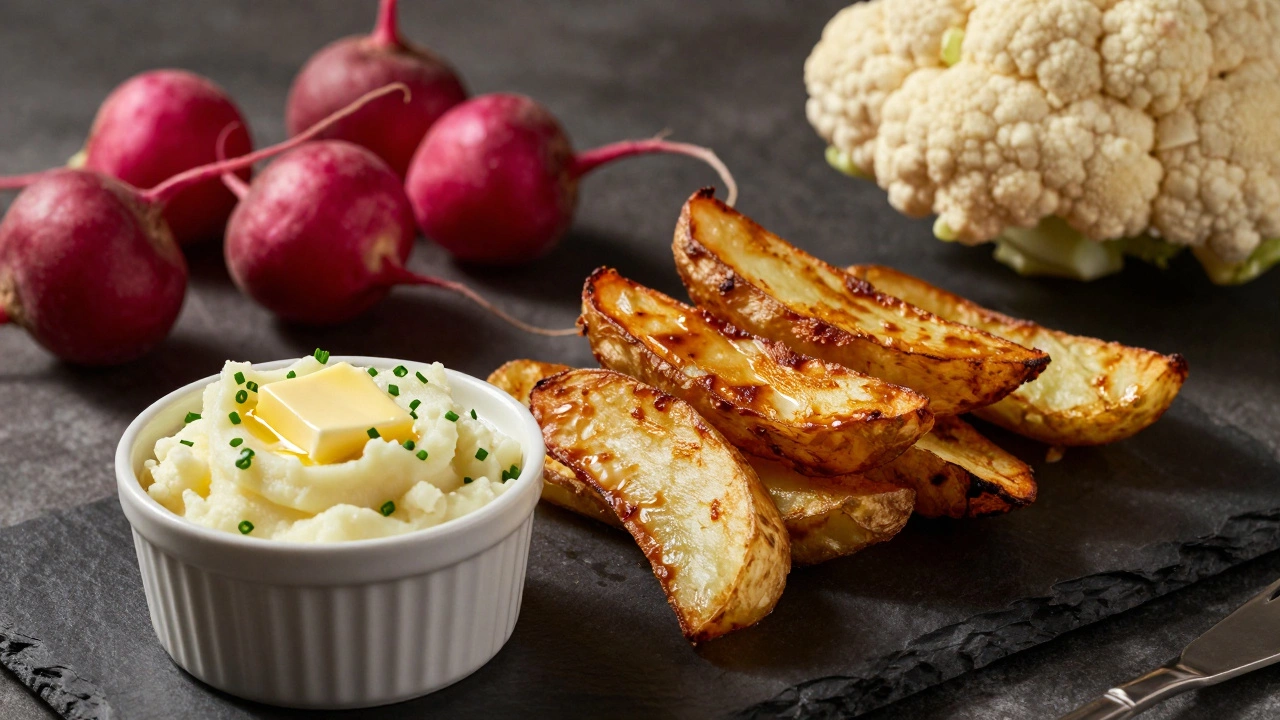
Mashed Cauliflower is the easiest swap. Steam cauliflower florets until tender, then blend them with butter, garlic powder, and cream cheese. The result is a creamy, savory side dish that looks and tastes remarkably like mashed potatoes. It’s rich in vitamin C and potassium, offering better nutrition than its starchy cousin.
For fries, try Roasted Radishes. Yes, radishes. When raw, they are peppery and crunchy. But roast them at 400°F (200°C) with olive oil and rosemary, and they transform. They lose their bite and develop a nutty, potato-like flavor. They’re crispy on the outside and soft inside, making them a perfect companion to burgers or steak.
Another great option is Spaghetti Squash. Once baked and scraped, the flesh forms long, stringy strands that hold up better than zucchini noodles in heavy sauces. It has a mild, slightly sweet flavor that works well with Italian dishes.
Bread and Baking: Flour Alternatives
Baking without wheat flour can seem daunting, but it opens up a world of new textures and flavors. Wheat flour is high in gluten and carbs. To replace it, you need ingredients that provide structure and binding.
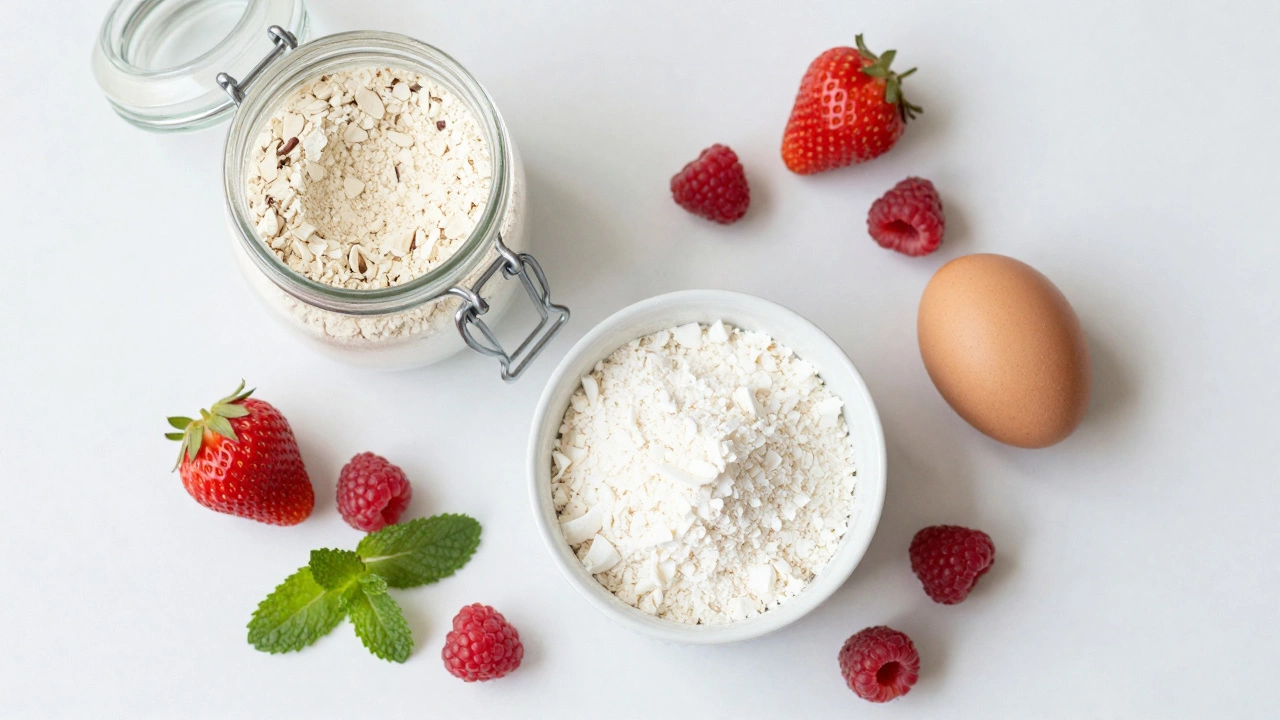
Almond Flour is the most popular substitute. Made from ground blanched almonds, it adds moisture and a rich, nutty flavor to cookies, cakes, and breads. It’s high in healthy fats and protein. However, it lacks gluten, so your baked goods won’t rise as much. You may need to add eggs or baking powder for lift.
Coconut Flour is another option, but it behaves differently. It is highly absorbent, meaning you need much less of it than almond flour. A recipe calling for one cup of wheat flour might only need a quarter cup of coconut flour. Plus, you’ll need more liquid and eggs to prevent dryness. It adds a subtle coconut taste, which pairs well with tropical desserts or savory flatbreads.
For wraps, skip the store-bought low-carb tortillas loaded with gums and fillers. Instead, use large leaves of Butter Lettuce or Romaine. They are sturdy enough to hold tacos, sandwiches, or deli meats. For a heartier wrap, try using Portobello Mushroom Caps as burger buns. Grill them lightly to soften, and they act as a delicious, umami-rich vessel for your patty.
Sweeteners: Ditching the Sugar
Sugar is pure carbohydrate. Cutting it out is crucial for reducing overall carb intake. But life without sweetness can feel bland. Fortunately, natural low-carb sweeteners exist that don’t spike insulin levels like table sugar does.
Erythritol is a sugar alcohol found naturally in some fruits. It has zero calories and zero net carbs because the body doesn’t metabolize it. It tastes very similar to sugar, though it can have a slight cooling effect in the mouth. It’s great for baking and sweetening coffee.
Stevia is derived from the leaves of the Stevia rebaudiana plant. It is hundreds of times sweeter than sugar, so you only need a tiny amount. Pure stevia extract can have a bitter aftertaste, so look for blends mixed with erythritol or monk fruit for a cleaner taste.
Monk Fruit is another natural option. Like stevia, it’s intensely sweet and calorie-free. It doesn’t cause digestive issues for most people, unlike some other sugar alcohols. It’s excellent for smoothies, yogurt, and no-bake desserts.
Breakfast Swaps: Beyond Cereal and Toast
Breakfast is often where people consume the most hidden carbs. Sugary cereals, bagels, and toast are common culprits. Switching to a high-protein, high-fat breakfast keeps you fuller longer.
Instead of oatmeal, try Chia Seed Pudding. Mix chia seeds with unsweetened almond milk and a dash of vanilla. Let it sit overnight. The seeds gel up, creating a texture similar to tapioca pudding. Top with berries and nuts for crunch.
If you crave crunch, reach for Hemp Seeds or Nuts. Sprinkle them over Greek yogurt or eat them plain. They provide healthy omega-3 fatty acids and protein. For a hot breakfast, scrambled eggs with spinach and avocado are classic for a reason. They’re filling, nutritious, and virtually carb-free.
Practical Tips for Transitioning
Changing your diet doesn’t happen overnight. Here are some practical steps to make the transition smoother:
- Read Labels: Many packaged foods hide carbs under names like maltodextrin, dextrose, or corn syrup. Always check the nutrition facts panel for total carbohydrates and subtract fiber to get net carbs.
- Prep Ahead: Spiralize zucchini or rice cauliflower on Sunday. Store them in airtight containers so they’re ready to cook during the week.
- Experiment with Spices: Without sugar and salt-heavy processed foods, spices become your best friend. Use cumin, paprika, garlic, and herbs to add depth to low-carb meals.
- Don’t Fear Fat: In a low-carb diet, fat becomes your primary energy source. Don’t be afraid to use olive oil, butter, or avocado. It helps keep you satiated.
Remember, the goal is sustainability. If you hate eating cauliflower rice every day, don’t force it. Try different vegetables and find what you enjoy. Cooking should be fun, not a punishment. By focusing on whole, unprocessed foods, you’ll likely find that your energy levels improve, your digestion gets better, and your cravings for junk food diminish.
Common Mistakes to Avoid
One common error is assuming all low-carb foods are healthy. Processed low-carb snacks often contain artificial additives, excessive sodium, or unhealthy fats. Stick to whole foods whenever possible. Another mistake is not drinking enough water. When you reduce carbs, your body sheds water weight quickly. This can lead to dehydration and electrolyte imbalances, causing headaches or fatigue. Drink plenty of water and consider adding a pinch of salt to your meals to replenish sodium.
Also, watch out for "healthy" fruits. While fruits are nutritious, some are higher in sugar than others. Berries like strawberries, raspberries, and blackberries are lower in carbs and higher in fiber. Tropical fruits like mangoes and bananas are very high in sugar and should be limited or avoided on a strict low-carb plan.
Final Thoughts on Carb Replacement
Replacing carbs is less about restriction and more about expansion. You’re expanding your palate to include vegetables and proteins you might have overlooked before. It’s about discovering that cauliflower can be creamy, radishes can be crispy, and almond flour can make delicious cookies. With the right swaps, you don’t have to give up the foods you love; you just have to prepare them differently. Start small, experiment with one or two swaps per week, and listen to your body. You might be surprised by how good you feel.
Can I eat any fruits on a low-carb diet?
Yes, but choose wisely. Berries such as strawberries, raspberries, and blackberries are the best options because they are lower in sugar and higher in fiber. Avoid high-sugar fruits like bananas, grapes, and mangoes if you are strictly limiting carbs.
Is almond flour healthier than wheat flour?
Almond flour is generally considered healthier for low-carb diets because it is lower in carbohydrates, higher in protein and healthy fats, and gluten-free. However, it is more calorie-dense, so portion control is important.
What is the best substitute for white rice?
Cauliflower rice is the most popular and versatile substitute. It has a similar texture when cooked and absorbs flavors well. Broccoli rice is another option if you prefer a stronger flavor.
Do I need to count carbs on a low-carb diet?
It depends on your goals. For general health improvement, estimating portions and avoiding obvious high-carb foods may be enough. For weight loss or ketosis, tracking net carbs (total carbs minus fiber) using an app is helpful to stay within your daily limit.
Can I still eat vegetables if I'm cutting carbs?
Absolutely. Non-starchy vegetables like leafy greens, broccoli, cauliflower, zucchini, and peppers are essential. They provide fiber, vitamins, and minerals while keeping carb counts low. Starchy vegetables like potatoes and corn should be limited.
Are low-carb snacks expensive?
Not necessarily. While almond flour and specialty products can be pricey, many low-carb staples like eggs, chicken, cabbage, and seasonal vegetables are affordable. Buying in bulk and cooking at home saves money compared to buying pre-packaged low-carb snacks.
How long does it take to adapt to a low-carb diet?
Most people experience an adjustment period of one to two weeks, often called the "keto flu," characterized by fatigue or headaches. This usually resolves as your body adapts to burning fat for fuel. Staying hydrated and maintaining electrolyte balance helps ease the transition.