
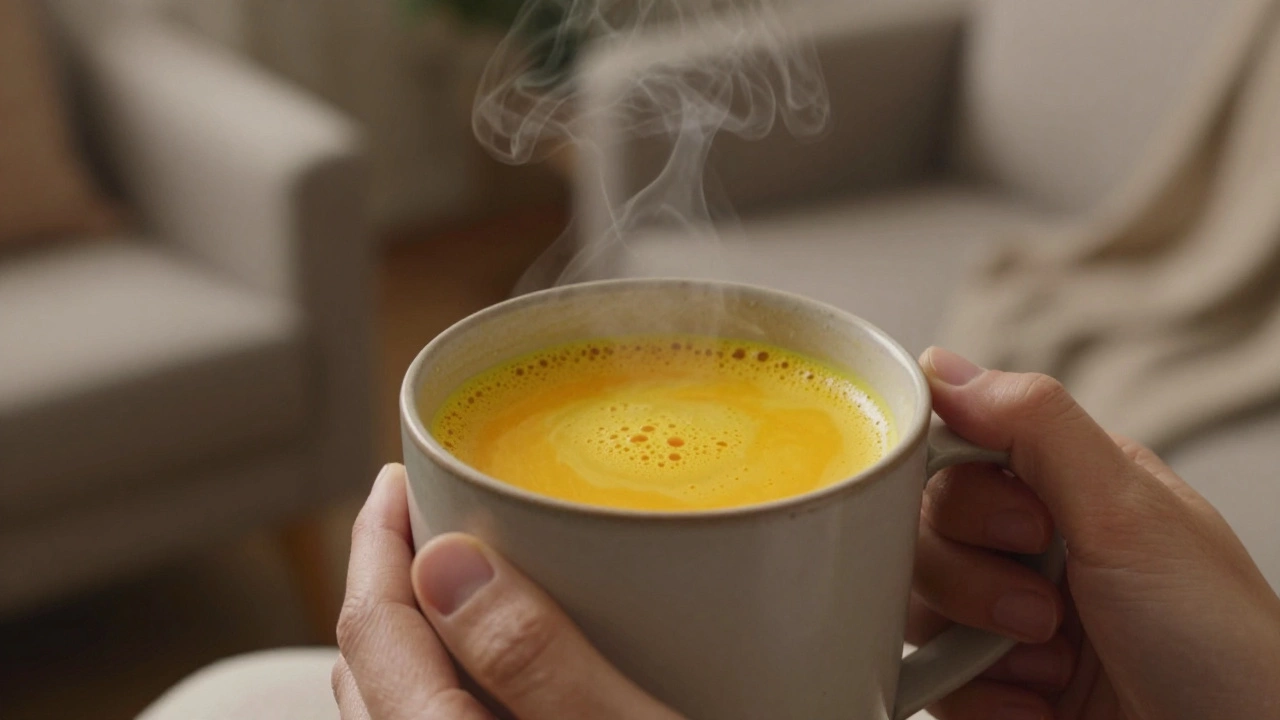
Anxiety Relief Meal Builder
Select Your Ingredients (Max 4)
Your Calming Plate
- No ingredients selected yet.
Nutritional Analysis
Calming Potential Score
0/100
Key Nutrients Detected:
Why this helps:
That tightness in your chest. The racing thoughts that won’t shut off. You know the feeling. It’s not just "stress"; it’s a physical reaction to an overloaded nervous system. While therapy and medication are vital tools for many, what you put on your plate plays a surprisingly powerful role in how your brain handles fear and tension.
You might think of comfort food as greasy fries or heavy ice cream. But true nutritional comfort comes from foods that actively regulate your neurotransmitters. We’re talking about lowering cortisol (the stress hormone) and boosting serotonin (the feel-good chemical). This isn’t about dieting; it’s about fueling your body to handle life’s pressure with more grace.
The Gut-Brain Connection: Why Food Matters
Your gut is often called your "second brain," and for good reason. About 95% of your body’s serotonin is produced in the gastrointestinal tract. If your gut health is compromised by processed sugars and inflammatory oils, your mood regulation suffers. Conversely, feeding your gut microbiome the right nutrients can stabilize your emotional baseline.
When you eat high-sugar foods, you get a quick dopamine hit followed by a crash. That crash mimics anxiety symptoms: jitteriness, fatigue, and irritability. To break this cycle, we need foods that provide steady energy and specific minerals like magnesium, which acts as a natural relaxant for muscles and nerves.
Top Nutrients for Calming the Mind
Before diving into recipes, let’s look at the key players in anxiety relief. Understanding these helps you make better choices even when you’re not cooking one of these specific meals.
- Magnesium: Known as nature’s chill pill. Deficiency is linked to increased anxiety. Found in pumpkin seeds, spinach, and dark chocolate.
- Omega-3 Fatty Acids: Reduce inflammation in the brain and lower cortisol levels. Best sources include salmon, walnuts, and flaxseeds.
- L-Theanine: An amino acid found in green tea that promotes relaxation without drowsiness. It increases alpha brain waves associated with calm focus.
- B Vitamins: Especially B6 and B12, which help produce neurotransmitters. Whole grains, eggs, and leafy greens are packed with them.
- Tryptophan: The precursor to serotonin. Turkey, chicken, and dairy contain tryptophan, but it needs carbs to cross the blood-brain barrier effectively.
Recipe 1: Warm Turmeric Golden Milk Latte
This isn’t just a trendy drink; it’s an ancient remedy. Turmeric contains curcumin, a compound with potent anti-inflammatory and antioxidant effects that may improve symptoms of depression and anxiety. When paired with black pepper, absorption increases by up to 2000%.
| Ingredient | Amount | Benefit |
|---|---|---|
| Almond milk (or oat) | 1 cup | Creamy base, low calorie |
| Turmeric powder | 1 tsp | Anti-inflammatory |
| Ginger root (fresh, grated) | 1/2 tsp | Digestive aid, warmth |
| Honey | 1 tbsp | Natural sweetener |
| Black pepper | Pinch | Boosts turmeric absorption |
Heat the milk gently in a small saucepan. Whisk in the turmeric, ginger, and honey. Simmer for 5 minutes-don’t boil, or you’ll destroy some beneficial compounds. Add the black pepper at the end. Sip slowly. The ritual of warming your hands around the mug triggers the parasympathetic nervous system, telling your body it’s safe to relax.
Recipe 2: Dark Chocolate & Walnut Energy Bites
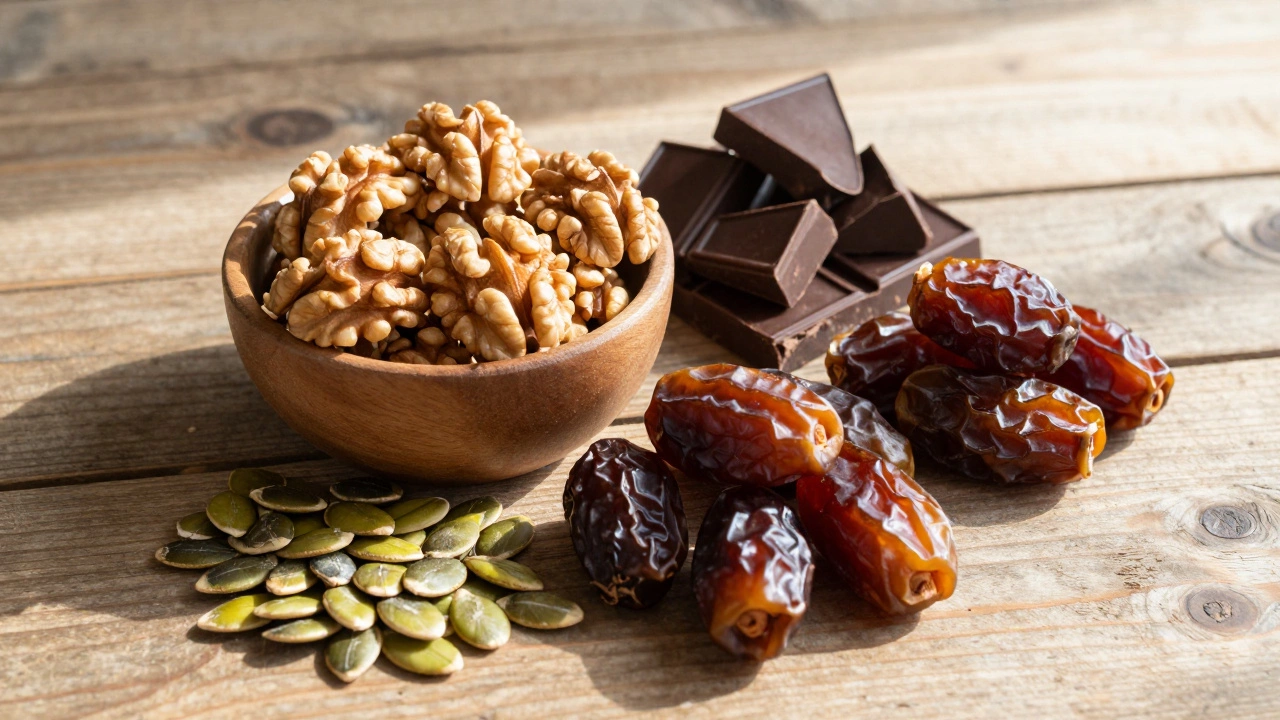
Craving something sweet? Don’t reach for the candy bar. Dark chocolate (at least 70% cocoa) is rich in flavonoids, which improve blood flow to the brain and reduce stress hormones. Walnuts add omega-3s and magnesium. These no-bake bites take 10 minutes and require zero cooking skills.
- In a food processor, pulse 1 cup of raw walnuts until they resemble coarse crumbs.
- Add 1/2 cup of pitted dates (soaked in warm water if dry), 2 tablespoons of unsweetened cocoa powder, and 1 tablespoon of almond butter.
- Pulse until the mixture sticks together when pressed. If it’s too dry, add a teaspoon of water.
- Roll into 1-inch balls. Optionally, roll them in extra cocoa powder or shredded coconut.
- Refrigerate for 20 minutes to firm up.
Keep these in the fridge. When anxiety spikes, eat one bite at a time. The slow release of energy prevents the sugar crash that worsens jitters.
Recipe 3: Salmon & Spinach Omega Bowl
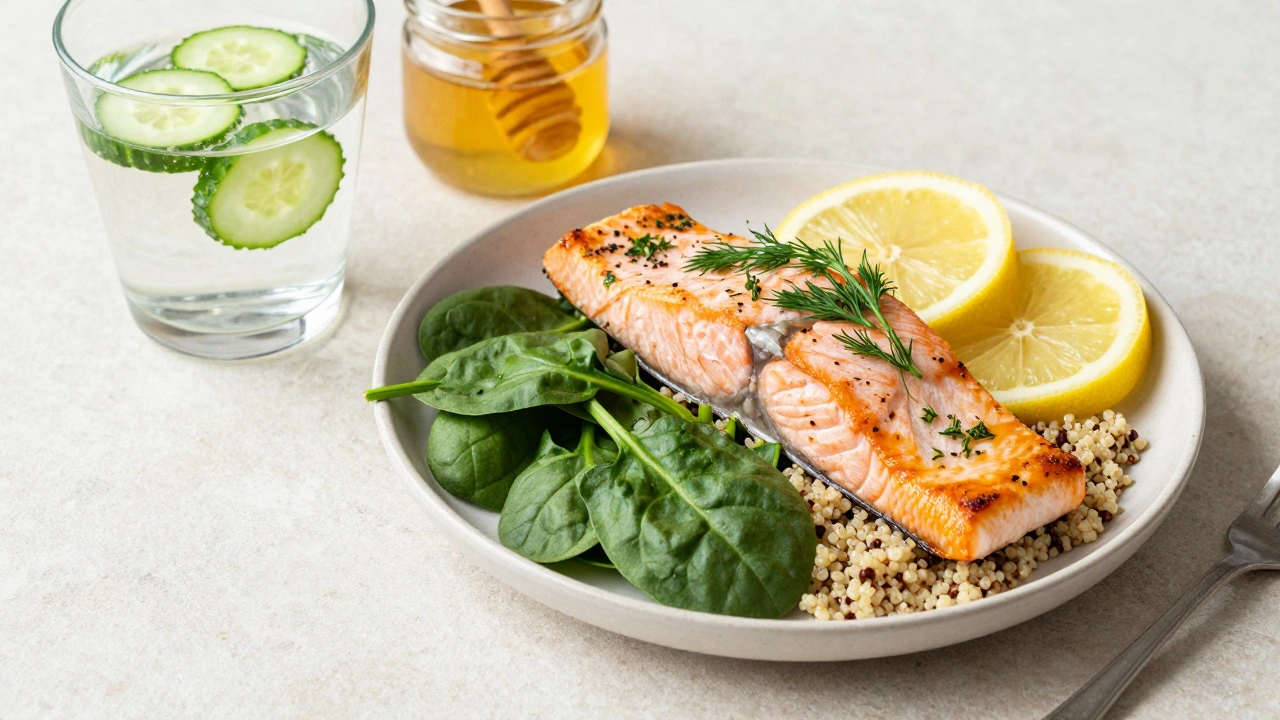
Fatty fish is arguably the most important food for mental health. Salmon is loaded with EPA and DHA, types of omega-3 fatty acids that support brain cell membrane health. Studies show that people who eat fish regularly have lower rates of anxiety disorders.
To make this easy weeknight meal:
- Season a salmon fillet with lemon juice, garlic powder, and dill.
- Bake at 400°F (200°C) for 12-15 minutes until flaky.
- Serve over a bed of sautéed spinach and quinoa. Spinach provides magnesium, while quinoa offers complete protein and B vitamins.
- Drizzle with olive oil for extra anti-inflammatory benefits.
This combination hits multiple calming pathways at once: reducing inflammation, stabilizing blood sugar, and providing essential fats for brain function.
Recipe 4: Banana Oat Smoothie with Chia Seeds
Breakfast sets the tone for your day. A banana is high in potassium and vitamin B6, both crucial for nerve transmission. Oats contain complex carbohydrates that help tryptophan enter the brain, boosting serotonin production. Chia seeds add fiber and omega-3s to keep you full and focused.
Blend one ripe banana, 1/2 cup rolled oats, 1 tablespoon chia seeds, 1 cup almond milk, and a handful of ice. The result is a creamy, filling drink that feels indulgent but works biologically to soothe your system. The texture is thick and satisfying, which can be psychologically comforting during stressful mornings.
Recipe 5: Chamomile Honey Toast with Avocado
Don’t underestimate the power of simple carbs paired with healthy fats. White bread causes spikes, but whole-grain toast provides steady glucose. Avocado adds monounsaturated fats and magnesium. Top it with a drizzle of chamomile-infused honey for an extra layer of calm.
To infuse the honey, steep a chamomile tea bag in two tablespoons of liquid honey for 10 minutes, then remove the bag and stir. Spread mashed avocado on toasted whole-wheat bread and drizzle with the chamomile honey. The bitterness of the avocado balances the sweetness, creating a savory-sweet profile that feels like a hug on a plate.
Recipe 6: Pumpkin Seed Trail Mix
Pumpkin seeds (pepitas) are one of the highest natural sources of magnesium. Just one ounce provides nearly 37% of your daily requirement. Magnesium blocks adrenaline receptors, preventing the "fight or flight" response from going into overdrive.
Mix 1/2 cup roasted pumpkin seeds, 1/4 cup dried apricots (for potassium), 1/4 cup almonds, and 1 square of dark chocolate. Keep this mix in your desk drawer or car. When you feel tension building, chew slowly. The act of chewing itself reduces stress, and the magnesium starts working within hours.
Recipe 7: Green Tea & Matcha Latte
If coffee makes you anxious, switch to matcha. Regular green tea has L-theanine, but matcha (powdered whole leaves) has higher concentrations. Unlike caffeine, which stimulates the sympathetic nervous system, L-theanine promotes relaxation while maintaining alertness. This unique combo prevents the jitters associated with coffee.
Whisk 1 teaspoon of ceremonial-grade matcha powder with 2 ounces of hot water (not boiling, about 175°F) until frothy. Steam 8 ounces of oat milk and pour it over the matcha. Sweeten lightly with stevia or honey if needed. Drink this in the afternoon to avoid sleep disruption while still getting a calm energy boost.
Foods to Avoid When Anxiety Is High
Just as some foods calm you, others trigger your stress response. Be mindful of these common culprits:
- Excessive Caffeine: More than 400mg a day can mimic anxiety symptoms, including rapid heartbeat and restlessness.
- Alcohol: While it may feel relaxing initially, alcohol disrupts sleep architecture and increases GABA rebound anxiety the next day.
- Refined Sugars: Cause blood sugar crashes that lead to irritability and panic-like sensations.
- High-Sodium Processed Foods: Can increase blood pressure and physical tension, making you feel physically anxious.
Building a Long-Term Calming Diet
You don’t need to overhaul your entire kitchen overnight. Start by swapping one anxiety-triggering habit for one calming one. Replace your morning latte with golden milk. Swap afternoon cookies for pumpkin seed trail mix. Over time, these small changes rewire your relationship with food and stress.
Remember, food is not a cure-all for clinical anxiety disorders, but it is a powerful tool for management. By nourishing your gut and balancing your neurotransmitters, you give your mind the best possible foundation to handle whatever comes your way.
Can dark chocolate really help with anxiety?
Yes, dark chocolate with at least 70% cocoa content contains flavonoids and magnesium, which have been shown to reduce cortisol levels and improve mood. However, moderation is key due to its calorie density and small amount of caffeine.
Is coffee bad for anxiety?
For many people, yes. Caffeine stimulates the central nervous system, which can mimic or exacerbate anxiety symptoms like heart palpitations and jitteriness. If you are sensitive to caffeine, switching to decaf, green tea, or matcha can significantly reduce anxiety triggers.
How long does it take for dietary changes to affect anxiety?
Some effects, like blood sugar stabilization, happen within hours. However, significant changes in gut health and neurotransmitter balance typically take 2-4 weeks of consistent dietary habits. Consistency is more important than perfection.
What is the best snack for immediate anxiety relief?
A combination of complex carbs and magnesium-rich foods works best. Try a handful of pumpkin seeds, a piece of dark chocolate, or apple slices with almond butter. These options prevent blood sugar crashes while providing minerals that relax the nervous system.
Does hydration impact anxiety levels?
Absolutely. Even mild dehydration can increase cortisol levels and cause physical symptoms like headaches and fatigue, which can be mistaken for or worsen anxiety. Aim for at least 8 glasses of water a day, and consider adding electrolytes if you sweat heavily.