
Italian Pasta Authenticity Checker
Select Ingredients:
Walk into any trattoria in Rome, Naples, or Bologna, and you’ll notice something strange. There is no ketchup. There is rarely a jar of red sauce sitting on the table. Instead, you see plates with just two or three ingredients that taste like they came from a five-star kitchen. If you’ve ever wondered what they actually put on pasta in Italy, the answer might surprise you: not much at all.
In Italy, pasta isn’t a blank canvas for heavy, complex sauces. It’s a vehicle for simplicity. The goal is to let high-quality ingredients shine. You won’t find twenty-herb marinara here. You’ll find olive oil, garlic, and chili flakes. Or maybe just cheese and black pepper. This approach requires better produce and sharper technique, but the results are consistently delicious. Let’s break down exactly what Italians serve with their pasta, region by region.
The Holy Trinity of Simplicity
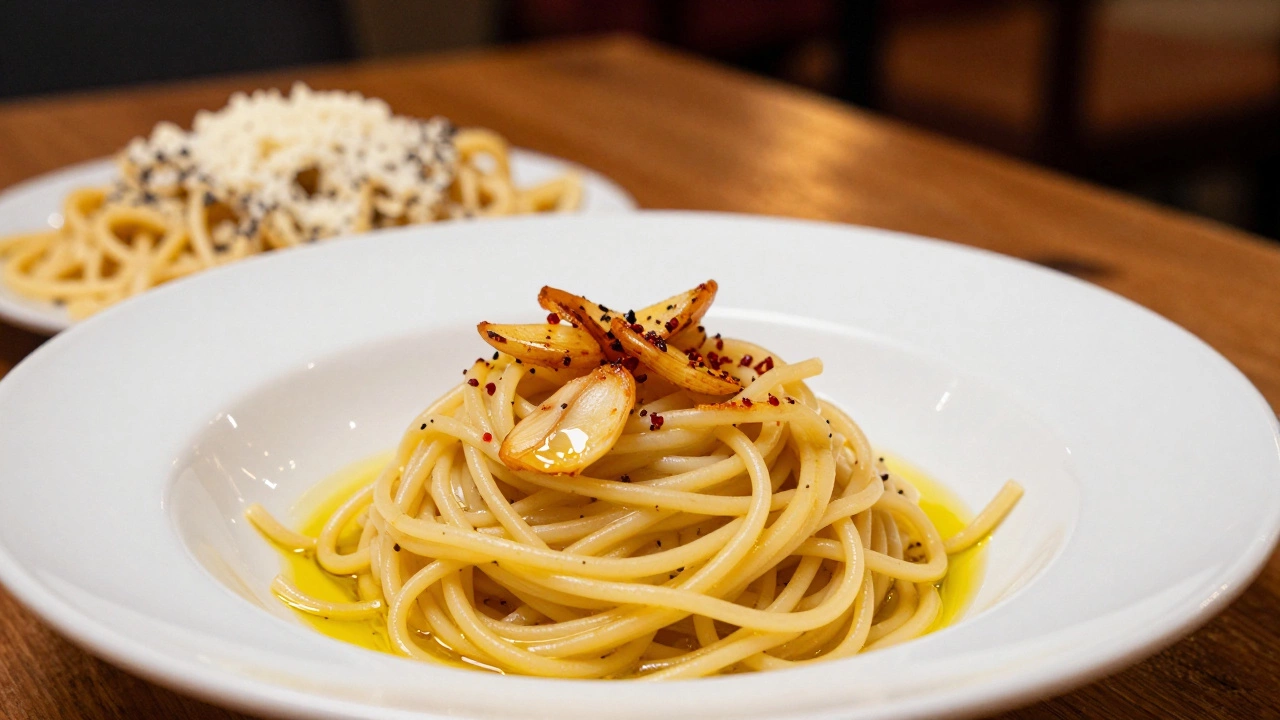
Before we get into regional specialties, we need to talk about the basics. In many Italian households, especially in the south, dinner starts with a pasta aglio e olio (garlic and oil). It sounds too simple to work, but it’s a staple for a reason. You take long strands of spaghetti, fry thin slices of garlic in extra virgin olive oil until they’re golden, add a pinch of red pepper flakes, and toss it with pasta water. That’s it.
Then there’s Cacio e Pepe. Originating from Lazio, this dish relies on just three things: Pecorino Romano cheese, freshly cracked black pepper, and starchy pasta water. The magic happens in the emulsion. You whisk the cheese and pepper into the hot water to create a creamy sauce without using any cream. It’s a lesson in chemistry as much as cooking. Many people fail at this because they boil the cheese or use low-fat substitutes. Stick to real Pecorino, and you’ll have a meal that feels luxurious despite its minimal ingredient list.
Finally, consider Pasta al Pomodoro. This isn’t the thick, sweet tomato sauce you might buy in a jar. It’s crushed San Marzano tomatoes simmered briefly with basil and olive oil. The texture should be loose, almost watery, coating the pasta lightly rather than drowning it. These three dishes-oil-based, cheese-based, and tomato-based-form the foundation of Italian home cooking.
Regional Rules: What Goes Where
Italy is small, but its culinary map is divided sharply. If you order seafood pasta in the north, you might get a confused look. If you ask for butter in the south, you’ll definitely get one. Geography dictates the pantry.
| Region | Primary Fat | Key Ingredients | Signature Dish |
|---|---|---|---|
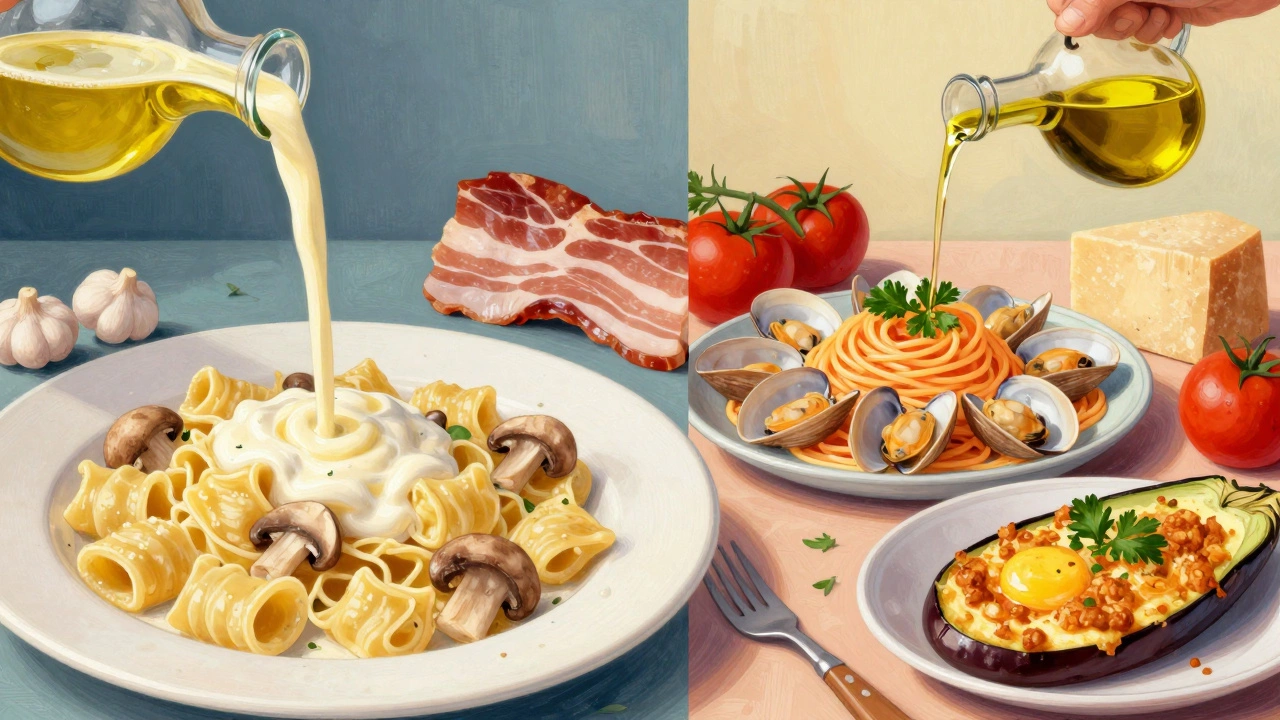
| North (Lombardy, Veneto) | Butter, Cream | Ricotta, Mushrooms, Saffron | Risotto-style pasta, Gnocchi al burro |
| Central (Lazio, Tuscany) | Olive Oil | Pecorino Cheese, Guanciale, Egg | Cacio e Pepe, Carbonara |
| South (Campania, Sicily) | Olive Oil | Tomatoes, Anchovies, Seafood | Pasta alla Norma, Spaghetti alle Vongole |
In the north, where the climate is cooler and dairy farming is common, you’ll see butter and cream used more frequently. Dishes like pasta al ragù bolognese often finish with a splash of milk or cream to soften the acidity of the tomatoes. In contrast, the south is bathed in sun, producing abundant olives and tomatoes. Here, olive oil is king. You’ll rarely see dairy mixed with seafood in the south; it’s considered a clash of flavors. Keep your fish pasta free of cheese unless you’re in a very specific local context.
The Meat and Cheese Classics
When meat enters the picture, it’s usually cured pork. Fresh ground beef is less common in traditional southern sauces. Take Spaghetti alla Carbonara, for example. Despite what you might see on international menus, there is no cream in authentic carbonara. The creaminess comes from eggs, Pecorino Romano, and rendered fat from guanciale (cured pork jowl). Some versions use pancetta if guanciale is unavailable, but guanciale provides a distinct, gamey richness that pancetta lacks.
Another heavyweight is Amatriciana. Originally from the town of Amatrice in Lazio, this sauce started as a vegetarian dish called Griscia (tomato and cheese). Later, guanciale was added. Today, it’s defined by its trio: guanciale, Pecorino, and tomato. The tomato should be subtle, playing second fiddle to the salty pork and sharp cheese. If the sauce tastes overwhelmingly like tomato paste, it’s likely not made correctly.
For those who prefer beef, Ragù alla Bolognese is the gold standard. But here’s the twist: Italians don’t serve it over spaghetti. They pair it with tagliatelle, a wide egg noodle that can hold up to the hearty, slow-cooked meat sauce. The ragù itself contains soffritto (onion, carrot, celery), beef, sometimes pork, wine, broth, and a touch of milk. It simmers for hours, resulting in a rich, savory condiment rather than a soup-like sauce.
Vegetarian and Seafood Variations
Vegetarian pasta in Italy is often overlooked by tourists, but it’s deeply rooted in tradition. Pasta alla Norma from Sicily is a perfect example. It features fried eggplant, tomato sauce, and Ricotta Salata (a salted, aged ricotta). The name supposedly references the opera Norma, reflecting the intensity of the flavor profile. The eggplant must be fried until golden to remove bitterness and absorb the olive oil, creating a creamy texture that pairs well with the acidic tomatoes.
Seafood pasta is another pillar, particularly in coastal regions. Spaghetti alle Vongole (spaghetti with clams) is perhaps the most famous. The sauce is white, made with olive oil, garlic, white wine, parsley, and fresh clams. No tomato. No cheese. The briny juice from the clams becomes the sauce when mixed with the pasta water. It’s light, refreshing, and incredibly addictive. When making this at home, ensure your clams are fresh and scrubbed clean; sand in your pasta is a dealbreaker.
The Secret Ingredient: Pasta Water
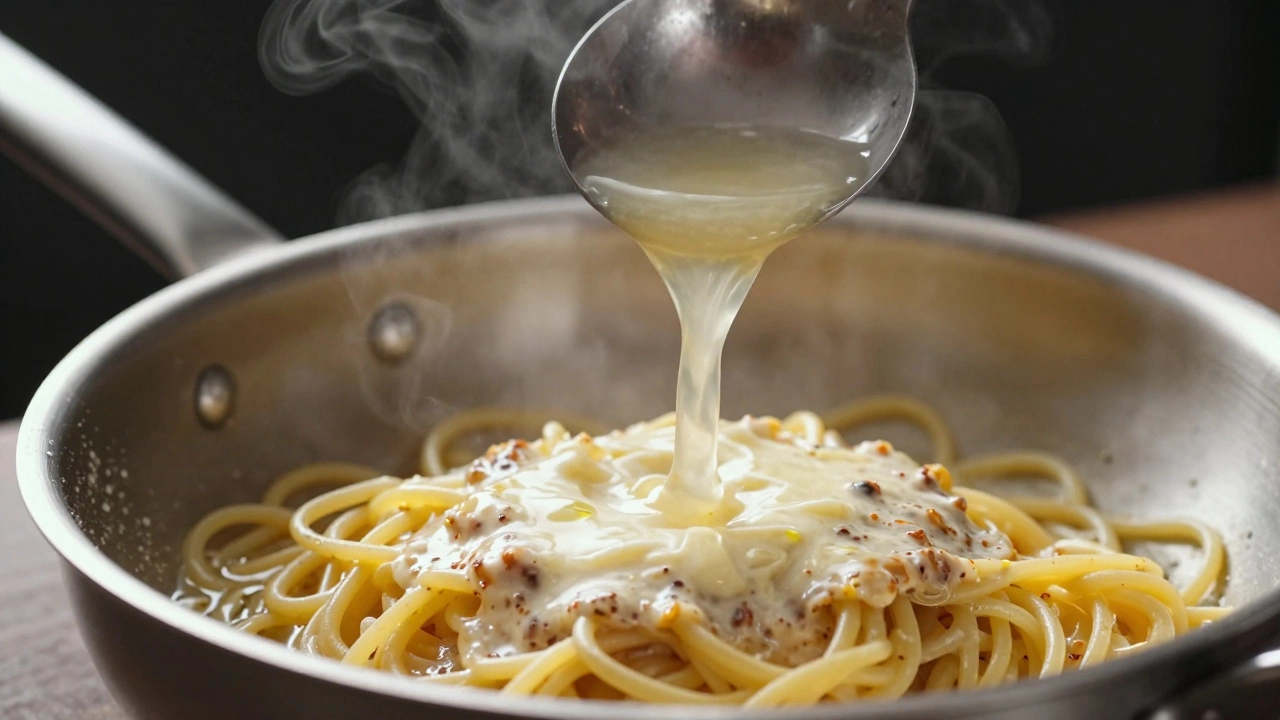
If there’s one thing every Italian cook knows, it’s the value of acqua di cottura (pasta water). This starchy liquid is the glue that binds sauce and pasta together. When you drain your pasta, save a cup of that cloudy water. Add it to your pan while tossing the pasta with your sauce. The starch helps emulsify fats (like olive oil or cheese) into a smooth, cohesive coating. Without it, your sauce might slide off the noodles, leaving you with dry pasta and a pool of oil at the bottom of the plate.
This technique works for everything from aglio e olio to heavy meat sauces. It’s the difference between a restaurant-quality finish and a homemade mess. Don’t rinse your pasta either; rinsing washes away the starch you need for binding. Serve immediately while the pasta is still hot and slightly al dente, as it will continue to cook in the residual heat of the sauce.
Common Mistakes to Avoid
Trying to replicate Italian pasta at home often leads to a few predictable errors. First, overcooking the pasta. Italians eat their pasta al dente, meaning it has a slight bite to it. Boiling it until soft turns it into mush. Second, using low-quality olive oil. In dishes like aglio e olio, the olive oil is the main flavor. If it tastes bitter or metallic, the whole dish suffers. Invest in a good extra virgin olive oil for finishing.
Third, adding too much sauce. Pasta should be coated, not submerged. A little goes a long way when you use proper technique. Finally, avoid mixing incompatible flavors. While fusion cuisine has its place, traditional Italian cooking respects ingredient boundaries. Don’t add cream to seafood pasta, and don’t mix Parmesan with delicate fish dishes unless you’re sure of the local custom. Stick to the classics first, and you’ll build a solid foundation for experimentation later.
Do Italians put ketchup on pasta?
No, ketchup is never used on pasta in Italy. It is considered a foreign condiment that masks the natural flavors of the ingredients. Traditional sauces rely on fresh tomatoes, olive oil, and herbs for sweetness and acidity.
What is the most popular pasta shape in Italy?
Spaghetti is widely consumed across the country, but regional preferences vary. Short shapes like penne and rigatoni are also extremely popular, especially in central and southern Italy where they hold thicker sauces well. Tagliatelle is preferred in the north for meat-based ragùs.
Is carbonara supposed to have cream?
Authentic Roman carbonara does not contain cream. The creamy texture is achieved by emulsifying eggs, Pecorino Romano cheese, and the fat from guanciale with hot pasta water. Adding cream is a modern adaptation often found outside of Italy.
Why do Italians add cheese to pasta?
Cheese adds umami, saltiness, and body to the sauce. Hard cheeses like Parmigiano Reggiano and Pecorino Romano melt into the pasta water to create a rich coating. However, cheese is typically omitted from seafood pasta dishes to avoid overpowering the delicate flavor of the fish.
Can I use regular tomatoes instead of San Marzano?
You can, but San Marzano tomatoes are grown in the volcanic soil near Mount Vesuvius and have a unique balance of sweetness and low acidity. For the best results, seek out canned whole peeled San Marzano tomatoes labeled "DOP" (Protected Designation of Origin).