
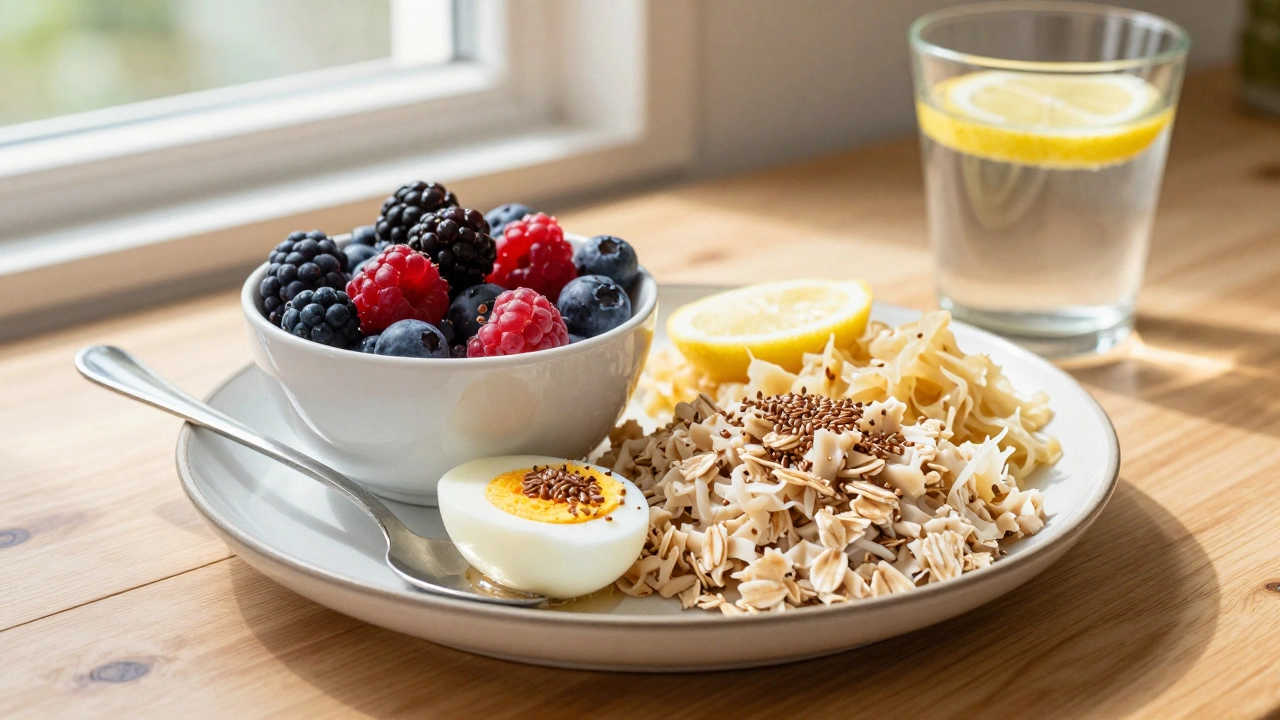
Daily Food Tracker
How are you doing today?
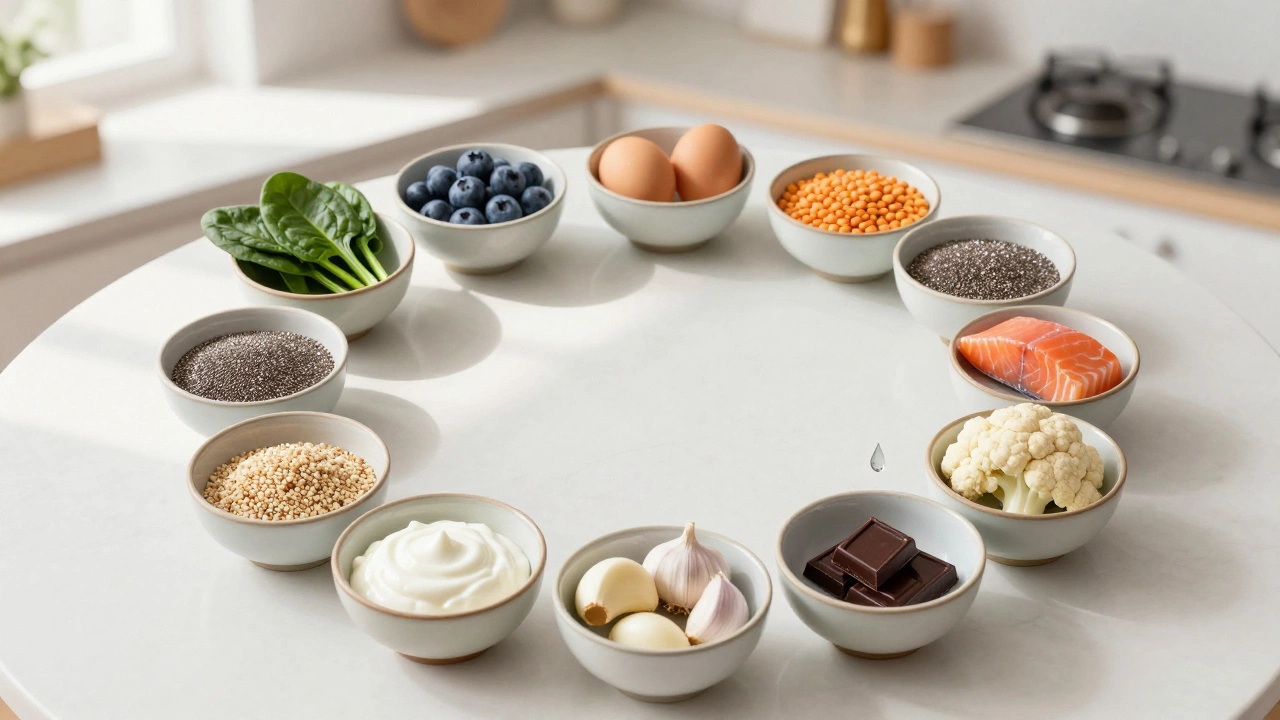
Select the foods you ate today from the list below. Aim for 5-7 of these 12 foods for optimal health.
Leafy Greens
Spinach, kale, chard
Berries
Blueberries, strawberries
Eggs
Whole eggs
Legumes
Beans, lentils, chickpeas
Nuts & Seeds
Almonds, chia, flax
Fatty Fish
Salmon, sardines
Whole Grains
Oats, quinoa, brown rice
Fermented Foods
Yogurt, sauerkraut, kimchi
Cruciferous Vegetables
Broccoli, cauliflower
Garlic
Fresh garlic
Dark Chocolate
70%+ cocoa
Water
Plain or infused water
Your Daily Score
How many of the 12 foods did you eat today?
Try for 5-7 foods daily. You're on track to better health!
Personalized Advice
Click on the foods you ate to see your daily score.
Want to feel better, have more energy, and stay healthy without complicated diets? It’s not about cutting out entire food groups or counting calories. It’s about what you add to your plate every single day. These 12 foods aren’t trendy gimmicks or expensive supplements-they’re real, accessible, and backed by decades of research. Eat them regularly, and your body will thank you.
1. Leafy Greens
Spinach, kale, Swiss chard, arugula-these aren’t just salad filler. A cup of raw leafy greens gives you more than 100% of your daily vitamin K, a good dose of folate, and antioxidants like lutein that protect your eyes. They’re low in calories but high in fiber, which keeps your gut happy and your blood sugar steady. Try tossing them into scrambled eggs, blending them into smoothies, or wilting them into soups. You don’t need to eat a giant salad-just make sure they’re on your plate.
2. Berries
Blueberries, strawberries, raspberries, blackberries-they’re all packed with anthocyanins, the pigments that give them their deep color and powerful anti-inflammatory effects. A 2023 study in the Journal of Nutrition found that people who ate at least half a cup of berries daily had lower markers of oxidative stress and better cognitive function over time. Frozen berries work just as well as fresh, and they’re cheaper. Toss them into oatmeal, yogurt, or eat them straight from the bag.
3. Eggs
For years, eggs got a bad rap because of their cholesterol. But science has moved on. A large egg gives you 6 grams of high-quality protein, choline (critical for brain health), and lutein. The yolk is where most of the nutrients live. A 2024 meta-analysis from the American Heart Association confirmed that eating one egg a day doesn’t raise heart disease risk for most people. Boil a batch on Sunday, and you’ve got a quick breakfast or snack all week.
4. Legumes
Beans, lentils, chickpeas-they’re fiber powerhouses. One cup of cooked lentils gives you 15 grams of fiber and 18 grams of protein. They’re also rich in iron, magnesium, and folate. Unlike meat, they don’t come with saturated fat. They’re cheap, shelf-stable, and versatile. Add them to soups, salads, or mash them into burgers. If you’re new to legumes, start with smaller portions-your gut might need time to adjust.
5. Nuts and Seeds
A small handful of almonds, walnuts, chia, or flaxseeds delivers healthy fats, vitamin E, and plant-based omega-3s. Walnuts have the highest amount of ALA (a type of omega-3) of any nut. Flaxseeds are rich in lignans, which may help balance hormones. Ground flaxseed absorbs better than whole, so grind it before using. Keep a small jar on your counter and sprinkle it on yogurt, oatmeal, or even toast.
6. Fatty Fish
Salmon, sardines, mackerel, trout-these fish are loaded with EPA and DHA, the most potent forms of omega-3 fatty acids. These fats reduce inflammation, support brain health, and help keep your heart rhythm steady. The Australian Heart Foundation recommends at least two servings a week. If you don’t like fish, canned sardines in olive oil are easy to toss on crackers or salad. They’re affordable, shelf-stable, and packed with calcium from the bones.
7. Whole Grains
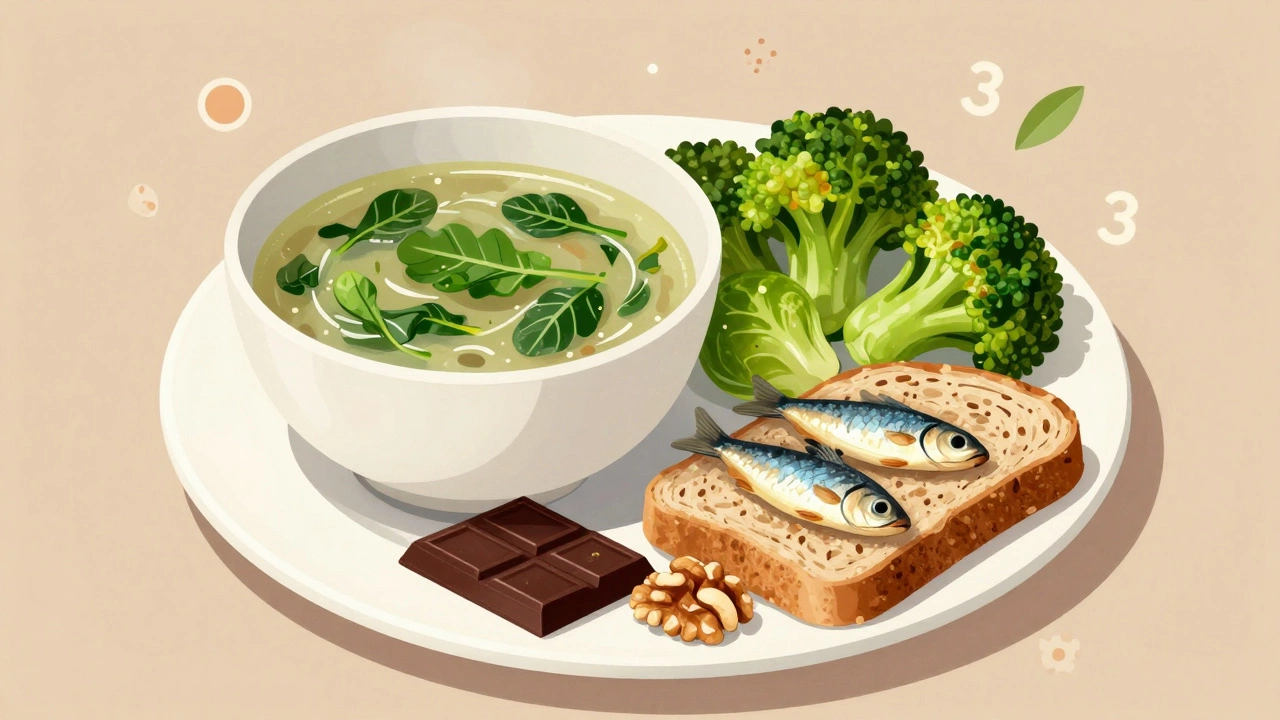
Not all carbs are bad. Oats, quinoa, brown rice, barley, and buckwheat give you slow-releasing energy and keep you full longer. They’re also rich in B vitamins and minerals like selenium and zinc. A 2022 study in The BMJ showed that people who ate 3 servings of whole grains daily had a 20% lower risk of early death from heart disease. Swap white bread for sourdough rye, white rice for brown, and sugary cereal for plain oats with fruit.
8. Fermented Foods
Your gut has more bacteria than human cells in your body-and what you feed them matters. Yogurt (with live cultures), kefir, sauerkraut, kimchi, and miso are full of probiotics that help balance your microbiome. A healthy gut means better digestion, stronger immunity, and even improved mood. Look for products labeled “live and active cultures.” Avoid pasteurized versions-they’re often stripped of good bacteria. Start with a spoonful of sauerkraut on your sandwich or a small cup of kefir in the morning.
9. Cruciferous Vegetables
Broccoli, cauliflower, Brussels sprouts, cabbage-they’re not just for side dishes. These veggies contain sulforaphane, a compound that activates your body’s natural detox pathways. A 2021 study from Johns Hopkins found that people who ate cruciferous veggies at least 3 times a week had lower levels of oxidative damage linked to cancer. Roast them with olive oil and garlic, or shred them into slaws. Don’t overcook them-keep them slightly crunchy.
10. Garlic
It’s not just for flavor. Garlic contains allicin, a sulfur compound with antimicrobial and anti-inflammatory properties. Studies show it can help lower blood pressure and improve cholesterol levels. Crush or chop garlic and let it sit for 10 minutes before cooking-it boosts allicin production. Add it to stir-fries, sauces, or even roasted vegetables. You don’t need a whole bulb-just a clove or two daily makes a difference.
11. Dark Chocolate (70% or higher)
Yes, chocolate can be part of a healthy diet. Choose dark chocolate with at least 70% cocoa. It’s rich in flavonoids, which improve blood flow and lower blood pressure. A 2023 trial in the European Journal of Nutrition found that eating 20 grams of dark chocolate daily for 4 weeks improved markers of vascular health. Skip the sugary milk chocolate. A square after dinner is enough-no need to overdo it.
12. Water
This one’s obvious, but most people don’t get enough. Dehydration doesn’t just make you feel sluggish-it affects your focus, digestion, and even your mood. Aim for 2 liters a day, more if you’re active or in hot weather. Don’t wait until you’re thirsty. Keep a bottle on your desk, sip before meals, and swap one soda for water. Herbal teas count too. If plain water feels boring, add lemon, mint, or cucumber.
How to Start
You don’t need to eat all 12 every day. Start with three. Pick the ones you already like. Maybe it’s berries with breakfast, a handful of nuts as a snack, and spinach in your lunch smoothie. Add one new food each week. Keep a simple log: “Today I ate eggs, broccoli, and flaxseed.” Small changes stick better than big overhauls.
What to Skip
These 12 foods work best when they replace processed stuff. That means less sugary cereal, fewer packaged snacks, and less fried food. You don’t need to be perfect. Just make sure your plate has more whole foods than packaged ones. If you’re eating these 12 regularly, you’re already ahead of most people.
Real-Life Examples
Emma, a 38-year-old teacher from Melbourne, started by adding one daily food: a spoonful of sauerkraut with her lunch. Three months later, she added berries to her morning yogurt and swapped white bread for sourdough. Her afternoon energy crashes disappeared. She didn’t lose weight-but she stopped feeling tired all the time.
James, 52, was told his cholesterol was high. He started eating salmon twice a week, added walnuts to his oatmeal, and swapped his afternoon cookies for dark chocolate. Six months later, his LDL dropped 18%. He didn’t take medication. He just changed his plate.
Final Thought
You don’t need a diet. You need a pattern. Eating these 12 foods isn’t about restriction-it’s about abundance. More color. More texture. More flavor. More life. Your body doesn’t need fancy supplements or expensive superfoods. It just needs real food, eaten regularly. Start small. Stay consistent. The results aren’t dramatic-they’re lasting.
Do I need to eat all 12 foods every single day?
No. The goal isn’t perfection. Aim to include at least 5-7 of these foods most days. Some days you’ll have eggs, berries, and spinach. Other days, you’ll have beans, nuts, and dark chocolate. Consistency over time matters more than daily perfection.
Can I get these nutrients from supplements instead?
Supplements can’t replicate the full package of nutrients, fiber, and phytochemicals found in whole foods. For example, a vitamin C pill won’t give you the fiber and antioxidants in an orange. Studies consistently show that people who eat whole foods have better health outcomes than those who rely on pills. Food works as a team-supplements work alone.
What if I’m vegan or vegetarian?
All 12 foods work for plant-based diets. Skip the eggs and fish, and replace them with more legumes, chia seeds, flaxseeds, walnuts, and fortified plant milks for omega-3s. Fermented foods like tempeh and miso are great too. You’ll still get all the benefits-just adjust the sources.
Are frozen or canned versions okay?
Yes, absolutely. Frozen berries, canned beans, and canned salmon (with no added salt) are just as nutritious as fresh. They’re often picked and packed at peak ripeness. Just avoid canned items with added sugar, syrup, or excessive sodium. Rinse beans before using to cut down on salt.
How long before I notice a difference?
Most people notice improved digestion, more stable energy, or better skin within 2-4 weeks. Better sleep and clearer thinking can take 6-8 weeks. The real benefit? It’s cumulative. The longer you stick with it, the more your body adapts and thrives.