
Vegetarian Nutrient Risk Calculator
How to Use
Select your dietary habits below to see your risk for key nutrients discussed in the article. Results show your deficiency risk level and personalized advice.
People go vegetarian for lots of reasons-animal welfare, the environment, health trends. But what if the switch doesn’t work as well as you thought? It’s not about judging choices. It’s about knowing what your body might actually need. Here are three real, practical reasons why going fully vegetarian might not be the best fit for everyone.
You Might Miss Out on Key Nutrients
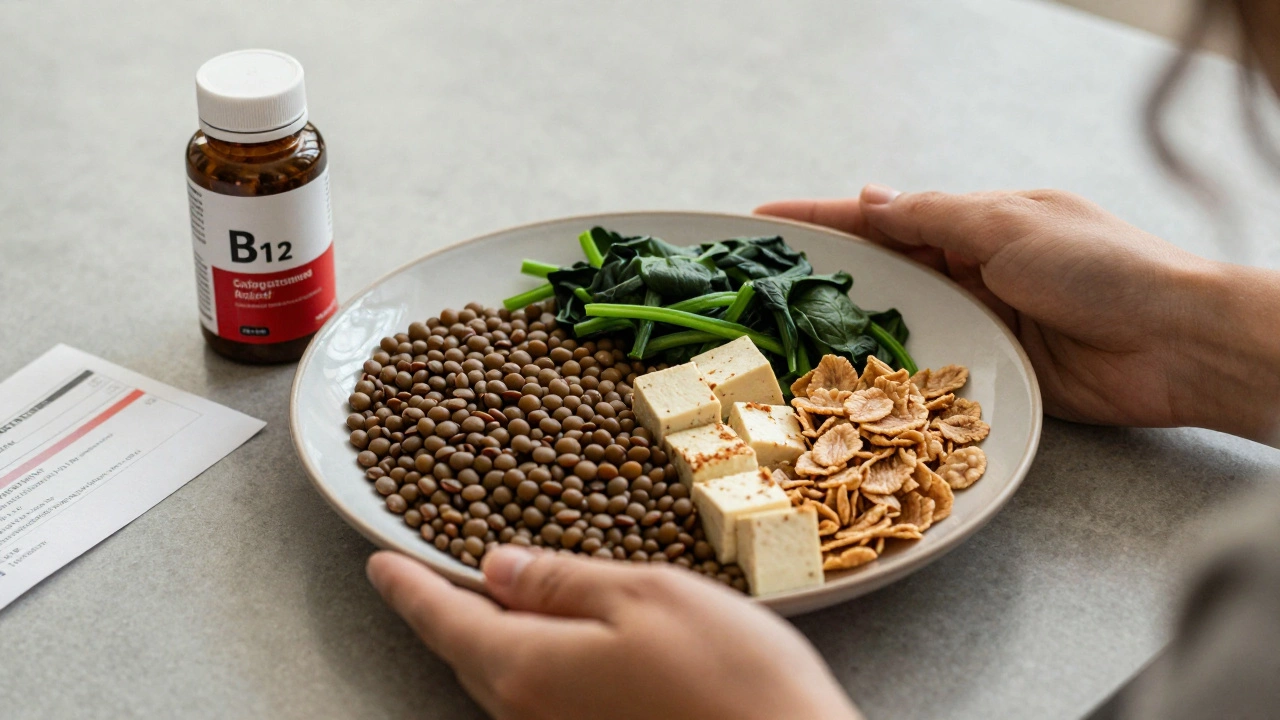
Plant-based diets are full of fiber, antioxidants, and healthy fats. But they often fall short on nutrients that are either hard to get from plants or not absorbed well without animal sources. Take vitamin B12. It’s critical for nerve function and making red blood cells. Your body doesn’t make it. You don’t get it from spinach or lentils. The only reliable sources are animal products or fortified supplements. If you’re not taking a daily B12 pill, you could be slowly depleting your stores without knowing it. A 2023 study in the European Journal of Clinical Nutrition found that nearly 40% of long-term vegetarians had borderline low B12 levels, even if they ate eggs and dairy.
Then there’s heme iron. Unlike the non-heme iron in beans and tofu, heme iron comes from animal blood and muscle. It’s absorbed at a rate of 15-35%. Non-heme iron? Only 2-20%. And that’s before you factor in how phytates in whole grains and oxalates in spinach block absorption. A woman who eats meat regularly gets about 18 mg of iron per day naturally. A vegetarian might need to eat 3 cups of cooked lentils, 2 cups of spinach, and 1 cup of fortified cereal just to hit 15 mg-and even then, half of it won’t get absorbed. Fatigue, brain fog, and brittle nails? They’re not always signs of stress. Sometimes they’re signs of iron deficiency.
Your Body Might Not Adapt Well
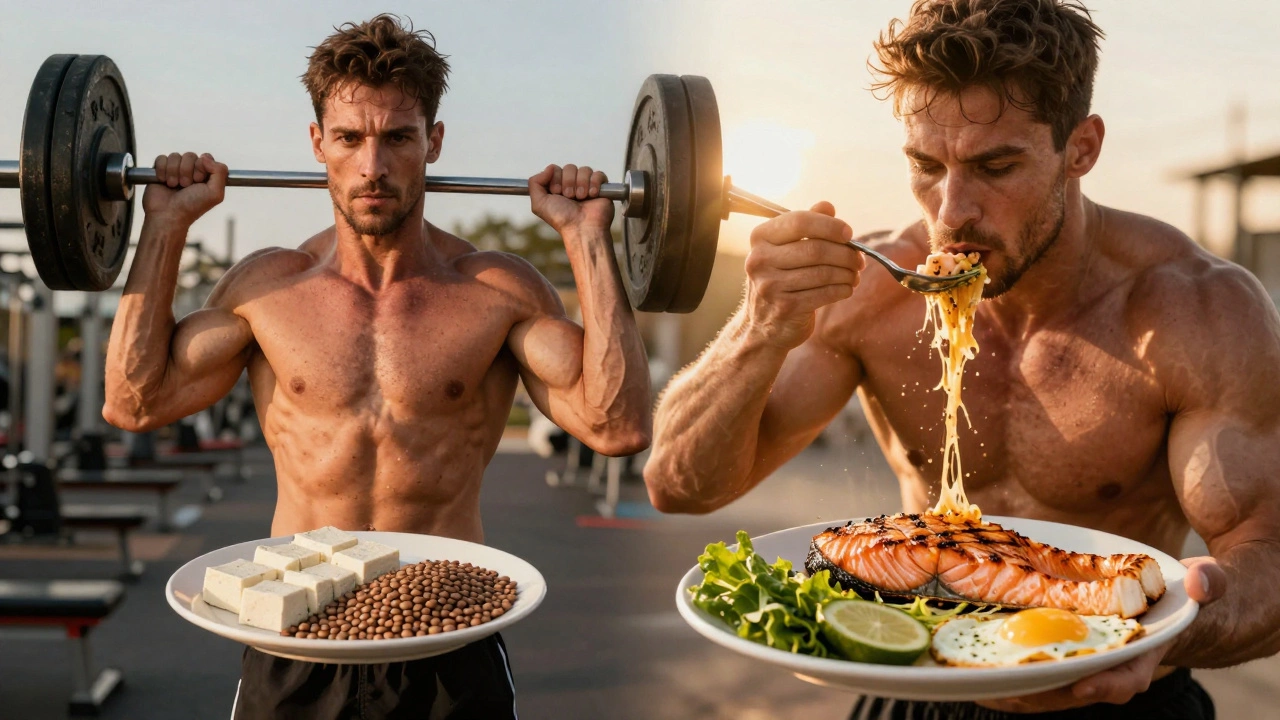
Humans evolved as omnivores. We’ve got the teeth, the digestive enzymes, and the metabolic pathways to process both plants and animals. That doesn’t mean everyone needs meat. But it does mean some people don’t thrive without it. Think about muscle maintenance. Protein is protein, right? Not quite. Animal proteins contain all nine essential amino acids in the right ratios. Plant proteins? Most are missing one or two. Soy comes close. But tofu, tempeh, and edamame aren’t always easy to eat in large enough quantities. A 70kg person needs about 56 grams of protein a day. That’s 2 cups of cooked lentils or 400 grams of tofu. Most people don’t eat that much. And if you’re active? Athletes, weekend hikers, or even just someone who walks the dog daily-they need more. Without meat, fish, or eggs, hitting that target becomes a full-time job.
And then there’s omega-3s. You’ve heard about ALA from flaxseeds and chia. But ALA doesn’t turn into DHA and EPA efficiently. Less than 5% of it converts. Those are the forms your brain and heart actually use. Fish oil gives you DHA and EPA directly. Algal oil supplements do too. But if you’re relying on flaxseed oil and calling it good? You might be missing out on the anti-inflammatory benefits that help with joint pain, mood, and even heart rhythm. A 2024 meta-analysis in Advances in Nutrition showed vegetarians had 20-30% lower blood levels of DHA than omnivores-even when they took ALA supplements.
It Can Make Social Life Harder Than It Needs to Be
Let’s be honest. Food isn’t just fuel. It’s connection. Birthdays, holidays, family dinners, barbecues, even casual coffee after work. When you’re vegetarian, you’re often the one asking, “Is there anything I can eat?” You’re the one reading menus twice. You’re the one who brings your own dish to potlucks. And yes, many places are more accommodating now. But not everywhere. In rural towns, small diners, or during travel abroad? Options are still limited. A friend in Adelaide told me she canceled a weekend trip to a remote outback lodge because the only meal option was steak or baked potato. No veggie burger. No lentil stew. Just silence at the table.
And it’s not just about food. It’s about identity. Some people feel judged when they say they’re vegetarian. Others feel like they’re being judged for not being strict enough. If you slip and eat chicken broth in soup? You feel guilty. If you skip the fish tacos at a friend’s beach party? You feel excluded. For some, the mental load of being “different” at every meal adds up. It’s not a dealbreaker. But for people who value ease, spontaneity, and connection over dietary purity? It’s a real cost.

It’s Not All or Nothing
None of this means you should eat meat every day. Or even every week. But rigid labels can hide better options. A flexitarian approach-eating mostly plants with occasional meat, fish, or eggs-can give you the benefits of a plant-rich diet without the risks of nutrient gaps. You get iron from steak, B12 from eggs, DHA from salmon, and still eat way more vegetables than the average person. It’s flexible. It’s realistic. And it’s what most people actually do when they stop chasing perfection.
There’s no single right way to eat. But there is a right way for you. If you’ve tried vegetarianism and felt tired, sluggish, or socially isolated, it might not be the problem with your willpower. It might be the diet.
What to Do Instead
Start by tracking your energy, sleep, and mood for two weeks. Then try adding back one animal-based food a week-say, eggs on weekends or grilled salmon twice a month. See how you feel. If your fatigue lifts, your focus improves, or your cravings fade? That’s your body telling you something. You don’t have to go back to eating meat daily. But you might find that small amounts make a big difference.
Supplement smartly. If you’re vegetarian, take a B12 pill (at least 2.4 mcg daily). Get your iron checked. Consider an algae-based omega-3. Talk to a dietitian. Don’t assume plant-based equals healthy. It can be. But only if you plan it right.
Food should nourish you-not drain you, isolate you, or stress you out. The goal isn’t to be perfect. It’s to feel good.
Is it true that vegetarians can’t get enough protein?
No, vegetarians can get enough protein-but it takes more planning. Animal proteins like eggs, dairy, and soy are complete proteins, meaning they contain all nine essential amino acids. Most plant proteins (like beans, lentils, nuts) are missing one or two. To get complete protein, vegetarians need to combine sources-like rice and beans, or hummus and whole grain pita. But it’s not hard. A 70kg adult needs about 56 grams of protein daily. That’s 2 cups of lentils, 1 cup of tofu, and 2 eggs. Many vegetarians hit that easily. The real issue is consistency. If you skip meals or eat mostly processed carbs, you’ll fall short.
Do vegetarians always lack iron?
Not always, but they’re at higher risk. Plant-based iron (non-heme) is harder for your body to absorb than the heme iron in meat. A cup of cooked spinach has 6.4 mg of iron, but only about 1 mg gets absorbed. A 100g steak has 2.5 mg, but 1 mg of that is absorbed. So while vegetarians often eat more total iron, they absorb less. Pairing iron-rich foods with vitamin C (like bell peppers, citrus, tomatoes) boosts absorption. Avoid drinking tea or coffee with meals-it blocks iron uptake. Regular blood tests are the best way to know if you’re deficient.
Can you get enough omega-3s without fish?
You can get ALA (alpha-linolenic acid) from flaxseeds, chia, walnuts, and hemp seeds. But your body converts less than 5% of ALA into DHA and EPA-the forms your brain and heart need. That’s why vegetarians often have lower levels of these critical fats. Algae-based supplements are the best solution. They’re derived from the same algae that fish eat, so they deliver DHA and EPA directly. Look for a supplement with at least 200-300 mg of DHA per day. Flaxseed oil alone won’t cut it.
Is vitamin B12 really a problem for vegetarians?
Yes, and it’s the most common nutrient gap. B12 is made by bacteria and naturally found in animal products. Eggs and dairy have some, but not enough to meet daily needs long-term. A 2023 study found that 40% of vegetarians had low B12 levels-even those who ate dairy and eggs. Symptoms like fatigue, numbness, memory issues, or depression can appear slowly. A daily supplement of 2.4 mcg (or 1,000 mcg weekly) is safe and effective. Don’t wait for symptoms. Get tested if you’ve been vegetarian for more than a year.
Should I just eat meat if I’m feeling tired?
Not necessarily. Feeling tired could be from poor sleep, stress, or not eating enough overall. But if you’re vegetarian and consistently low on energy, it’s worth checking your iron, B12, and omega-3 levels. If tests show deficiencies, adding back small amounts of animal foods-like eggs, fish, or lean poultry-can help. You don’t have to go back to a meat-heavy diet. Just enough to fill the gaps. Many people find that eating meat once or twice a week gives them more energy without changing their overall eating pattern.