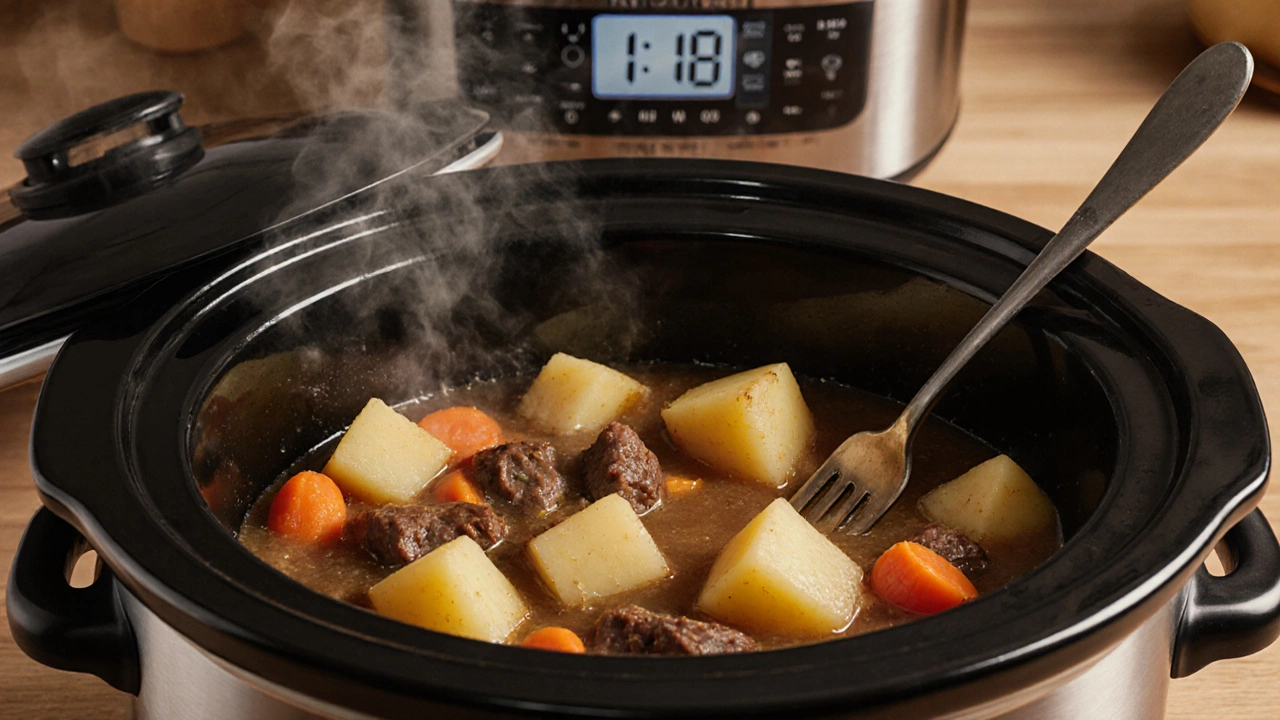
Adding vegetables to a slow cooker, a countertop appliance that cooks food slowly over several hours using low, even heat. Also known as a crockpot, it’s perfect for tender meats and rich stews—but vegetables can turn to mush if you don’t time them right. The key isn’t just throwing everything in at once. Root vegetables like potatoes, carrots, and turnips hold up well to long cooking, but softer ones like zucchini, spinach, and peas need to join later. If you dump them all in at the start, you’ll end up with a bowl of soggy, flavorless mush instead of bright, textured bites.
Slow cooker layering, the strategic placement of ingredients to ensure even cooking matters more than you think. Dense, hard vegetables go on the bottom, closest to the heat source. That’s why onions, garlic, and root veggies usually start there. Meat sits on top of those, and liquids go in last to help conduct heat evenly. But tender vegetables? They’re not part of the base layer. Add them in the last 1–2 hours. That’s when they’ll absorb flavor without breaking down. Think bell peppers, mushrooms, spinach, or green beans—add them when you’d normally stir in fresh herbs.
Some people think slow cooking means set-it-and-forget-it, but that’s where things go wrong. A slow cooker tip, a practical method to improve results without changing the recipe that works every time: check your recipe’s total cook time. If it’s 8 hours on low, add delicate veggies after 6. If it’s 4 hours on high, wait until hour 2. This isn’t guesswork—it’s physics. Heat travels slowly through dense foods, and soft vegetables cook fast. You’re not just preserving texture; you’re preserving flavor, color, and nutrients.
You’ll find plenty of posts here that dig into this. Some explain how the tea towel trick helps control moisture so your veggies don’t steam instead of braise. Others show how layering affects flavor absorption. There are even guides on how to use the slow cooker for meals that taste like they’ve been simmering all day—even when you only had time to prep for 20 minutes. You’ll see how people fix bland stews, rescue overcooked carrots, and make sure their lentils don’t turn to paste.
This isn’t about following rigid rules. It’s about understanding how heat moves through different foods. Once you get the timing right, your slow cooker stops being a black box and becomes a tool you control. You’ll start noticing how celery holds up longer than spinach, how tomatoes release water that affects cooking speed, and why frozen veggies often turn to sludge if added too early. These aren’t myths—they’re patterns you can learn.
Below, you’ll find real examples from home cooks who’ve cracked the code. No fluff. No theory without results. Just clear, tested ways to make your slow cooker meals taste better—starting with when and how you add your vegetables.