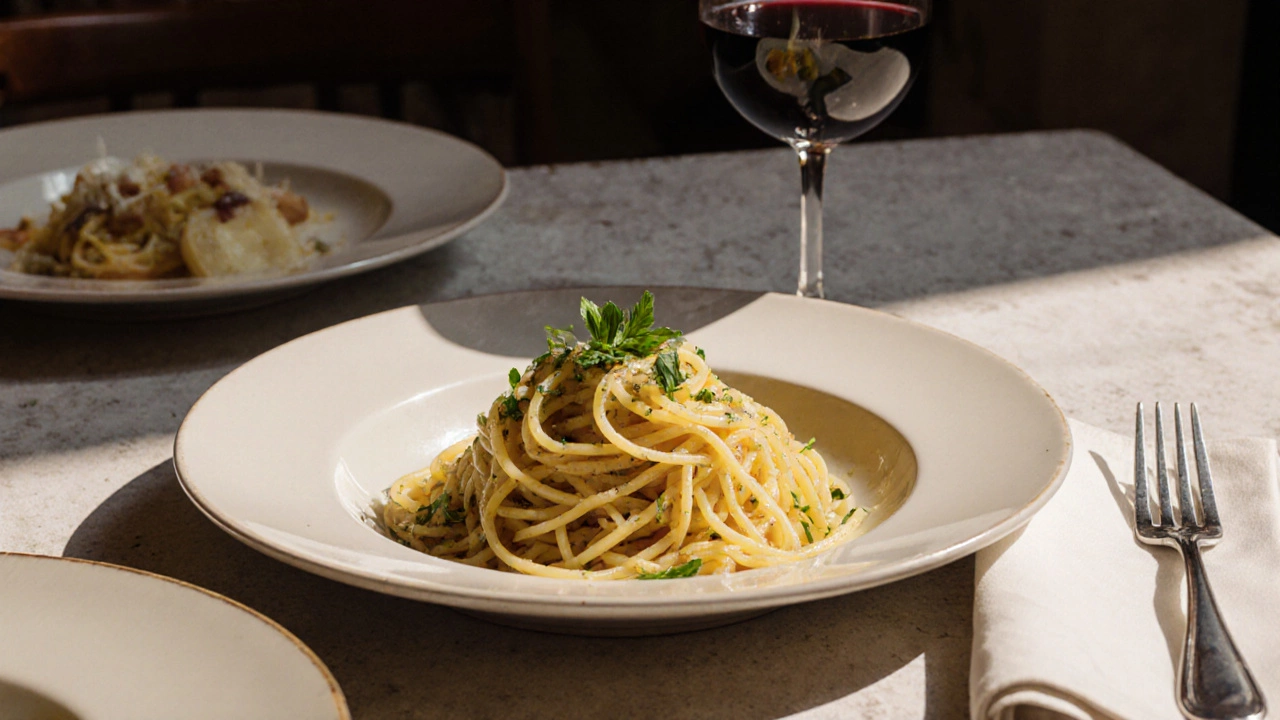
When it comes to spaghetti rule Italy, the unspoken standards that govern how spaghetti is made, cooked, and served in Italy. Also known as Italian pasta tradition, it’s not just about boiling water and tossing in noodles—it’s a cultural code written in flour, water, and time. You won’t find Italians using pre-cooked pasta from a box, or drowning their spaghetti in thick, gloppy sauce. That’s not laziness—it’s a violation of something deeper.
The Italian pasta, a staple food made from durum wheat semolina and water, shaped into long strands and dried for shelf stability. Also known as pasta secca, it’s the backbone of daily meals across the country is treated like a sacred ingredient. In Italy, pasta isn’t a side dish—it’s the main event. And the rules? They’re passed down like family recipes. The water must be salty like the sea. The pasta must be cooked al dente—not soft, not mushy, but with a firm bite that says, "I was made by hand, not machine." The sauce? It clings, it doesn’t drown. And you never, ever cut spaghetti with a knife.
Why does this matter outside Italy? Because the pasta regulations, strict national standards that define what can legally be called "pasta" in Italy, including ingredients, drying times, and production methods. Also known as Italian food law, these rules ensure authenticity are backed by law. In the U.S., you can call anything "spaghetti"—even if it’s made with cheap flour, dried in hours, and sold in plastic tubs. In Italy, if it doesn’t meet the legal definition, it’s not pasta. That’s why fresh pasta is common in Italy but rare in American supermarkets. It’s not about availability—it’s about what’s allowed.
And then there’s the Italian cooking, the regional, hands-on approach to preparing meals with minimal ingredients, maximum flavor, and deep respect for tradition. Also known as cucina italiana, it’s not about fancy tools or complicated steps. It’s about timing. About listening to the pot. About knowing when the water boils just right, when the garlic turns golden, when the cheese melts just enough. This isn’t something you learn from a YouTube video. It’s something you feel after years of eating it at nonna’s table.
That’s why the spaghetti rule Italy isn’t just about food—it’s about identity. It’s why Italians won’t serve spaghetti with meatballs (that’s an American invention), why they don’t use olive oil to cook the pasta (they use it to finish), and why they never rinse the noodles after draining (the starch helps the sauce stick). These aren’t quirks. They’re rules written in generations of practice.
Below, you’ll find real posts that dig into what makes Italian pasta different—why you can’t replicate it at home without understanding the culture behind it, how food laws shape what ends up on your plate, and how to cook spaghetti the way Italians actually do. No fluff. No myths. Just the facts that change how you see every bowl of pasta you ever made.