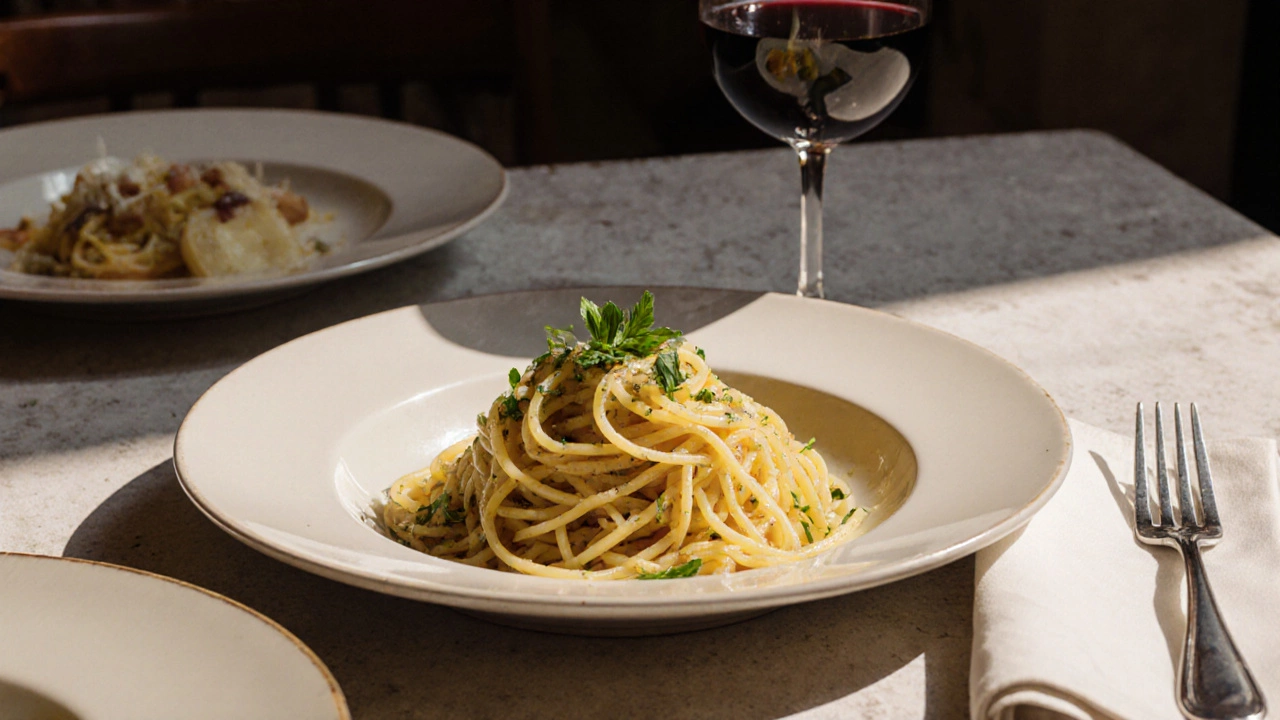
When you sit down to a plate of pasta, you’re not just eating—you’re taking part in a cultural ritual. pasta etiquette, the unwritten rules of how to eat pasta with grace and respect for its origins. Also known as Italian dining manners, it’s not about being fancy—it’s about knowing how to enjoy pasta the way it was meant to be eaten. In Italy, pasta isn’t a side dish or a quick snack. It’s a centerpiece. And how you handle it says more than you think.
Forget what you’ve seen in movies. Twirling pasta with a fork and spoon? That’s not tradition—it’s a myth made for tourists. Real Italian pasta etiquette says: use only a fork. No spoon. No cutting. No lifting the whole strand to your mouth. You twirl, gently, against the side of the plate or bowl, letting the pasta coil neatly around the tines. Why? Because that’s how you get the sauce to cling, not drip. And sauce? That’s the whole point. Italian pasta rules, a set of cultural norms passed down through generations are built around flavor, not show. Slurping? Fine in Japan. Not in Naples. A quiet, controlled bite is the goal. Even the way you hold your fork matters—tines down, not up. It’s not about being perfect. It’s about being respectful.
And what about the bread? In Italy, bread isn’t meant to soak up leftover sauce. That’s called scarpetta, and while locals might do it at home, it’s not done in restaurants. The same goes for ordering spaghetti with meatballs—it’s an American invention. Real Italian meals separate pasta from main courses. dining manners, the subtle behaviors that reflect cultural values during meals aren’t about rules for rules’ sake. They’re about pacing, balance, and savoring. When you eat pasta the right way, you’re not just feeding yourself—you’re honoring hours of slow cooking, fresh ingredients, and centuries of tradition.
There’s no test. No one’s grading you. But if you’ve ever felt awkward at a pasta dinner, wondering if you’re doing it right, this is your guide. Below, you’ll find real posts that dig into the why behind pasta customs, how food laws shape what we eat, and why some dishes look totally different across borders. You’ll learn what’s actually true, what’s just a stereotype, and how to eat pasta with confidence—no matter where you are.