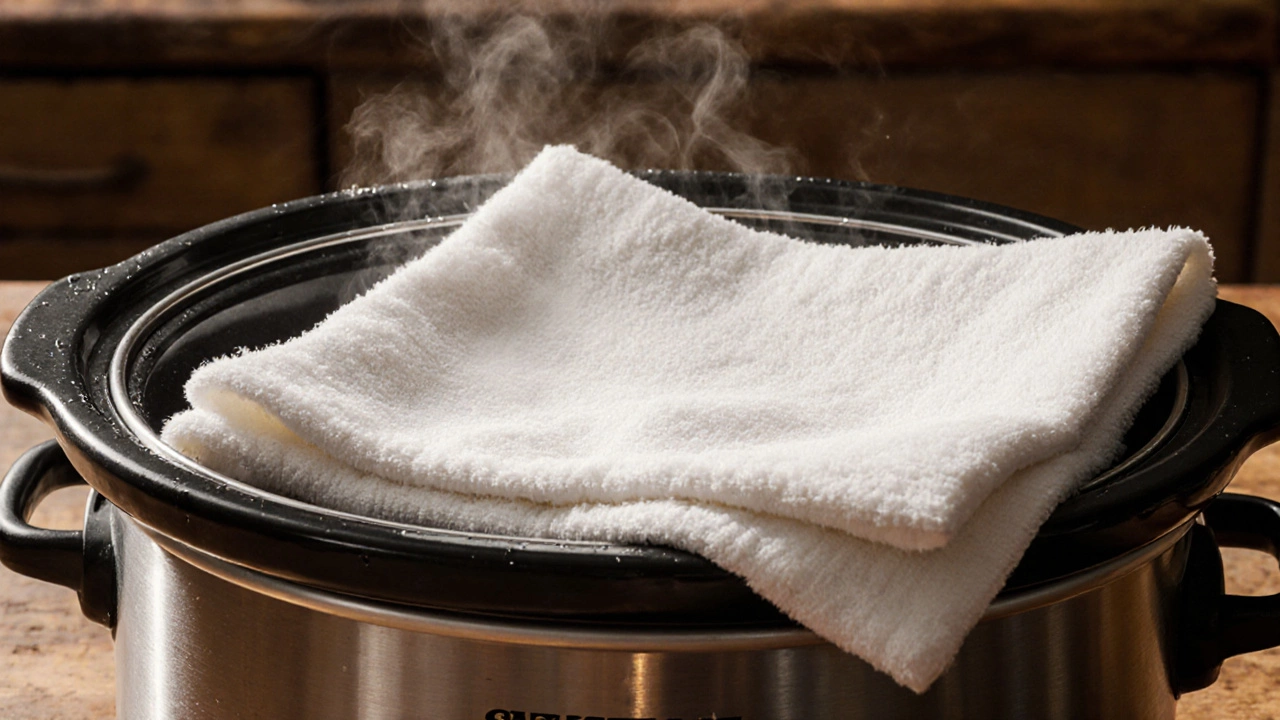
When you cook, moisture control, the deliberate management of water content in food during cooking. Also known as water retention, it’s what turns a dry chicken breast into something tender and juicy, or a soggy casserole into a balanced, flavorful meal. It’s not about adding more water—it’s about keeping the right amount in the right place at the right time. Too little, and your food turns tough and tasteless. Too much, and you get watery sauces, mushy vegetables, or bland textures that make you wonder why you bothered cooking at all.
Good moisture control connects directly to how you use tools like the slow cooker, a kitchen appliance designed for low-heat, long-duration cooking that traps steam and natural juices, or how you bake chicken, a protein that loses moisture quickly if not handled correctly. Whether you’re covering it with foil, brining it first, or letting it rest after cooking, every step affects how much water stays inside. The same goes for pasta—overcooking it isn’t just about texture; it’s about losing the water that gives it body and helps sauce cling. Even in slow-cooked meals, layering ingredients properly matters. Put watery veggies on the bottom? You’ll drown the meat. Put meat on the bottom with dry herbs on top? You’ll get flavor without sogginess.
Moisture isn’t just a cooking detail—it’s the invisible thread tying together food safety, flavor, and satisfaction. The USDA warns that leaving meat in a crockpot too long can lead to dangerous temperature zones, but it’s also the moisture loss that makes it unappetizing long before it’s unsafe. People ask why their oven-baked chicken always dries out. It’s not the oven—it’s the lack of moisture management. They want to know how to make spaghetti taste richer. It’s not more sauce—it’s keeping the pasta from soaking up all the water too early. And if you’ve ever wondered why Italian pasta portions are smaller, it’s because they know: less pasta + better moisture = more flavor per bite.
What you’ll find below isn’t just a list of recipes. It’s a collection of real fixes for real problems: how to keep chicken juicy, how to layer a slow cooker so nothing turns to mush, how to avoid dryness without drowning your food in oil or butter. These aren’t tricks. They’re the quiet science behind every great meal. Whether you’re cooking for one or feeding a family, mastering moisture control means fewer regrets and more bites worth remembering.