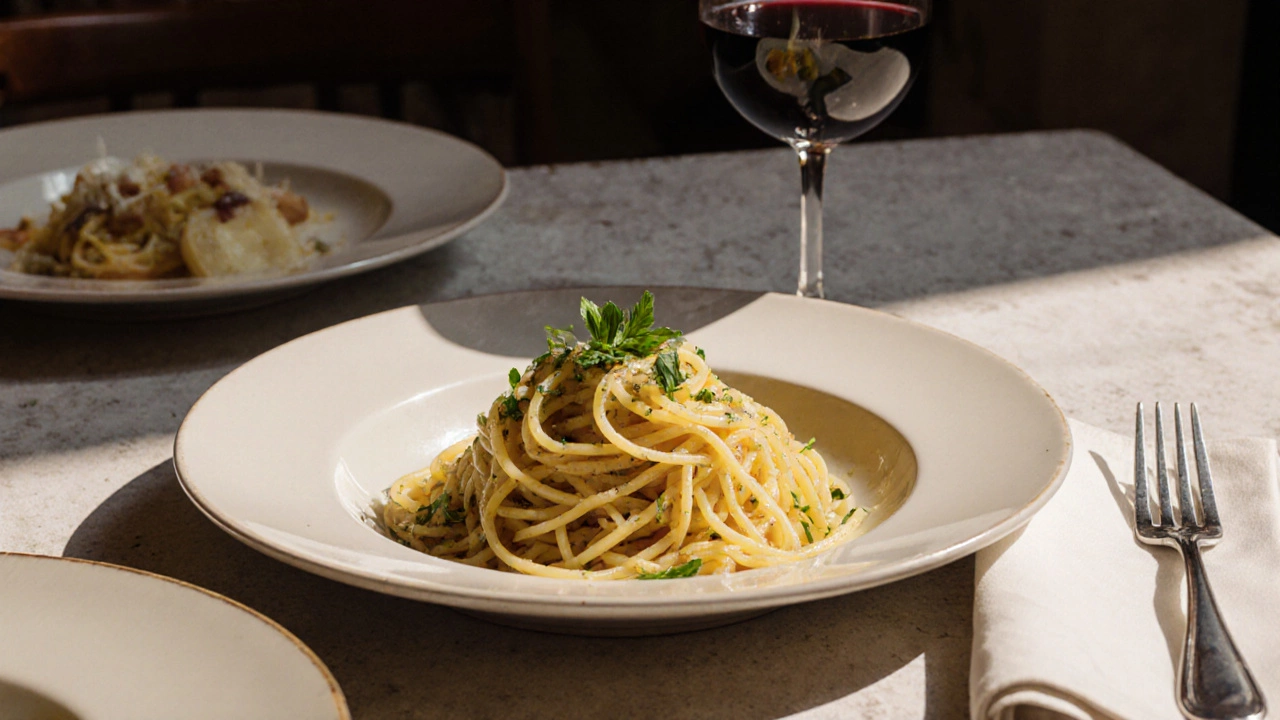
When you think of Italian pasta serving, the traditional way Italians plate and present pasta at home, focusing on balance, simplicity, and timing. Also known as pasta al dente service, it’s not about piling high—it’s about getting every bite just right. Most people outside Italy serve pasta like a main course with a mountain of sauce, but in Italy, it’s the opposite. Pasta is the star, not the sidekick. The sauce clings, it doesn’t drown. A proper serving is just enough to coat each strand, never pool at the bottom of the bowl. And portion size? It’s not a plate full—it’s a cup, maybe two, depending on whether it’s lunch or part of a multi-course meal.
Pasta portions, the measured amount of dry pasta per person used in traditional Italian cooking. Also known as pasta serving size, it typically runs 75 to 100 grams per person for a main course, and even less if it’s a first course before a second. This isn’t a diet trick—it’s tradition. Italians eat pasta as part of a sequence, not as the whole meal. That’s why you’ll never see a giant bowl of spaghetti with meatballs in a Roman home. The meatballs? They’re separate. The sauce? Light, made with just a few ingredients, and tossed in the pan with the pasta right before serving. Then there’s pasta sauce pairing, the rule that certain pasta shapes match specific sauces based on texture, thickness, and how well they hold flavor. Also known as pasta and sauce compatibility, it’s not optional—it’s law. Long, thin spaghetti works with oil-based or light tomato sauces. Short, tubular rigatoni holds chunky meat sauces. Flat fettuccine? Perfect for creamy sauces, but only if they’re made with egg and cheese, not heavy cream. In Italy, cream in pasta? That’s an American invention. Real carbonara uses eggs, Pecorino, pancetta, and black pepper. No cream. No garlic. No onions. Just three or four ingredients, cooked right.
And here’s the thing most guides miss: Italian pasta serving isn’t just about food—it’s about rhythm. The pasta is cooked minutes before serving. The sauce is warmed in a pan. The pasta is drained, tossed in the sauce with a splash of pasta water, then plated immediately. No sitting. No reheating. No leftovers in the pot. It’s served hot, fresh, and fast. That’s why restaurant pasta in Italy tastes better than at home—you’re eating it within 30 seconds of it leaving the stove.
If you’ve ever made pasta and felt like something was off, it’s probably not the recipe. It’s the serving. You’re serving it like a side dish, not a centerpiece. You’re using too much sauce. You’re pairing the wrong shape with the wrong flavor. You’re letting it sit. The posts below show you exactly how Italians do it—real recipes, real portions, real techniques. No fluff. No shortcuts that ruin the taste. Just the way it’s done in kitchens from Naples to Milan.