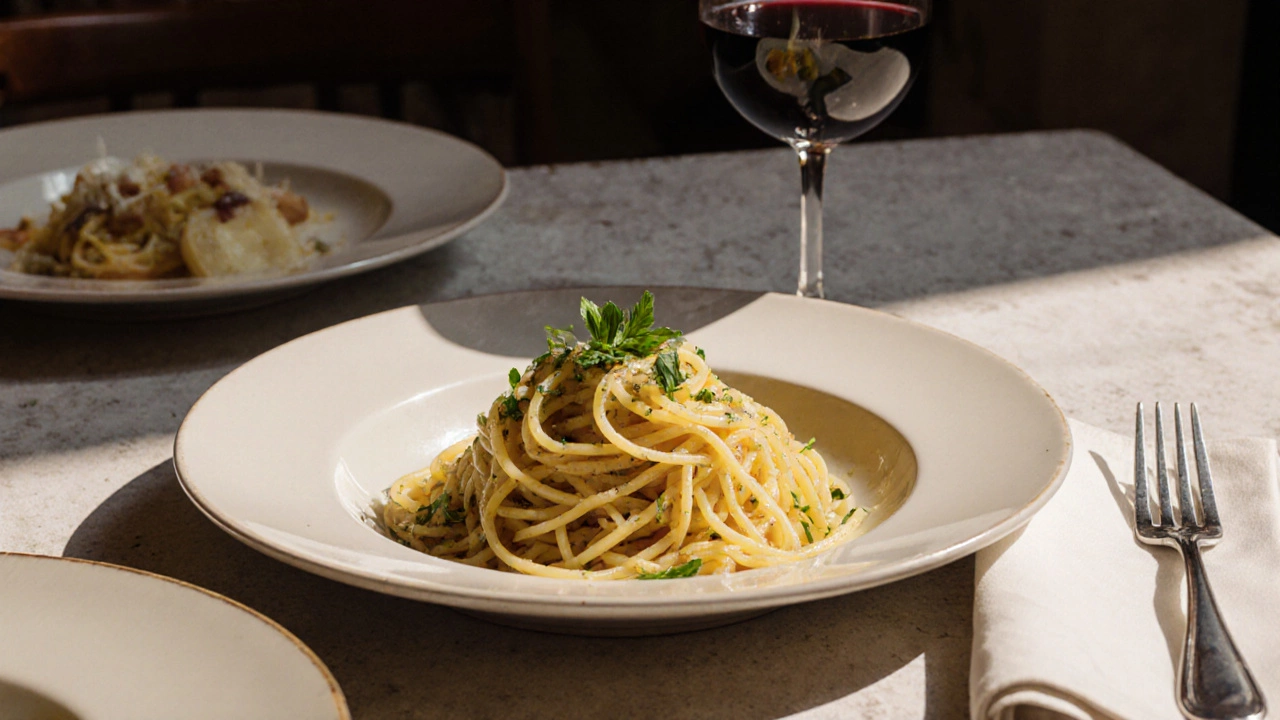
When we talk about Italian dining tradition, the cultural rituals around food, family, and time that shape how Italians eat every day. Also known as la cucina italiana, it’s not just about pasta and tomatoes—it’s a rhythm, a rulebook, and a way of life. This isn’t about fancy restaurants or Instagram-worthy plates. It’s about sitting down for hours, talking over a pot of simmering ragù, letting bread soak up sauce, and never rushing the last bite. In Italy, meals aren’t something you fit in—they’re something you live in.
At the center of this tradition is the family meal, the daily gathering where food connects generations and conversations flow as freely as wine. Also known as la cena in famiglia, it’s the backbone of Italian life. Studies show that families in Italy still eat together nearly every night, even in cities. This isn’t nostalgia—it’s practical. It’s how kids learn what good food tastes like, how grandparents pass down recipes, and how stress melts away after a long day. The slow food movement, a global effort to preserve traditional cooking and local ingredients. Also known as cucina lenta, started in Italy for a reason: because fast food doesn’t last, but a meal shared with love does. And then there’s the pasta culture, the deep-rooted belief that pasta isn’t just a dish—it’s a daily ritual with regional rules. Also known as la pasta quotidiana, it’s never just boiled and tossed with jarred sauce. In Italy, pasta water is salted like the sea, sauces are made from what’s fresh that morning, and every region has its own shape, sauce, and story. You won’t find spaghetti Bolognese in Bologna, because it doesn’t exist there—the real dish is ragù alla bolognese, slow-cooked for hours, served with tagliatelle, not spaghetti.
What you’ll find in the posts below isn’t a list of recipes—it’s a window into how Italians eat, think, and live through food. You’ll see how a simple lunch in Rome differs from a Sunday dinner in Sicily, why fresh pasta is common in Italy but rare in the U.S., and how meals are structured around seasons, not schedules. There’s no magic ingredient. Just time. Respect. And a table full of people who refuse to rush.