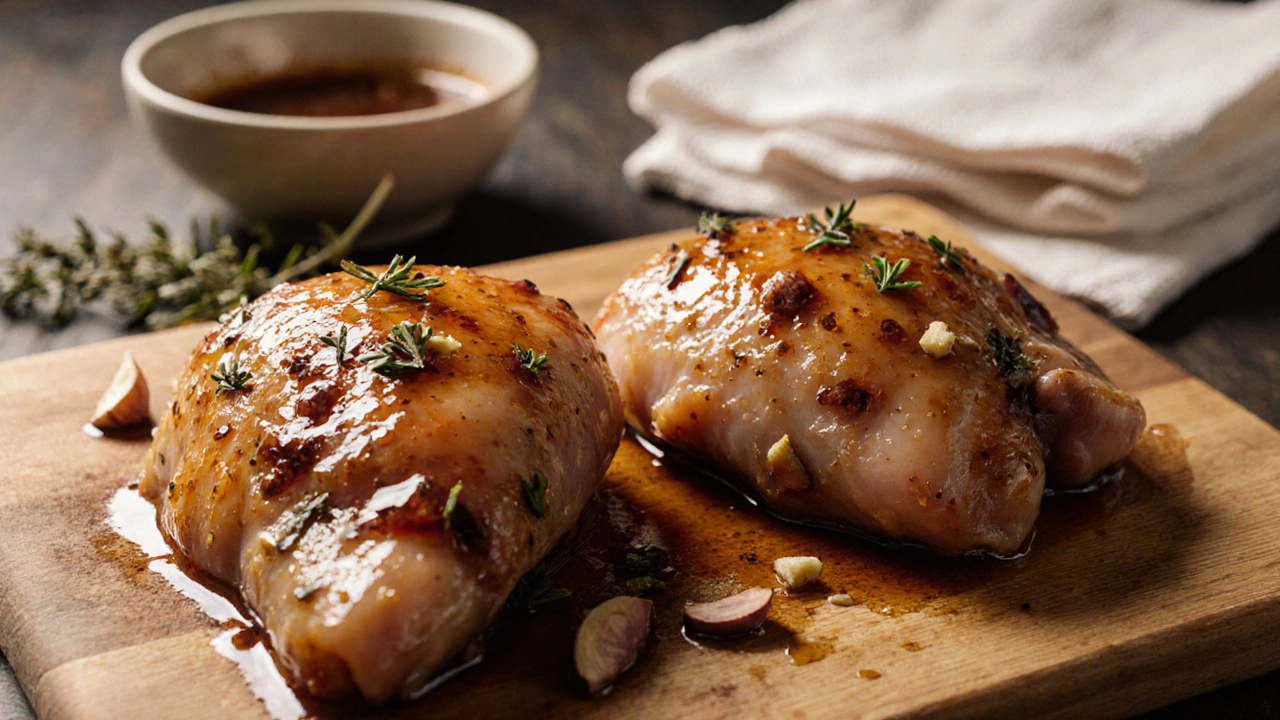
When you handle food safety chicken, the set of practices that prevent illness from contaminated poultry. Also known as chicken hygiene, it’s not about being paranoid—it’s about knowing what actually works in your kitchen. Every year, millions get sick from improperly handled chicken. Most of it isn’t because the chicken was bad to begin with—it’s because of how it was stored, cooked, or cleaned up after.
Chicken carries Salmonella, a common bacteria found in raw poultry that causes fever, diarrhea, and cramps. The key isn’t to wash the chicken—washing spreads germs around your sink. It’s to cook it to the right temperature. The USDA, the U.S. government agency that sets food safety standards. Also known as United States Department of Agriculture, it says chicken must hit 165°F (74°C) inside, no matter if it’s baked, grilled, or slow-cooked. That’s the number that kills the bad stuff. Don’t guess. Use a thermometer. It’s cheap, fast, and the only way to be sure.
Storage matters just as much. Raw chicken shouldn’t sit out for more than two hours—not even in a cool kitchen. Keep it in the fridge at or below 40°F (4°C), and use it within two days. If you’re not cooking it soon, freeze it. Leftovers? Put them in the fridge within two hours of cooking, and eat them within three to four days. That’s not a suggestion—it’s a rule from the same people who track food outbreaks.
Slow cookers are great for chicken, but they’re not magic. If you’re leaving chicken on low for hours, make sure it starts cold and the cooker is full enough to heat up fast. A half-full crockpot can sit in the danger zone too long. That’s why slow cooker chicken, chicken cooked slowly at low temperatures. needs to reach 140°F within four hours. If it doesn’t, you’re inviting bacteria to party.
There’s no room for guesswork with chicken. You don’t need to be a chef to get it right. You just need to know the numbers, the rules, and how to use your fridge and thermometer. The posts below cover exactly that—how long chicken can sit in a crockpot, how to layer it safely, how to avoid cross-contamination, and what to do when you’re cooking for a crowd. No fluff. No myths. Just what keeps you and your family safe.