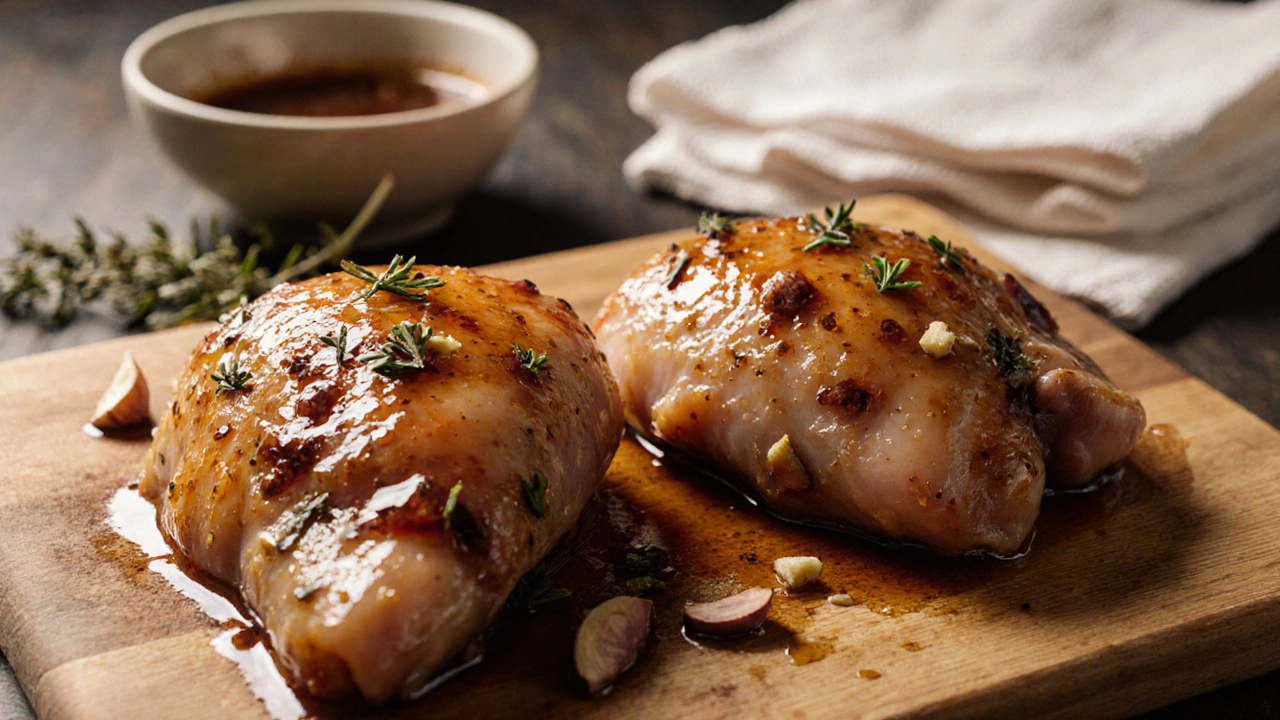
When you're trying to make chicken marinade, a mixture of liquids, acids, oils, and seasonings used to flavor and tenderize chicken before cooking. Also known as chicken soak, it's not just about adding spice—it's about turning bland meat into something that sticks to your ribs and makes people ask for seconds. A good marinade doesn’t just coat the surface; it works its way in, especially if you give it time. Too many people dump soy sauce and garlic on chicken and call it done. That’s not a marinade—that’s a splash. Real flavor comes from balance: acid to break down fibers, oil to carry flavor, salt to lock in moisture, and spices to give it character.
What makes a chicken marinade work isn’t just what’s in it, but how long, the amount of time chicken sits in the marinade before cooking and how it’s stored, keeping chicken cold while marinating to prevent bacterial growth. You don’t need 24 hours. For skinless chicken breasts, 2 to 4 hours is enough. Thighs and drumsticks? Go for 6 to 12. Longer than that? You risk turning the texture mushy, especially with citrus or vinegar. And never marinate at room temperature—your fridge isn’t just for keeping things cold, it’s your safety net.
People forget that oil, a carrier for fat-soluble flavors like paprika, cumin, and chili powder is just as important as the acid. Olive oil, sesame oil, even avocado oil helps spices stick and prevents the chicken from drying out in the oven or on the grill. Salt? Don’t skip it. It doesn’t just make things taste salty—it changes the protein structure so the meat holds onto its own juices. And if you’re using sugar or honey, don’t pour it in straight. Mix it with oil first, or it’ll burn before the chicken even gets warm.
One thing you’ll notice in the posts below: nobody’s using fancy store-bought packets. The best chicken marinades come from your pantry—cumin, smoked paprika, garlic powder, lime juice, yogurt, soy sauce, ginger, chili flakes. No one needs a bottle labeled "Cajun Chicken Seasoning." You can make better with three things you already have. And if you’re grilling, let the chicken sit out for 20 minutes before cooking. Cold meat sears unevenly. Warm it up a bit, and you get that perfect crust without dry spots inside.
You’ll find real examples below—how yogurt tenderizes better than vinegar, why pineapple juice can turn chicken to mush if you leave it too long, and how a simple 10-minute brine before marinating makes a bigger difference than you think. No fluff. No gimmicks. Just what works, tested in home kitchens, not food labs.