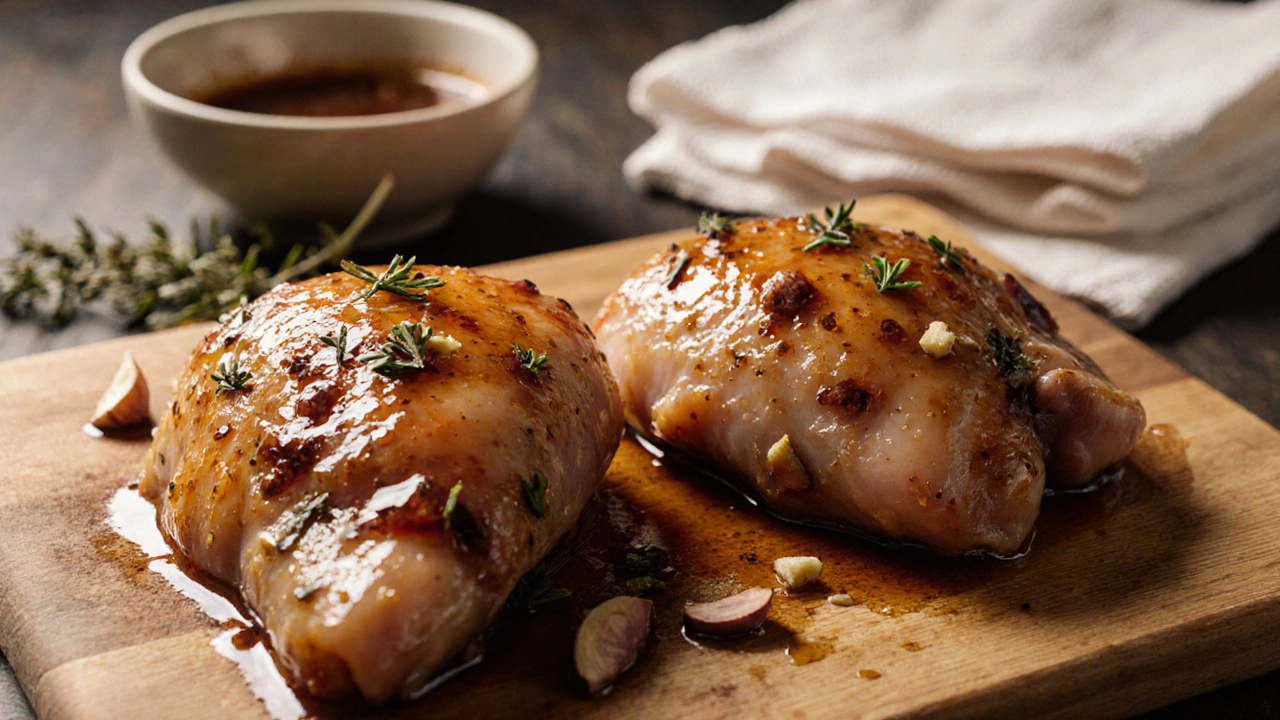
When you bake marinated chicken, a method of cooking chicken that uses a flavorful liquid soak to tenderize and infuse taste before roasting. Also known as marinated oven chicken, it’s one of the easiest ways to turn simple chicken breasts or thighs into a meal that tastes like it came from a restaurant. The magic isn’t just in the spices—it’s in the timing, the temperature, and whether you cover it or not.
Not all marinades work the same. A good one has acid (like lemon juice or vinegar), oil, salt, and flavor agents like garlic or smoked paprika. The acid breaks down proteins just enough to make the meat tender, but too much and it turns mushy. Most home cooks over-marinate, thinking more time equals more flavor. But after 24 hours, the texture starts to suffer. For best results, 2 to 12 hours is the sweet spot. And don’t forget to pat the chicken dry before baking—wet chicken steams instead of browns, and no one wants soggy skin.
Oven baked chicken, the process of roasting chicken in a conventional oven to achieve a golden crust and moist interior isn’t just about tossing it in the oven and forgetting it. The key is control: high heat at first to crisp the surface, then lowering it to cook through evenly. Many people bake chicken covered, thinking it locks in moisture. But that traps steam and softens the skin. Uncovered baking lets the heat circulate, creating a crisp exterior while the marinade keeps the inside juicy. And always let it rest for 5 to 10 minutes after pulling it out—the juices redistribute, so every bite stays wet and flavorful.
Marinated chicken isn’t just for weeknights. It works for meal prep, picnics, and even fancy dinners if you pair it right. Toss it over salads, tuck it into wraps, or serve it with roasted vegetables. The same marinade that works for chicken breasts also shines on thighs—thighs just need a few extra minutes because they’re thicker and fattier. And if you’re worried about dryness, brining before marinating gives you a double layer of protection. It’s not complicated, but it does require paying attention to the details.
You’ll find a lot of conflicting advice online: should you use butter? Should you baste? Does bone-in taste better? The truth is, there’s no single right way—but there are plenty of wrong ones. Overcooking is the biggest mistake. Chicken hits perfect doneness at 165°F, but it keeps cooking after you take it out. Pull it at 160°F and let carryover heat do the rest. And if your marinade has sugar in it, watch it closely near the end—sugar burns fast.
Below, you’ll see real examples from people who’ve nailed this. Some use yogurt-based marinades for extra tenderness. Others swear by honey and soy for that sticky-sweet glaze. There are tips on how to reuse marinades safely, how to adjust cooking times for different cuts, and even how to fix dry chicken after it’s already baked. No fluff. Just what works.