
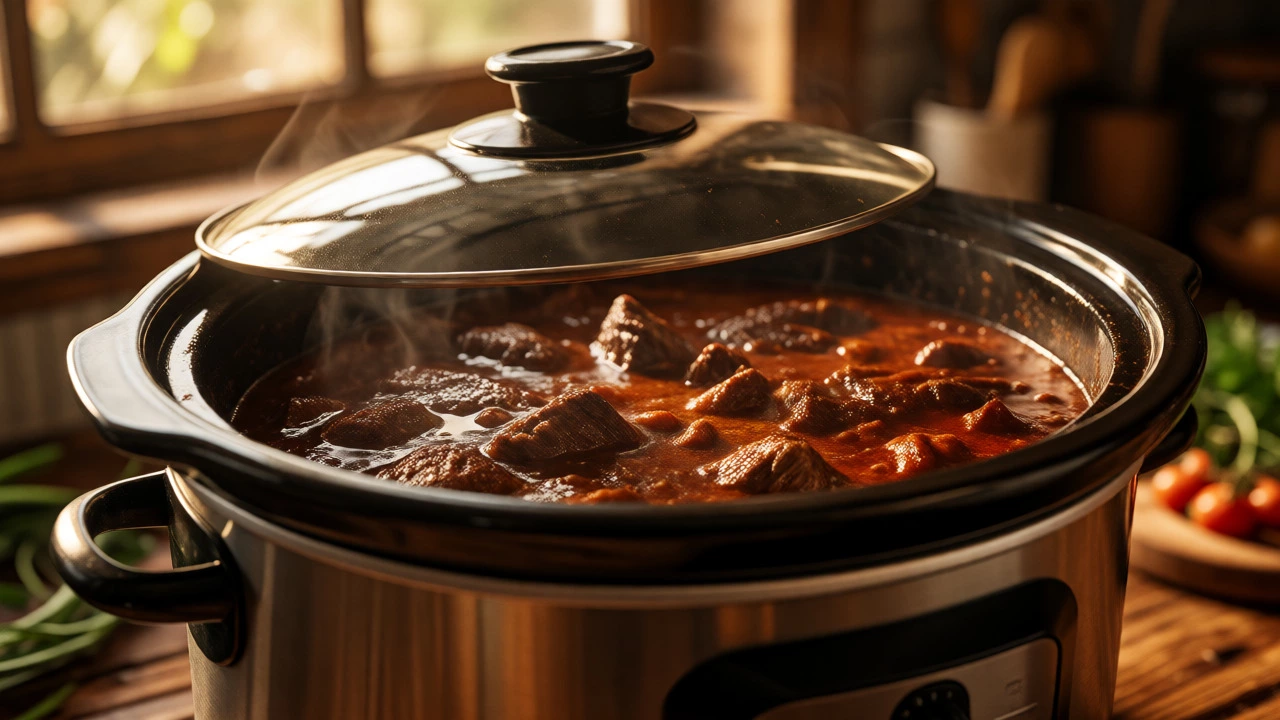
Slow Cooker Time & Setting Converter
Conversion Result
Important Safety Note:
Always use a meat thermometer to ensure internal temperatures reach safe levels (Poultry: 165°F/74°C, Ground Meat: 160°F/71°C, Whole Cuts: 145°F/63°C). The "Danger Zone" is between 40°F and 140°F.You’re standing in your kitchen, staring at that stubborn piece of beef chuck or a bag of dried beans. The recipe says 8 hours on low, but you only have four hours before dinner guests arrive. You think to yourself, "Math is math. If I double the heat, I should be able to halve the time, right?" It’s a logical assumption, and one that trips up almost everyone who owns a slow cooker (or Crock-Pot). But here is the harsh truth: no, 4 hours on high is not exactly the same as 8 hours on low. While they often overlap in terms of getting food cooked, the results-texture, moisture, and safety-are different enough that treating them as identical can ruin a meal.
The Science Behind the Heat
To understand why these settings aren't interchangeable, you need to look at what is actually happening inside the pot. A modern electric slow cooker works by heating a ceramic insert from the outside in. According to the National Center for Home Food Preservation, the difference between the two settings isn't about how hot the food gets eventually; it's about how fast it gets there.
| Setting | Internal Temperature Target | Time to Reach Boil | Best For |
|---|---|---|---|
| Low | ~190°F (88°C) | 6-8 hours | Tough cuts, legumes, soups, stews |
| High | ~300°F (149°C) | 3-4 hours | Lean meats, quick meals, reheating |
See that gap? On low, the temperature creeps up slowly, allowing collagen in tough meat to break down into gelatin over a long period. This process requires time. On high, the unit pushes the contents toward boiling much faster. While both settings will eventually kill bacteria if held above 140°F (60°C), the structural changes in the food differ significantly.
When You Can Swap the Settings
So, when is it safe to cut corners? Generally, you can convert a recipe from low to high if the total cook time on low is 7 hours or less. The rule of thumb used by many chefs is simple: multiply the low setting time by roughly 0.5 to get the high setting time, but add a buffer. If a recipe calls for 8 hours on low, checking it at 4 hours on high is risky because you might dry it out. However, if the recipe calls for 4 hours on low, switching to 2 hours on high is usually fine.
Here are the scenarios where swapping works well:
- Soups and Stews: These dishes have plenty of liquid. The extra heat on high just makes the broth bubble more vigorously. As long as you don’t let it boil aggressively for too long, the flavor profile remains intact.
- Dried Beans: If you’ve soaked your beans overnight, high heat helps them soften quickly without turning them into mush, provided you monitor them closely after the 3-hour mark.
- Lean Proteins: Chicken breasts and pork tenderloins cook through fast. On low, they can sometimes sit in the "danger zone" too long if the pot is overloaded. High heat gets them through the danger zone quicker, though you must watch for dryness.
When Swapping Ruins Your Dinner
There are specific foods that hate being rushed. If you try to force a tough cut of meat to tenderize in half the time, you won’t get tenderness; you’ll get chewiness. Collagen breakdown is a chemical reaction that relies on time and moderate heat, not just raw intensity.
Avoid using the high setting for:
- Fatty Cuts like Beef Short Ribs or Pork Shoulder: These need the gentle, prolonged heat of the low setting to melt fat and connective tissue properly. On high, the protein fibers tighten up, squeezing out moisture, while the fat doesn’t render evenly. You end up with greasy, stringy meat.
- Dairy-Based Sauces: Cream, milk, and cheese curdle when exposed to rapid, high heat. If a recipe calls for adding cream at the end, keep the whole process on low if possible, or switch to high only for the first few hours and drop back to low before adding dairy.
- Delicate Vegetables: Zucchini, spinach, and fish turn to sludge on high. They simply cannot withstand the aggressive simmering that occurs when the unit is set to high for extended periods.
The Safety Factor: Bacteria and the Danger Zone
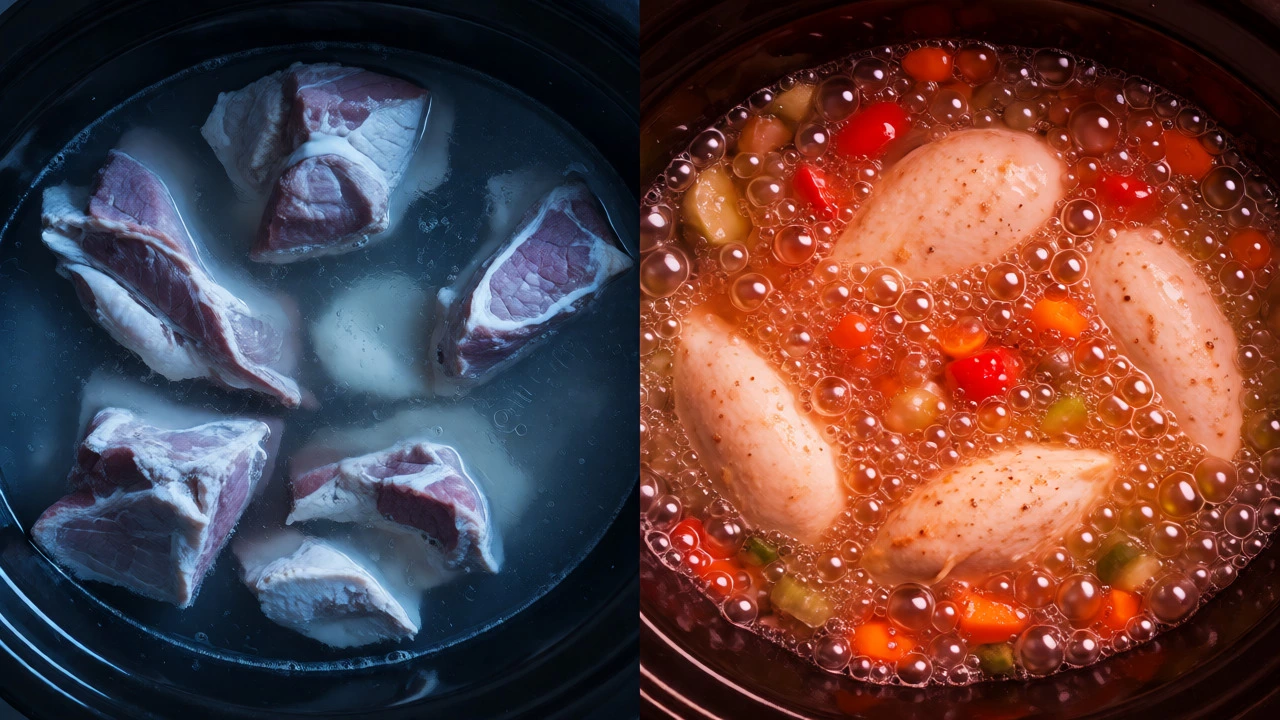
Food safety is the biggest reason people hesitate to mess with settings. The USDA states that bacteria grow rapidly between 40°F and 140°F (4°C and 60°C). This is known as the "Danger Zone." A common myth is that putting frozen meat in a slow cooker on low is unsafe because it takes too long to pass through this zone. In reality, most modern slow cookers are designed to reach safe temperatures relatively quickly, even on low, provided the pot isn’t overloaded.
However, switching from low to high reduces the time food spends in the Danger Zone. This is actually a benefit for certain ingredients. For example, if you are cooking chicken thighs, starting on high ensures the internal temperature rises swiftly, reducing bacterial load early on. Conversely, if you are cooking a large roast on low, ensure you don’t open the lid frequently, as each opening drops the temperature and extends the time spent in the danger zone.
Practical Tips for Converting Recipes
If you decide to take the risk and swap settings, follow these guidelines to minimize disaster:
- Add Liquid Carefully: Slow cookers trap moisture. On high, evaporation happens slightly faster than on low, but not dramatically. Do not reduce liquid amounts drastically when switching to high, or you might burn the bottom layer.
- Check Early: If converting an 8-hour low recipe to a 4-hour high recipe, check the food at the 3-hour mark. Use a meat thermometer. Poultry should hit 165°F (74°C); ground meats 160°F (71°C); and whole cuts of beef/pork 145°F (63°C) followed by a rest.
- Layer Smartly: Place dense vegetables (carrots, potatoes) at the bottom near the heat source. Place delicate items (herbs, seafood, dairy) on top or add them in the last hour.
- Don’t Overfill: Fill the pot only halfway to two-thirds full. An overstuffed pot on high may not circulate heat effectively, leading to uneven cooking where the edges are burnt and the center is raw.
Real-World Example: The Pulled Pork Test
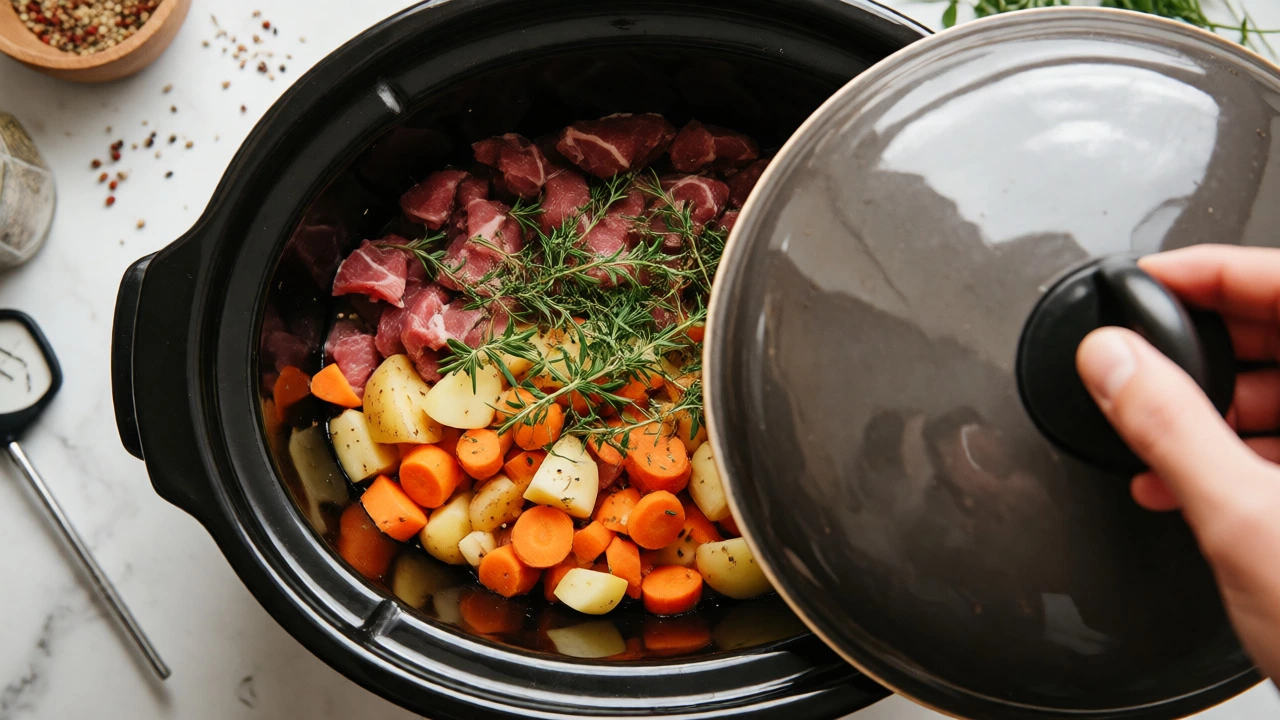
Let’s look at a classic pulled pork shoulder. Recipe A says 8 hours on low. Recipe B says 4 hours on high. I tested this in my own kitchen in Melbourne. The version cooked on low for 8 hours resulted in meat that fell apart with a fork. The juices were rich and integrated. The version cooked on high for 4 hours was technically "cooked"-the internal temp hit 195°F-but the texture was drier. The fibers had tightened, and the fat hadn’t fully rendered. It tasted fine, but it lacked that silky, melt-in-your-mouth quality. If you’re serving this to picky eaters, stick to low. If you’re eating it yourself with some BBQ sauce, high is acceptable.
Final Verdict
Is 4 hours on high the same as 8 hours on low? No. They are cousins, not twins. High heat cooks food faster but risks drying out proteins and failing to tenderize tough cuts. Low heat preserves moisture and breaks down connective tissue but demands patience. Use high when you are short on time and cooking lean meats, soups, or pre-soaked beans. Stick to low for fatty roasts, delicate dishes, and when you want the best possible texture. Understanding this distinction saves you from serving rubbery chicken or undercooked stew, ensuring your slow cooker does its job perfectly every time.
Can I leave food on warm instead of low?
No, the "Warm" setting is designed to hold food at a safe serving temperature (usually around 145°F/63°C) after it has already been cooked. It does not generate enough heat to safely cook raw meat from scratch. Using Warm for cooking can keep food in the bacterial Danger Zone for too long, increasing the risk of foodborne illness.
Does the size of my slow cooker matter when converting times?
Yes. A larger slow cooker filled with a small amount of food will heat up differently than a smaller one filled to capacity. If your pot is less than half full, the food may cook faster than expected because there is less thermal mass to heat. Always use a meat thermometer rather than relying solely on clock time.
Why is my food burning on the high setting?
Burning usually happens when there is insufficient liquid or if the food sticks to the ceramic insert. On high, the bottom layer reaches higher temperatures faster. Ensure you have enough broth or water to create steam circulation, and consider lightly oiling the pot or using a liner to prevent sticking.
Is it safe to put frozen meat directly into a slow cooker?
It is generally recommended to thaw meat before cooking to ensure it passes through the Danger Zone quickly. However, if you must cook from frozen, use the High setting for the first hour to bring the temperature up rapidly, then switch to Low. Never cook large frozen roasts on Low alone, as they may spend too many hours in the bacterial growth range.
How do I know if my slow cooker is working correctly?
Fill the pot halfway with room-temperature water. Cover and cook on Low for 8 hours. The water should reach approximately 190°F (88°C). Then, switch to High for 2 hours; the water should reach about 300°F (149°C). If the temperatures are significantly lower, your appliance may be faulty or aging.