
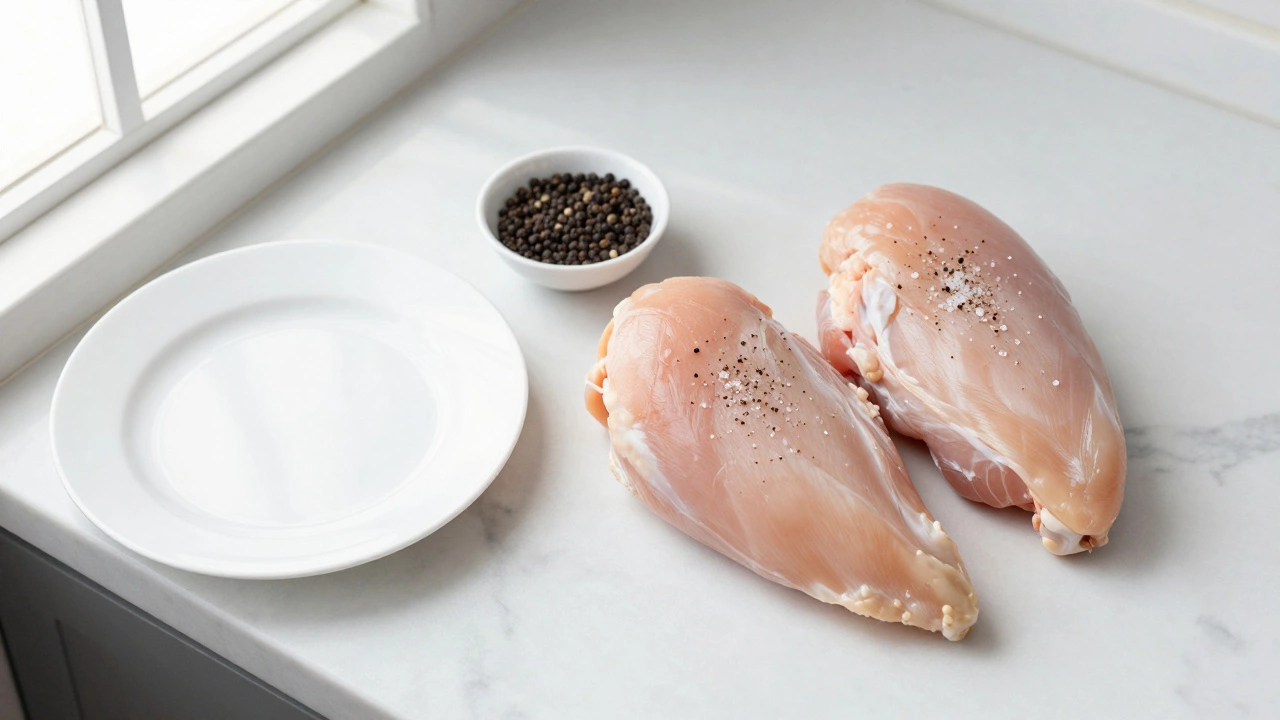
Chicken Tempering Timer & Guide
1. Select Your Cut
2. Tempering Progress
Never leave raw chicken at room temperature for more than 2 hours.
Quick Check: Why do this?
Tempering reduces thermal shock, ensuring the center reaches 165°F (74°C) without overcooking the exterior.
You've probably heard the advice to let your steak sit on the counter for 30 minutes before hitting the pan, but does that apply to poultry? Most people think "resting" only happens after the meat is cooked to keep the juices inside. However, there is a completely different process called tempering that happens before the heat even touches the meat. If you throw a freezing-cold chicken breast straight from the fridge into a searing hot skillet, you're likely sabotaging your dinner.
Quick Takeaways: The Pre-Cook Rest
- Tempering is the act of bringing meat closer to room temperature before cooking.
- It helps the chicken cook more evenly, preventing a burnt exterior and raw center.
- You don't need hours; 15 to 30 minutes is usually enough for most cuts.
- Food safety is the priority-never leave meat out for more than two hours.
- It's especially critical for thick cuts like breasts or whole birds.
What Exactly is Tempering Chicken?
When people talk about letting meat "rest" before cooking, they are actually talking about tempering is the process of allowing raw meat to lose its chill and move closer to room temperature before applying heat. This isn't about the muscle fibers relaxing-that's what happens during the post-cook rest-but about managing the thermal shock. Imagine the difference between pouring boiling water into a frozen glass versus a room-temperature one; the frozen one is more likely to crack. Your chicken behaves similarly in a pan.
If you've ever sliced into a chicken breast and found a perfectly browned crust but a center that's still slightly pink and cold, you've experienced the failure of tempering. The outside of the meat reaches the cooking temperature rapidly, while the core remains stubbornly cold. By the time the center hits a safe internal temperature, the outside is often overcooked and dry.
Why Temperature Matters for Your Meal
The core goal here is consistency. When you use Thermal Conductivity is the property of a material to conduct heat, you realize that cold meat acts as a heat sink. A cold piece of chicken drops the temperature of your oil or butter the second it hits the pan. This kills your sear and leads to steaming rather than frying.
When the meat is tempered, the heat penetrates the center much faster. This means you spend less time on the stove and achieve a more uniform cook. For those using a Meat Thermometer is a tool used to measure the internal temperature of food to ensure safety and doneness, you'll notice that tempered meat reaches the target temperature of 165°F (74°C) more predictably.
How to Rest Your Chicken Before Cooking
You don't need to treat this like a science experiment, but a few simple steps make a big difference. Start by taking your chicken out of the refrigerator about 20 to 30 minutes before you plan to cook. If you're preparing a whole roast chicken, you might want to give it a full hour, as the density of the bird keeps the center cold for longer.
Place the meat on a plate or cutting board. If you've already applied a Dry Brine is the process of seasoning meat with salt and spices hours before cooking to improve moisture retention, the tempering phase is even more effective. The salt has already started breaking down proteins, and the gradual warming helps the seasoning penetrate deeper into the muscle fibers.
Avoid the mistake of leaving the meat in a sealed plastic bag or wrap. This traps moisture and can create a breeding ground for bacteria. Instead, let it breathe on a clean surface. If you're worried about spills, use a rimmed baking sheet.
| Cut of Meat | Recommended Rest Time | Goal Temperature | Primary Benefit |
|---|---|---|---|
| Chicken Breast (Boneless) | 15-30 Minutes | Cool to Room Temp | Prevents rubbery exterior |
| Chicken Thighs (Boneless) | 20-30 Minutes | Cool to Room Temp | Better fat rendering |
| Whole Roast Chicken | 45-60 Minutes | Slightly chilled | Even internal cooking |
| Chicken Wings | 10-15 Minutes | Cool to Room Temp | Crispier skin |
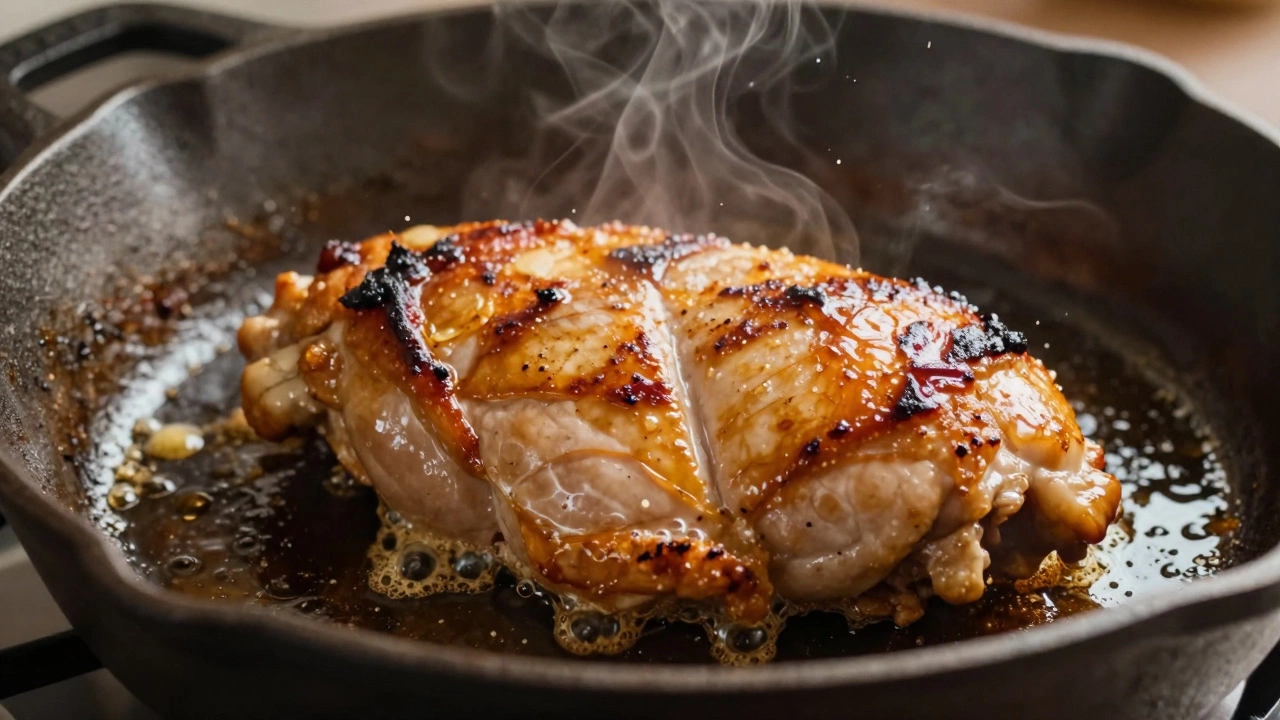
The Safety Debate: Is it Risky?
This is where most people get nervous. We are taught from day one that raw meat shouldn't sit out. The Danger Zone is the temperature range between 40°F and 140°F where bacteria grow most rapidly. It's a valid concern, but context is key. Bacteria don't suddenly multiply into a colony in 20 minutes.
Most food safety guidelines, including those from the USDA, suggest that perishable foods can be left out for up to two hours. By tempering your chicken for 30 minutes, you are well within the safety window. The risk of foodborne illness is significantly lower than the risk of eating undercooked chicken because you didn't temper it and mistakenly thought it was done.
To keep things safe, follow these rules:
- Only temper meat you intend to cook immediately.
- Keep the meat away from direct sunlight or heat vents.
- If your kitchen is extremely hot (above 90°F), shorten the tempering time to 15 minutes.
- Never re-refrigerate meat that has been tempered but not cooked.
Tempering vs. Post-Cook Resting
Don't confuse pre-cook tempering with post-cook resting. They are different tools for different problems. Tempering is about heat distribution; post-cook resting is about juice retention.
After you remove chicken from the heat, the muscle fibers are tight and have pushed the moisture toward the center. If you cut it immediately, those juices run all over the plate, leaving the meat dry. By resting the cooked meat for 5 to 10 minutes, the fibers relax and reabsorb the juices. If you do both-temper before and rest after-you're essentially guaranteeing a professional-grade result.
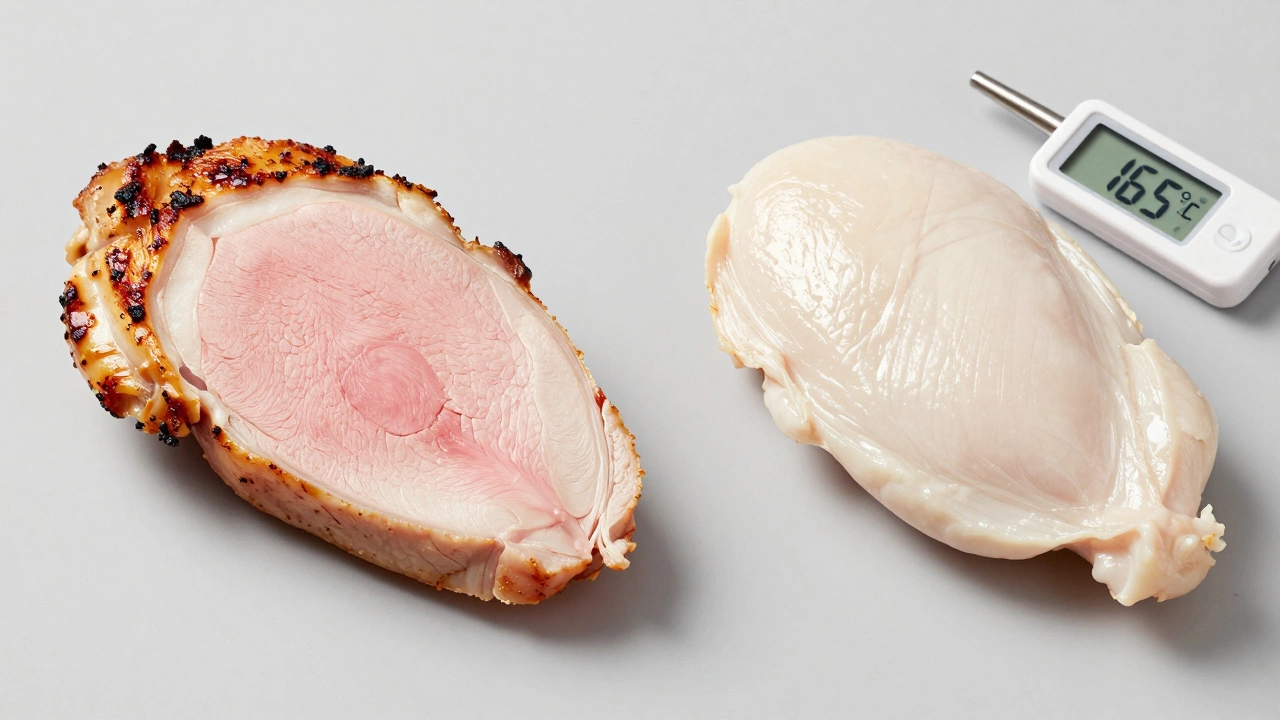
Common Pitfalls to Avoid
One of the biggest mistakes is over-tempering. Leaving a chicken breast on the counter for three hours isn't helping the cook; it's just inviting bacteria. Stick to the 30-minute rule. Another error is tempering meat in a way that makes it damp. If you're using a wet marinade, pat the meat dry with paper towels after the tempering period. Excess surface moisture creates steam, which prevents that golden-brown Maillard Reaction is a chemical reaction between amino acids and reducing sugars that gives browned food its distinctive flavor from happening.
Lastly, don't rely on a visual check. Because tempered meat cooks so much more evenly, you might be tempted to guess the doneness. Always use a probe thermometer. The difference between a juicy breast and a dry one is often just 5 degrees.
Is it really necessary to let chicken sit out before cooking?
While not strictly necessary for safety, it is highly recommended for quality. Tempering prevents the outside from overcooking before the inside is safe to eat, resulting in a juicier and more evenly cooked piece of meat.
Can I temper chicken in the microwave?
No. Microwaves heat unevenly and will start cooking the edges of the chicken while the center stays frozen or cold. This actually creates the exact problem tempering is meant to solve and increases the risk of bacterial growth in the partially warmed areas.
How long can I safely leave raw chicken on the counter?
According to standard food safety guidelines, raw meat should not be left at room temperature for more than two hours. For tempering purposes, 20 to 60 minutes is the sweet spot depending on the size of the cut.
Do I need to temper chicken if I'm poaching it?
It's less critical for poaching or slow-cooking since the temperature change is more gradual. However, for high-heat methods like pan-searing, grilling, or roasting, tempering is essential for a good sear.
What is the difference between tempering and marinating?
Marinating is about adding flavor and tenderizing the meat using acids or enzymes. Tempering is strictly about the temperature of the meat to ensure an even cook. You can do both at the same time by marinating in the fridge and then letting the marinated meat sit out for 20 minutes before cooking.
Next Steps for Better Chicken
If you're new to this, try a simple experiment. Take two chicken breasts of the same size. Put one in the pan straight from the fridge and let the other sit out for 30 minutes. Cook them for the exact same amount of time. You'll see that the tempered breast is more uniformly cooked and likely juicier. Once you master this, consider exploring reverse-searing for thicker cuts or using a sous-vide machine to eliminate the need for tempering entirely.