
Sear or Skip? The Slow Cooker Decision Tool
Not sure if you should dirty another pan? Select your meat type below to get a science-backed recommendation.
You’re rushing out the door. The kids are screaming, the dog needs walking, and you’ve got a pound of chuck steak sitting on the counter. You dump it into the slow cooker, pour in some broth, and hit start. No pan, no oil, no fuss. But then you wonder: did I just ruin dinner? Is my stew going to taste like boiled cardboard?
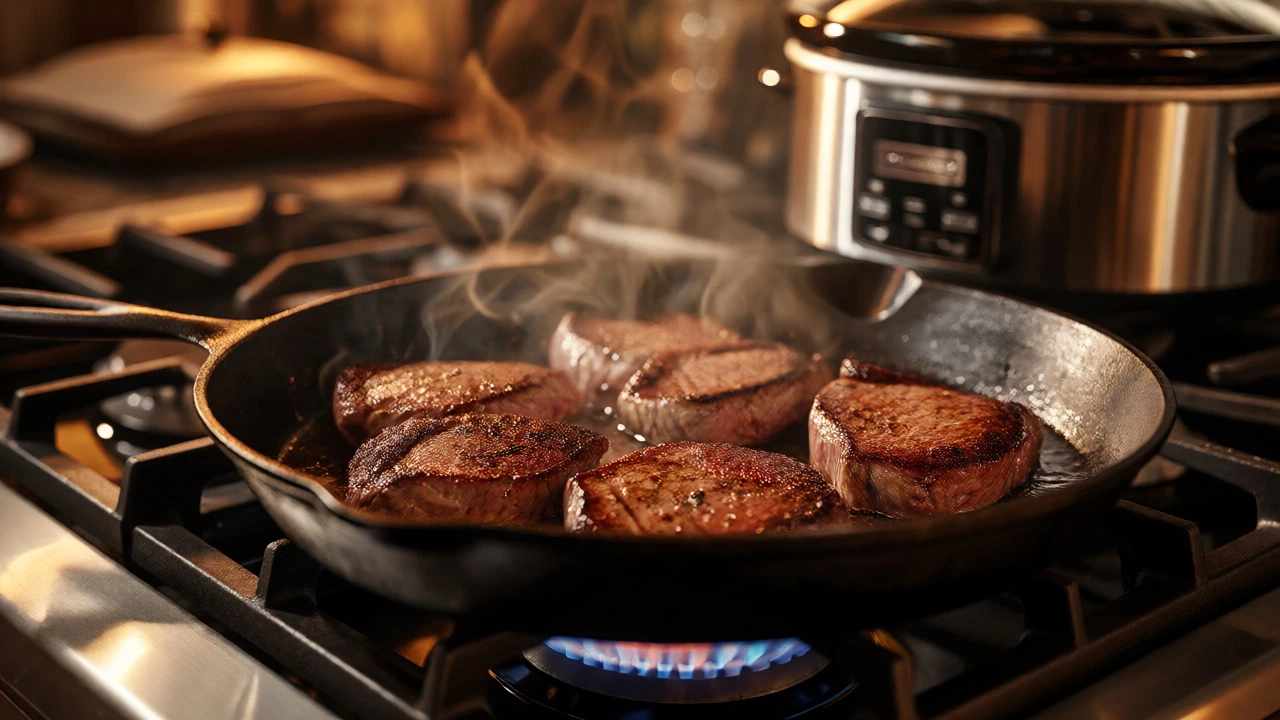
Here’s the short answer: no, you didn’t ruin it. Your meal will still be edible. It might even be tender. But if you skip searing, you’re leaving serious flavor on the table. Searing isn’t about cooking the meat through; it’s about chemistry. Specifically, it’s about the Maillard reaction, a chemical process that creates complex, savory flavors when proteins and sugars meet high heat. Without it, your dish lacks depth. With it, you get that rich, umami-packed taste that makes people ask for seconds.
The Science Behind the Brown Bits
Let’s break down what actually happens when you put a cold piece of beef into a hot pan. This isn’t magic; it’s thermodynamics. When the surface temperature of the meat exceeds 140°C (285°F), amino acids and reducing sugars react. This is the Maillard reaction. It produces hundreds of new flavor compounds and gives meat its brown color.
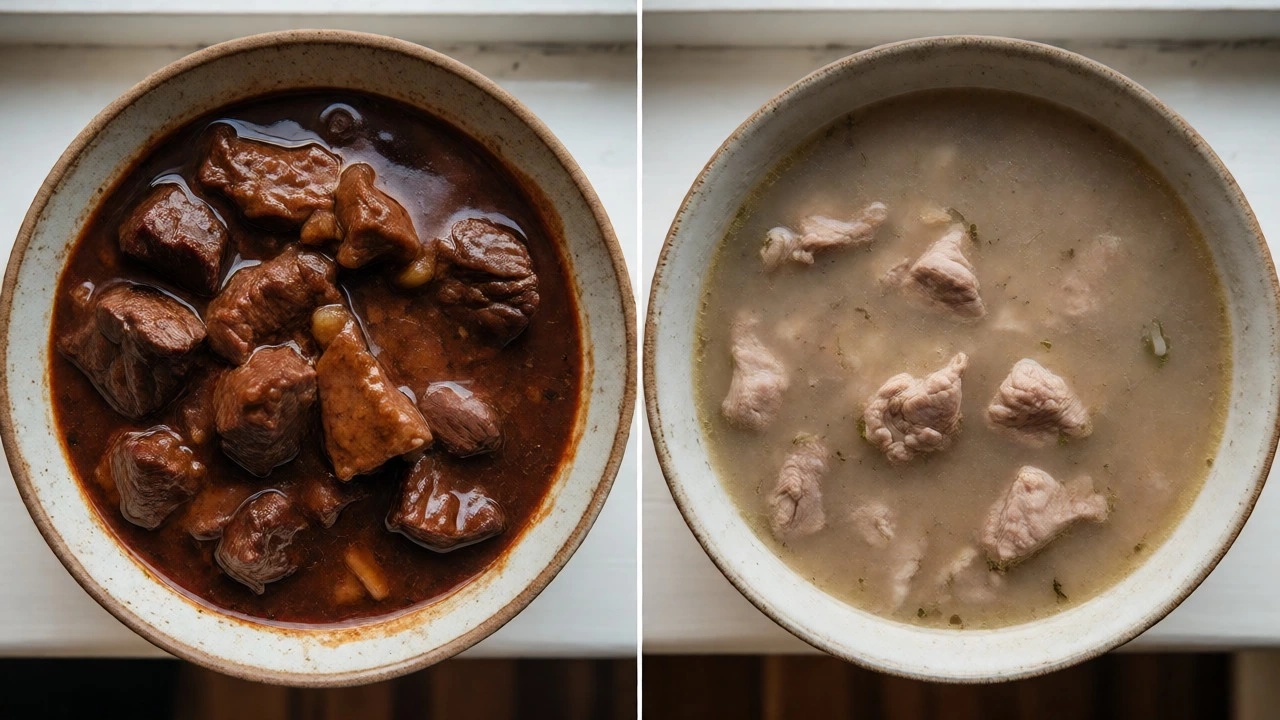
A slow cooker works differently. It cooks at low temperatures, usually between 80°C and 90°C (176°F-194°F). At these temps, the Maillard reaction barely happens. If you drop raw meat into a slow cooker, it essentially poaches or steams in its own juices and the added liquid. The result? A pale, grayish exterior and a flavor profile that tastes more like "cooked" than "delicious."
Think of it this way: searing builds the foundation. The slow cooker does the heavy lifting of breaking down connective tissue. You need both for the best result. Skipping the first step means you’re building a house without a concrete slab. It stands up, but it won’t last long in memory.
Flavor vs. Convenience: The Real Trade-Off
Why do so many recipes insist on searing? Because it changes the texture and taste of the final sauce. Those brown bits stuck to the bottom of your frying pan aren’t burnt mess; they’re concentrated flavor bombs. Chefs call them "fond." When you deglaze the pan with wine, stock, or beer and scrape those bits loose, you add layers of complexity to your gravy.
If you skip this, your sauce stays thin and one-dimensional. It might taste salty because you had to compensate for the lack of depth, but it won’t have that rounded, savory richness. Here’s a quick comparison of what you can expect:
| Attribute | Sear First | No Sear |
|---|---|---|
| Prep Time | +10-15 minutes | 0 minutes |
| Cleanup | Extra pan to wash | One pot only |
| Meat Color | Brown, appetizing | Pale gray, unappealing |
| Sauce Depth | Rich, complex, umami | Thin, flat, metallic |
| Texture | Slightly firmer exterior | Uniformly soft/mushy |
Notice that cleanup is the biggest pain point. Washing a greasy skillet after work feels like a chore. But consider this: you can use the same pan to sauté onions and garlic before dumping everything into the slow cooker. That kills two birds with one stone.
When You Can Skip Searing (And When You Shouldn’t)
Not every dish demands a pre-sear. Context matters. If you’re making a delicate white chicken soup where clarity is key, browning might muddy the broth. Or if you’re using ground meat in a chili, browning helps drain excess fat, which is crucial for health-conscious cooks. But for tough cuts like beef shank, lamb shoulder, or pork butt? Searing is non-negotiable if you want restaurant-quality results.
Consider these scenarios:
- Beef Stew: Always sear. The contrast between the browned crust and the tender interior defines the dish.
- Pulled Pork: Optional. Many pitmasters skip it because the rub provides flavor, but a quick sear adds a nice bark-like texture.
- Chicken Thighs: Skip it if skinless. If bone-in with skin, sear skin-side down to render fat and prevent rubbery skin.
- Ground Beef Tacos: Brown and drain. Raw ground beef clumps together and releases too much water, making tacos soggy.
If you’re pressed for time, prioritize dishes where flavor impact is highest. For a simple vegetable-heavy curry with tofu, skipping searing is fine. For a Sunday roast-style pot roast, don’t even think about it.
How to Sear Properly (Without Ruining Your Kitchen)
Most people fail at searing because they overcrowd the pan. When you pack too many pieces of meat into a skillet, the temperature drops. Instead of browning, the meat steams. You end up with gray, wet chunks instead of golden-brown beauties.
Follow these steps for perfect searing:
- Dry the meat. Pat it dry with paper towels. Moisture is the enemy of browning. Wet meat steams; dry meat browns.
- Heat the pan properly. Use a heavy-bottomed skillet (cast iron is ideal). Add a high-smoke-point oil like avocado or grapeseed. Wait until the oil shimmers.
- Don’t touch it. Place the meat in the pan and leave it alone. Let it sit for 2-3 minutes. If it sticks, it’s not ready to flip.
- Work in batches. Give each piece space. Crowding lowers the pan temperature and ruins the Maillard reaction.
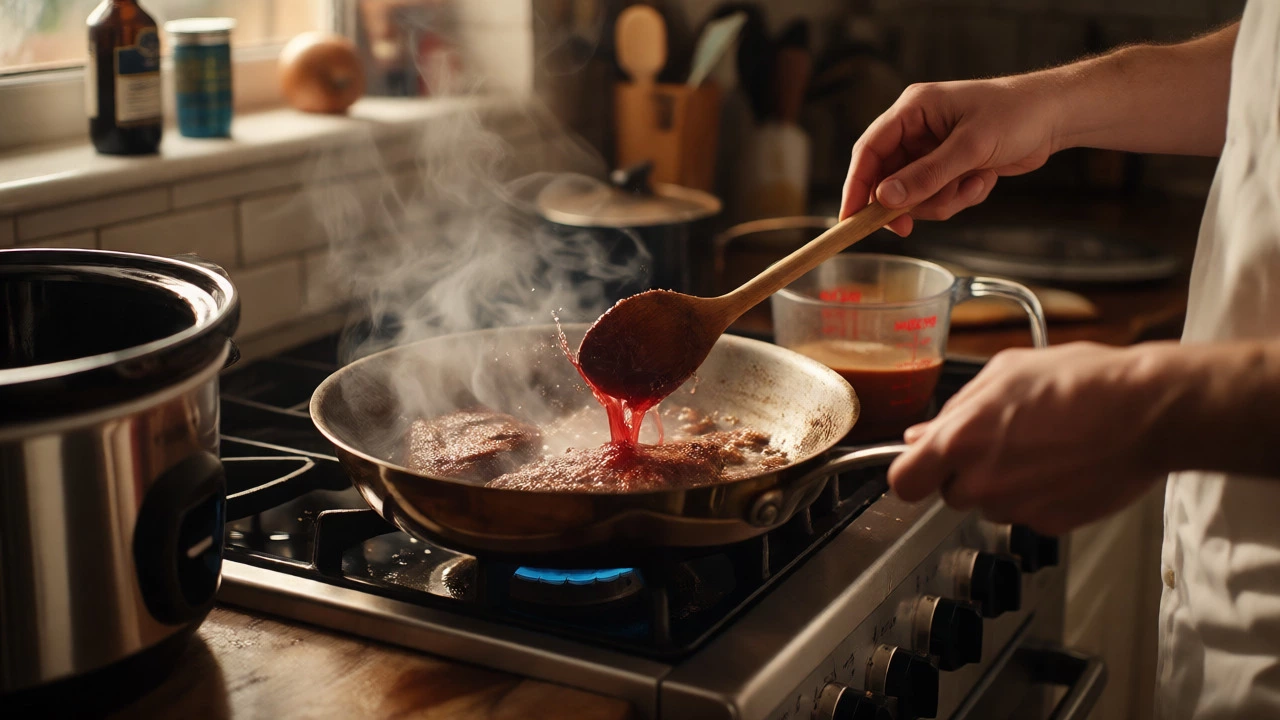
- Deglaze immediately. Once the meat is browned, remove it. Pour a splash of broth, wine, or water into the hot pan. Scrape up the brown bits with a wooden spoon. Pour this liquid gold into your slow cooker.
This whole process takes less than ten minutes if you organize well. Season your meat while the pan heats up. Have your veggies chopped and ready to go. It’s all about workflow.
Alternatives to Traditional Searing
If washing a pan is your absolute dealbreaker, there are hacks. Some modern slow cookers come with a "Sear" or "Brown" setting. These function like a stovetop burner built into the ceramic insert. It’s convenient, though not as effective as a dedicated cast-iron skillet because the heat distribution is often uneven.
Another trick: use a broiler. Place seasoned meat on a baking sheet and run it under the oven’s broiler for 5-7 minutes per side. It gets the job done, though it heats up your kitchen-a downside in an Australian summer. Just watch it closely; broilers burn food fast.
For ground meats, you can microwave them briefly to break up clumps, then transfer to the slow cooker. It won’t give you the Maillard flavor, but it prevents the texture issues associated with raw ground meat in a stew.
Common Myths About Slow Cooking
There’s a persistent myth that searing seals in juices. It doesn’t. Tests by J. Kenji López-Alt and others have shown that seared meat actually loses slightly more moisture during cooking than unseared meat. The benefit is purely flavor and appearance, not juiciness. Don’t sear to keep it moist; sear to make it taste good.
Another myth: you must let meat come to room temperature before searing. For thick cuts, this helps ensure even cooking, but for standard stew cubes, it makes little difference. Dry it off, season it, and throw it in the pan. Efficiency wins here.
Finally, people worry that searing makes the meat tough. It doesn’t. The high heat only affects the surface. The internal temperature rises slowly in the slow cooker, keeping the inside tender. In fact, the slight firmness on the outside helps the meat hold its shape better during long cooks.
Does searing meat make it safer to eat?
No. Searing is primarily for flavor and texture. Since the meat continues to cook in the slow cooker at safe temperatures for several hours, any bacteria on the surface will be killed regardless of whether you seared it first. However, searing ground meat helps reduce bacterial load early on, which is a minor safety bonus.
Can I use frozen meat in a slow cooker?
Yes, but it’s risky. Frozen meat keeps the slow cooker in the "danger zone" (4°C-60°C) longer, allowing bacteria to multiply. Also, frozen meat releases a lot of water, diluting your sauce. If you must use frozen meat, skip the sear and extend the cooking time by 1-2 hours. Thawing in the fridge overnight is always better for texture and safety.
What oil is best for searing meat?
Use oils with a high smoke point, such as avocado oil, grapeseed oil, or refined coconut oil. Olive oil can work but has a lower smoke point and may impart a fruity flavor that clashes with hearty stews. Avoid butter for initial searing as milk solids burn quickly; save butter for finishing sauces.
Do I need to sear vegetables before slow cooking?
It depends. Root vegetables like carrots and potatoes benefit from a quick roast or sauté to bring out natural sugars and improve texture. Leafy greens should never be seared; add them in the last 30 minutes to prevent mushiness. Onions and garlic gain significant flavor depth from sautéing before entering the slow cooker.
Will my stew taste bad if I forget to sear?
It won’t taste "bad," just different. It will likely be milder and less complex. You can compensate by adding umami-rich ingredients like Worcestershire sauce, soy sauce, tomato paste, or mushroom powder directly into the slow cooker. These shortcuts mimic some of the depth lost by skipping the sear.