
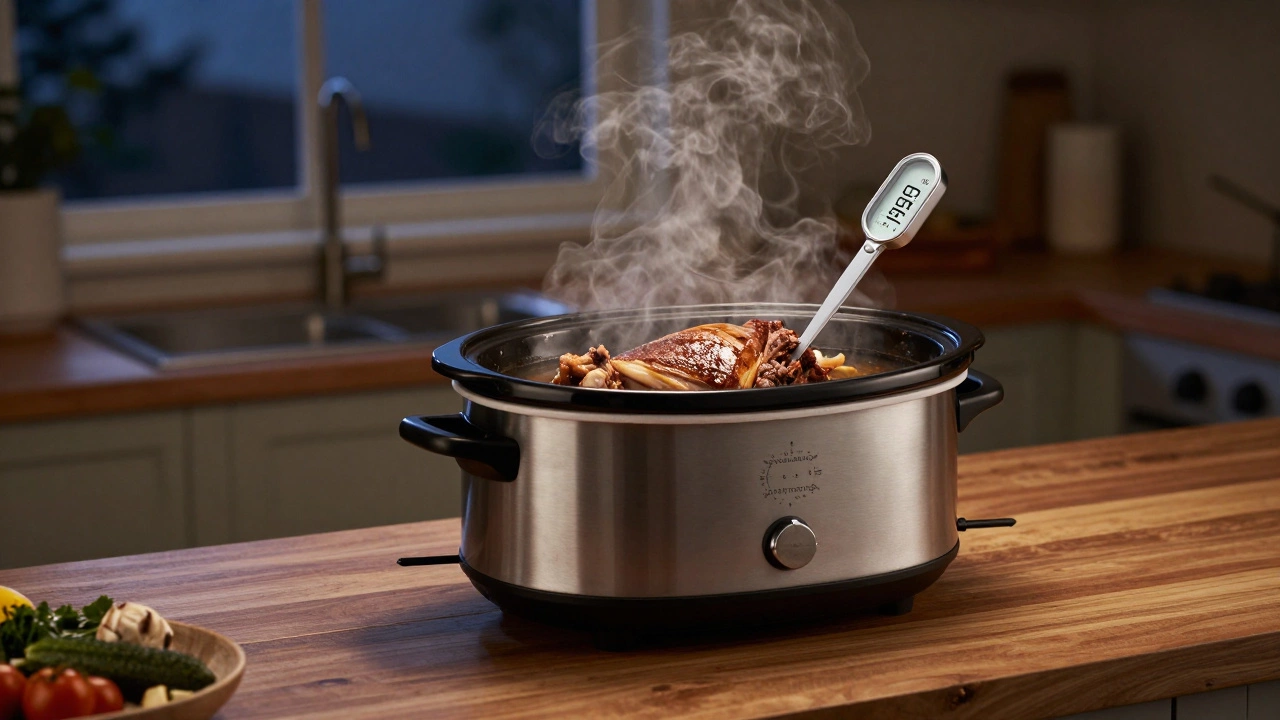
Crockpot Safety Temperature Calculator
How This Calculator Works
Enter your crockpot cooking parameters to see if your meat is safe. This calculator uses USDA guidelines based on the danger zone (40°F - 140°F / 4°C - 60°C).
Leaving meat in a crockpot overnight sounds like a convenient way to get dinner ready without lifting a finger. But is it actually safe? Many people do it-tossing in a chuck roast before bed and walking away until morning. Others worry about bacteria, spoilage, or worse. The truth isn’t as simple as yes or no. It depends on how you use your slow cooker, what kind of meat you’re cooking, and whether you’re following basic food safety rules.
How Slow Cookers Work
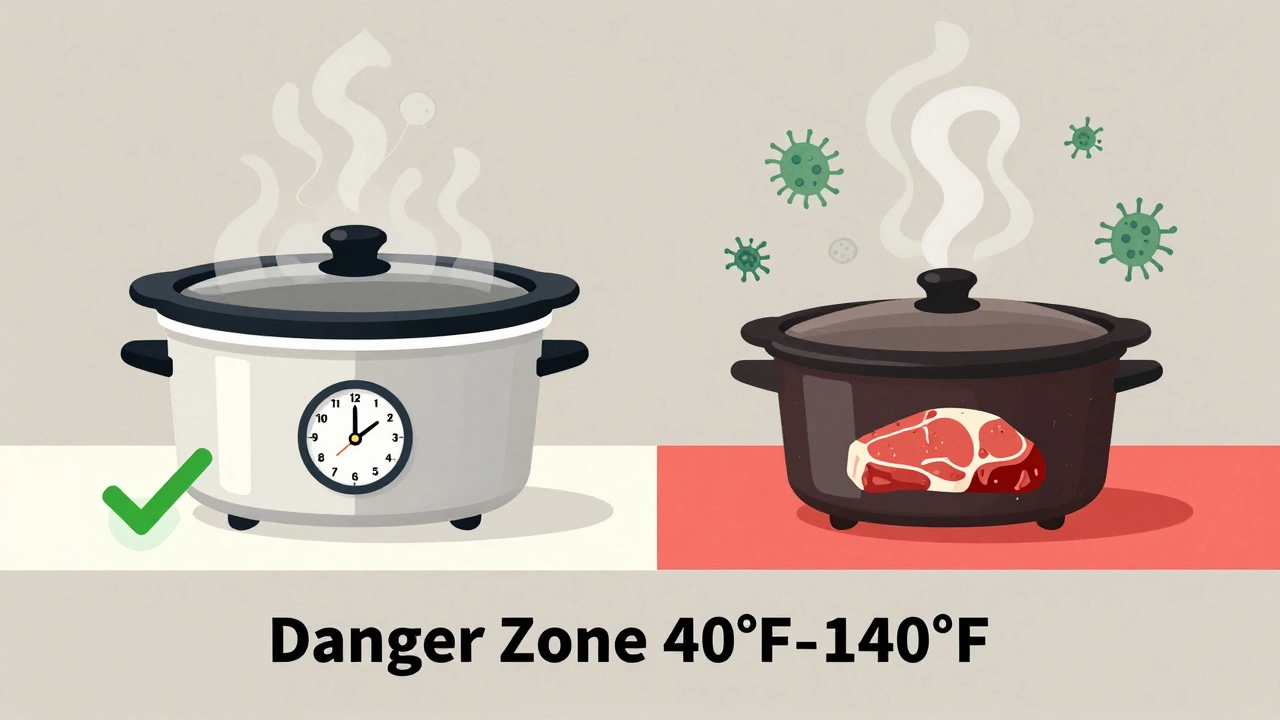
Slow cookers don’t just keep food warm-they cook it slowly over hours using low, steady heat. Most models have three settings: low, high, and warm. The low setting typically runs between 170°F and 200°F (77°C to 93°C), while high is around 280°F to 300°F (138°C to 149°C). The key to safety is getting food through the danger zone-between 40°F and 140°F (4°C and 60°C)-as quickly as possible. That’s where bacteria like Salmonella and E. coli multiply fastest.
If you start with raw meat and set the crockpot to low, it can take 6 to 8 hours to reach a safe internal temperature. That’s fine if you’re starting the cook cycle before you leave for work or go to bed. But if you leave raw meat sitting in the crockpot for hours before turning it on? That’s a problem. The meat stays in the danger zone too long, and bacteria can grow to unsafe levels even before cooking begins.
What Happens If You Leave Meat in a Crockpot Overnight?
Let’s break this down into two scenarios: one where the crockpot is turned on and cooking, and one where it’s just sitting with raw meat inside.
- Scenario 1: The crockpot is on and cooking. If you set your crockpot to low before bed and it’s been running for 8-10 hours, the meat will likely be fully cooked and safe to eat. Most cuts of beef, pork, or chicken will reach an internal temperature above 165°F (74°C) after 8 hours on low. That’s enough to kill harmful bacteria. The USDA confirms that slow cookers are safe when used properly, and many recipes are designed for overnight cooking.
- Scenario 2: The crockpot is off, and meat is sitting inside. This is where things get risky. If you put raw meat into the crockpot, turn it off, and leave it on the counter overnight, you’re creating a perfect breeding ground for bacteria. Even if you turn it on in the morning, the meat may have already spent too much time in the danger zone. That’s not something you can cook away.
There’s also a third scenario: cooking the meat all day, then leaving it on the “warm” setting overnight. This one is tricky. The warm setting on most slow cookers hovers around 145°F (63°C). The USDA says food should stay above 140°F (60°C) to stay safe. So technically, if your crockpot maintains 145°F or higher, it’s still safe. But many crockpots drop below that threshold after several hours, especially older models. You can’t assume “warm” is safe unless you’ve tested it with a thermometer.
How to Check If Your Crockpot Is Safe
Not all slow cookers are created equal. Some heat unevenly. Others lose heat over time. Here’s how to test yours:
- Fill the crockpot halfway with water.
- Cover it and set it to low for 8 hours.
- After 8 hours, check the water temperature with a food thermometer.
If the water is at least 140°F (60°C), your crockpot is safe for keeping food warm overnight. If it’s below that, don’t rely on the “warm” setting. Instead, transfer the food to a refrigerator after cooking and reheat it the next day.
Best Practices for Overnight Cooking
If you want to cook meat safely overnight, follow these simple rules:
- Start with cold ingredients. Never leave raw meat sitting out before adding it to the crockpot. Put it straight from the fridge into the pot.
- Use the right setting. For overnight cooking, use low. High settings can overcook meat and dry it out. Low gives you tender results without risking undercooking.
- Don’t overfill. Your crockpot should be between half and two-thirds full. Too little liquid or too much food can prevent even heating.
- Keep the lid on. Every time you lift the lid, you lose heat. That can add 15-20 minutes to your cooking time. Resist the urge to check on it.
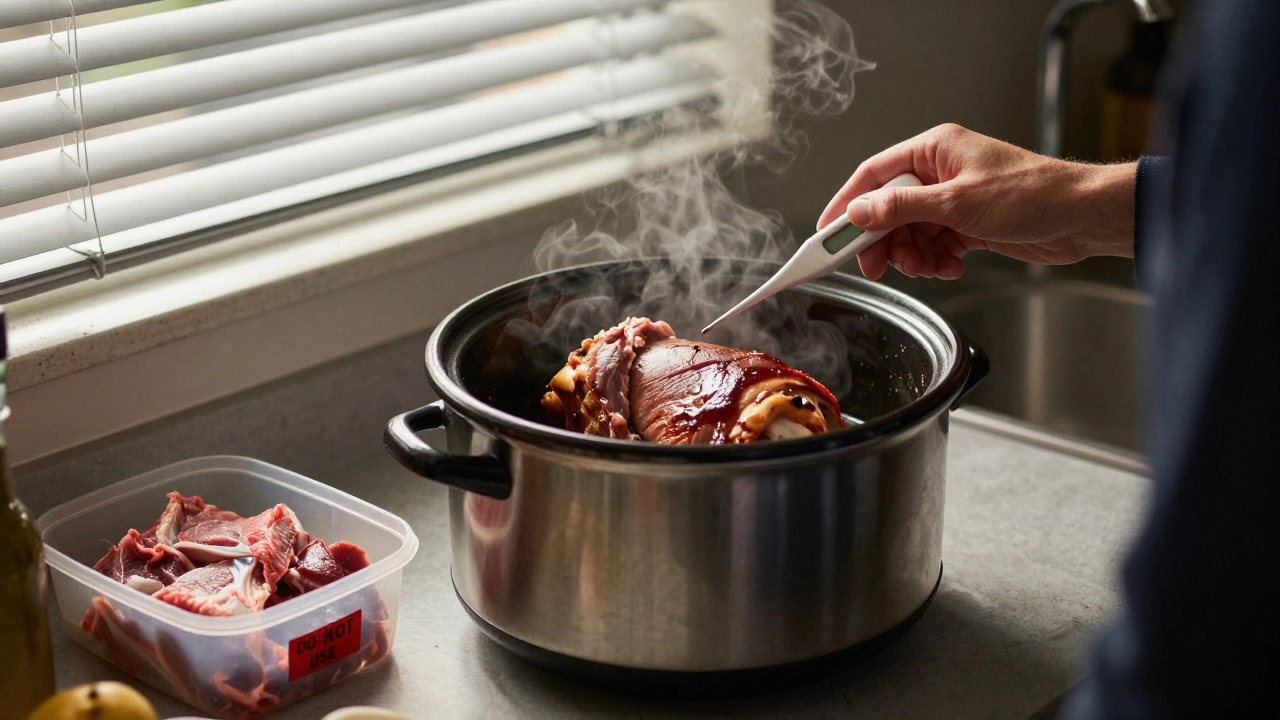
- Use a food thermometer. The only way to know if meat is safe is to check its internal temperature. Chicken should hit 165°F (74°C). Beef and pork should reach 145°F (63°C) with a 3-minute rest.
What About Leftovers?
Once your meat is cooked, you need to handle leftovers properly. Don’t leave it sitting in the crockpot for hours after cooking. Even if it’s still warm, the temperature will eventually drop into the danger zone. Here’s what to do:
- Remove the meat and sauce from the crockpot within 2 hours of cooking.
- Divide large portions into smaller containers to cool faster.
- Refrigerate within 2 hours. If your kitchen is warm (above 90°F/32°C), refrigerate within 1 hour.
- Reheat leftovers to 165°F (74°C) before eating.
Many people think “if it smells fine, it’s fine.” That’s a dangerous myth. Spoiled food doesn’t always smell bad. Bacteria like Clostridium perfringens can grow without changing the smell or appearance of food.
What Types of Meat Are Safe Overnight?
Some meats handle long cooking times better than others:
- Chuck roast, brisket, pork shoulder - These are tough cuts with lots of connective tissue. They benefit from 8-10 hours of slow cooking. They become tender and juicy.
- Chicken thighs or drumsticks - Dark meat holds up better than breast meat. Chicken breast can turn dry and stringy if cooked too long.
- Ground beef - Can be cooked overnight, but it’s best to brown it first. Raw ground meat has more surface area for bacteria to grow.
- Delicate proteins - Fish, shrimp, tofu, and lean chicken breast should not be cooked overnight. They’ll turn mushy or overcooked.
Common Mistakes People Make
Even experienced cooks slip up. Here are the most common errors:
- Putting frozen meat directly into the crockpot without thawing. Frozen meat takes too long to heat up, spending too much time in the danger zone.
- Adding dairy products like milk or cream at the start. They can curdle after long cooking. Add them in the last 30 minutes.
- Using too much liquid. Slow cookers trap steam, so you need less liquid than stovetop recipes. Too much makes everything soggy.
- Assuming “overnight” means 12+ hours. Most recipes call for 8 hours on low. Going longer doesn’t make it safer-it just makes it mushy.
What If You Forgot and Left It On Overnight?
Let’s say you meant to turn on the crockpot before bed, but you forgot. You wake up to find the meat sitting in the pot, untouched, for 12 hours. What do you do?
If the meat was raw and the crockpot was off? Toss it. Don’t risk it. Food poisoning isn’t worth saving a $15 cut of beef.
If the crockpot was on low and the meat is fully cooked? Check the temperature. If it’s still above 140°F, it’s probably safe. If it’s below that, reheat it to 165°F. If you’re unsure, throw it out.
When in doubt, throw it out. That’s the golden rule of food safety.
Final Answer: Is It OK to Leave Meat in a Crockpot Overnight?
Yes-but only if the crockpot is turned on and cooking. If you start with cold, fresh meat, use the low setting, and let it run for 8-10 hours, you’ll get tender, safe results. But if you leave raw meat sitting in an unheated pot overnight? That’s a recipe for illness. Always use a thermometer. Always refrigerate leftovers within two hours. And never assume your slow cooker is doing what you think it is-test it.
Slow cookers are amazing tools. But like any kitchen appliance, they need respect. Treat them like a reliable partner-not a magic box that does everything for you.