
Slow Cooker Safety Risk Calculator
Assess Your Risk
Enter your slow cooker usage details to see potential safety hazards.
Safety Assessment
Safe Alternatives
- Reduce liquid by 20-30% from recipe
- Leave lid on - Opening it disrupts cooking
- Use vented lid or lift slightly near end of cooking
- Thicken sauces with cornstarch mixture
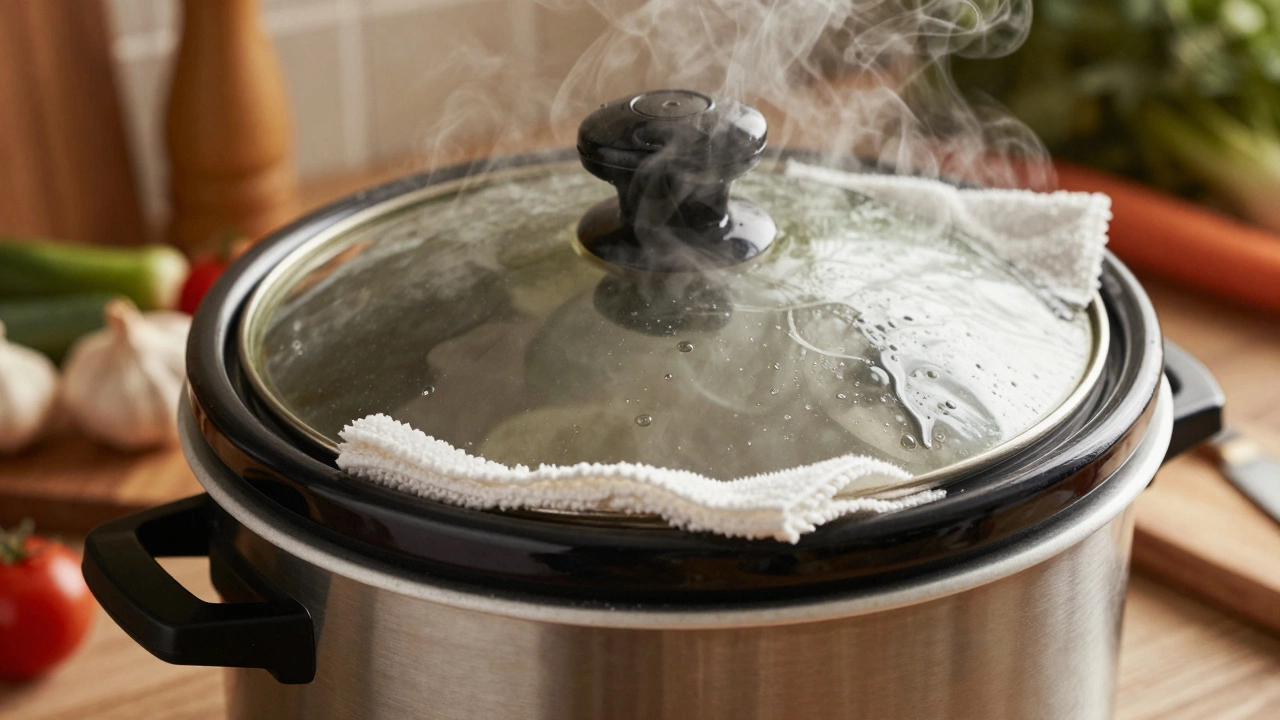
Leaving a tea towel under a slow cooker lid might seem like a harmless trick-maybe you’ve seen it online, or a friend swears by it. But here’s the truth: it’s not safe, and doing it regularly could put your kitchen at risk.
Why People Do It
Many home cooks use a tea towel under the lid to absorb condensation. Slow cookers naturally build up steam, and that moisture drips back down onto the food, making dishes watery or diluting sauces. The idea is simple: put a dry towel between the lid and the pot to soak up the drops, keeping your stew thick and flavorful. Some even say it helps the food cook faster by trapping heat better. But this trick comes with hidden dangers you can’t see until it’s too late.The Real Risk: Heat and Fire
Slow cookers operate at temperatures between 77°C and 93°C on low, and up to 150°C on high. The lid itself can get hot enough to ignite fabric. A cotton tea towel isn’t flame-retardant. Even if it doesn’t catch fire right away, prolonged contact with a hot surface can cause it to smolder-slow, silent, and deadly. In 2023, the Australian Fire and Rescue Service reported 17 kitchen fires linked to slow cookers. Three of those cases involved fabric placed too close to the heating element or lid. None of the homeowners realized the towel was a fire hazard until smoke filled their kitchen. The heat doesn’t need to be extreme to cause damage. A damp towel can also trap steam, increasing pressure under the lid. That pressure can force the lid off suddenly, spraying hot liquid across your countertop-or your hands.What Happens When Steam Gets Trapped
Slow cookers are designed to release steam gradually through small gaps in the lid. That’s intentional. It keeps pressure low and prevents explosions. A tea towel pressed under the lid blocks those vents. Steam has nowhere to go. Over time, pressure builds. The lid might lift slightly, or worse-it could pop off entirely. You’ll hear a loud hiss. Then comes the splash. Hot broth, beans, or gravy can hit your skin, your clothes, or your floor. Burns from slow cooker spills are common, and they’re often worse than people expect because the liquid stays hot for minutes after it lands.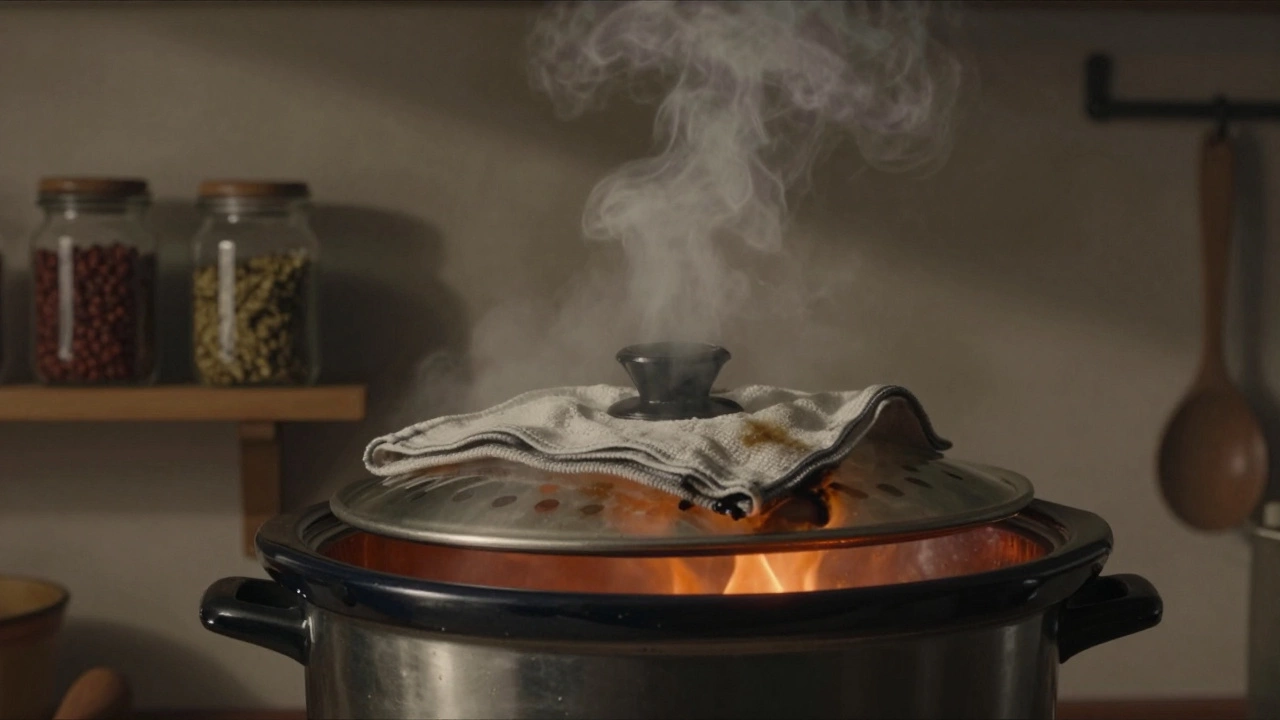
Safe Alternatives That Actually Work
You don’t need a towel to keep your food from getting watery. Here’s what to do instead:- Reduce the liquid by 20-30% from the recipe. Most slow cooker recipes are written for older models that leaked more steam. Modern ones seal better.
- Leave the lid on. Opening it even once drops the internal temperature by 15-20°C, forcing the cooker to work harder and longer. That’s when moisture builds up.
- Use a lid with a vented design. Some newer models have built-in steam vents. If yours doesn’t, lift the lid slightly with a wooden spoon for 10-15 minutes near the end of cooking. That lets steam escape without losing heat.
- Thicken sauces at the end. Mix 1 tablespoon of cornstarch with 2 tablespoons cold water. Stir it into the pot during the last 30 minutes. No towels needed.
What About Dish Towels on the Counter?
Some people place the towel on the counter under the slow cooker, not under the lid. That’s fine-as long as it’s not touching the appliance. A dry towel under the base won’t cause a fire, but it’s unnecessary. Slow cookers are designed to sit on heat-resistant surfaces. Your countertop is fine. If you’re worried about scratches, use a silicone mat or a ceramic trivet.Real-Life Consequences
A woman in Geelong lost her kitchen in 2024 after leaving a cotton towel under her slow cooker lid overnight. The towel smoldered for hours. She didn’t smell smoke until flames licked the cabinets. Her insurance claim was denied because the investigation found she’d modified the appliance’s intended use. Another family in Brisbane had a near-miss when their toddler pulled the slow cooker off the counter. The lid flew off, scalding the child’s arm. The towel underneath had blocked the vent, increasing internal pressure. That’s when the lid popped. These aren’t rare cases. They’re preventable.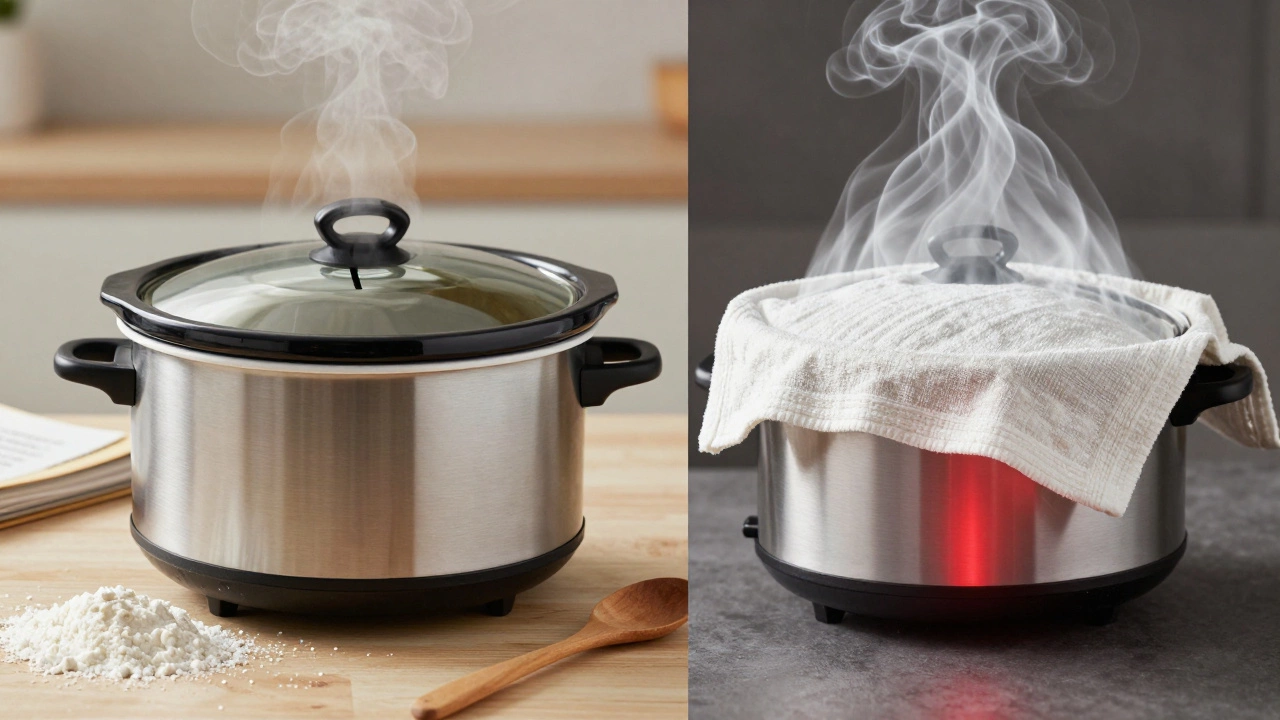
What the Manufacturers Say
All major slow cooker brands-Crock-Pot, Instant Pot, Ninja, and others-clearly warn against placing any fabric, paper, or non-approved items under or around the lid. Their manuals state: "Never cover the lid or place materials between the lid and the appliance." These warnings aren’t legal footnotes. They’re based on real incidents and engineering tests. The manufacturers know exactly what happens when you block the steam vents.When You Might Be Tempted to Break the Rules
You’re making a rich beef stew. The sauce is too thin. You’ve cooked it for 8 hours. You’re tired. You just want it to taste right. That’s when the towel seems like the easy fix. But it’s not. You’re trading safety for flavor-and the cost isn’t worth it. Instead, turn the slow cooker to high for the last 30 minutes. Stir. Let the liquid reduce naturally. Taste. Adjust salt. Done. No towels. No risk.Final Rule: Trust the Design
Slow cookers work because they’re engineered to cook slowly, evenly, and safely. Every part of the appliance has a purpose. The lid isn’t just a cover-it’s a pressure regulator. The base isn’t just a container-it’s a heat distributor. Don’t modify it. Don’t improvise. Don’t use a towel. If you want thicker sauce, adjust the recipe. If you want to keep your kitchen safe, leave the towel on the rack.Can I use a paper towel instead of a tea towel?
No. Paper towels are even more flammable than cotton tea towels. They can ignite faster and burn more quickly. They also break down when wet, which can leave fibers in your food. Never use paper, cloth, or any fabric under a slow cooker lid.
What if I only leave the towel there for an hour?
Even short periods are risky. Heat builds up over time, and the towel can begin to smolder without any visible signs. It only takes one minute for a fire to start. If you’re not watching it constantly, you’re gambling with safety.
Does a silicone lid cover work better?
Silicone lid covers are designed for oven use, not slow cookers. They’re not meant to replace the original lid. Using one could block steam vents, trap pressure, and interfere with cooking. Stick with the lid that came with your appliance.
Can I put a towel on the counter under the slow cooker?
Yes, as long as it doesn’t touch the appliance. A dry towel under the base won’t cause a fire, but it’s not necessary. Slow cookers are safe on heat-resistant surfaces like granite, quartz, or wood. Use a silicone mat if you’re worried about scratches.
Why don’t slow cookers come with absorbent lids?
Because absorbent lids would interfere with steam release and pressure control. Slow cookers rely on controlled evaporation to cook food properly. Adding absorbent material would change the cooking dynamics, potentially leading to undercooked food or dangerous pressure buildup. The design is intentional for safety and performance.