
Junk Food Mood Tracker
Track Your Eating Patterns
Record your junk food choices and how they make you feel. Over time, you'll discover patterns that help you make better choices aligned with how you want to feel.
Log Your Meal
Your Insights
Log your first meal to see your personal patterns emerge.
Your Logs
| Date | Food | Reason | Right After | Next Day |
|---|
You know the drill. You’ve had a long day. The kids are finally asleep. The dishes are still in the sink. And all you want is a greasy burger, a bag of salty chips, or a whole tub of ice cream. You reach for it. You eat it. And then… the guilt hits. Hard.
Here’s the truth: you don’t have to give up junk food to feel good about yourself. The problem isn’t the food-it’s the story you tell yourself about it. You think eating it means you’ve failed. That you’re lazy. That you don’t have willpower. But what if you could eat those foods and still feel in control? What if you could enjoy them without the emotional hangover?
It’s not about cutting them out. It’s about changing how you eat them.
Stop treating junk food like a secret
The moment you label something as "bad," it becomes forbidden. And forbidden things? They’re irresistible. You hide them. You sneak them. You eat them alone in the dark with the lights off, hoping no one will find out.
That’s not freedom. That’s shame.
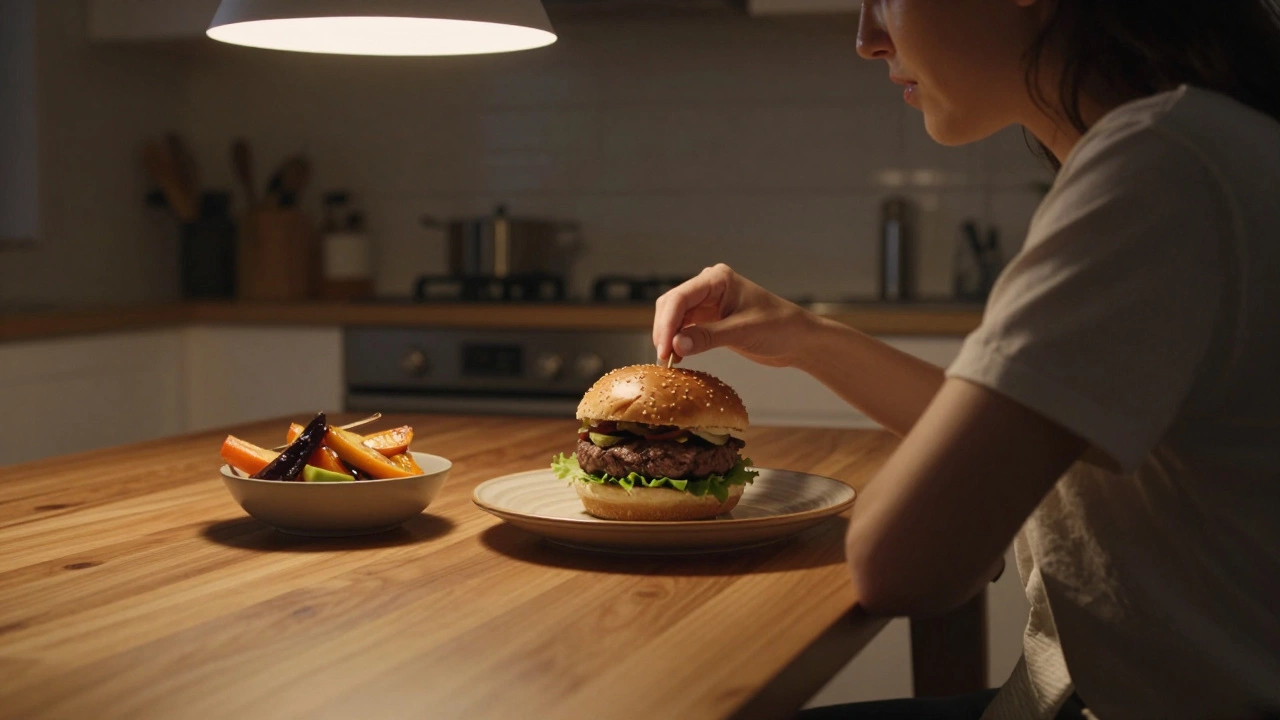
Instead, bring junk food out of the shadows. Buy it. Keep it in the pantry. Eat it at the table. Sit down. Use a plate. Put a napkin on your lap. Treat it like any other meal.
Why does this matter? Because when you stop hiding, you stop overeating. When you know it’s there, you don’t binge. You don’t feel like you’re stealing. You feel like you’re choosing.
Studies show people who allow themselves all foods-without restriction-end up eating less of the "forbidden" stuff over time. It’s not magic. It’s psychology.
Plan your indulgences
Want fries? Don’t grab them on impulse after a stressful meeting. Plan for them.
Set aside one or two meals a week as your "junk food windows." Friday night pizza. Saturday afternoon nachos. Sunday morning donuts. Make it a ritual, not a reaction.
When you plan it, you stop feeling like you’re losing control. You’re not giving in-you’re showing up. You’re honoring your cravings instead of fighting them.
And here’s the kicker: when you know you have permission to eat it later, you’re less likely to binge right now. Your brain stops screaming, "This is my last chance!"
Make it better, not bigger
You don’t need to eat a whole family-sized bag of chips. You don’t need a double-decker cheeseburger with extra bacon. You need to enjoy it.
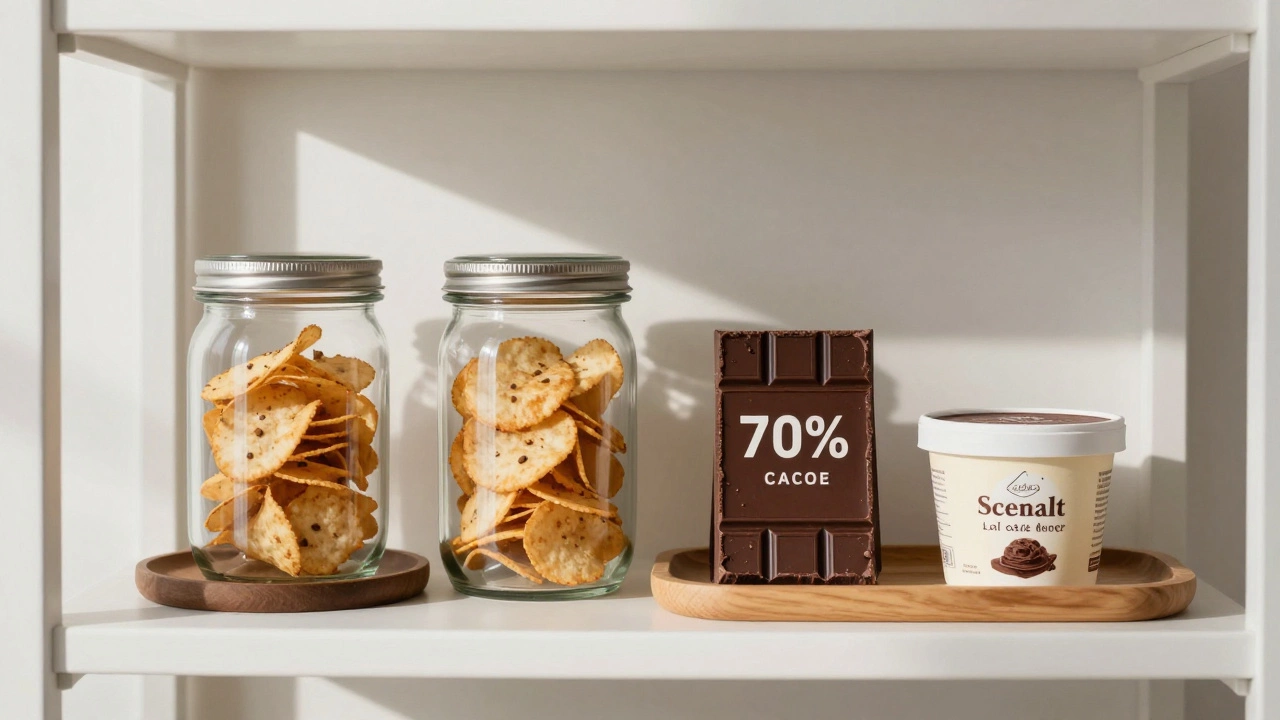
Try this: instead of buying the biggest pack, get the gourmet version. Go for the small-batch chips with real sea salt and vinegar. Pick the burger from the local shop that uses grass-fed beef. Choose the dark chocolate bar with 70% cacao instead of the sugary candy bar.
Why? Because better ingredients = more flavor = less to eat. You’ll feel satisfied with half the amount. And you’ll actually taste it.
There’s a reason you crave junk food. It’s not because you’re weak. It’s because your brain is wired to seek out fat, salt, and sugar. But your taste buds can learn to appreciate quality. A single perfect slice of pepperoni pizza can be more satisfying than three slices of a cheap frozen one.
Eat slowly. Really slowly.
Most guilt comes from not even remembering you ate the food.
You open the bag. You stare at the TV. You finish the bag. You feel empty. Then you feel guilty.
Change that. Put down the phone. Turn off the screen. Sit at the table. Take one bite. Chew it. Really chew it. Notice the crunch. The salt. The oil. The warmth.
Put your fork down between bites. Wait ten seconds. Breathe.
When you eat mindfully, you get more pleasure from less. You don’t need to eat the whole thing to feel satisfied. Your brain needs about 20 minutes to register fullness. If you’re rushing, you’ll eat past that point-and then feel awful.
Try this next time: eat your favorite snack for five minutes. No distractions. Just you and the food. You’ll be surprised how much you enjoy it-and how quickly you feel done.
Pair it with something good
Junk food doesn’t have to be the whole meal. Make it part of a balanced moment.
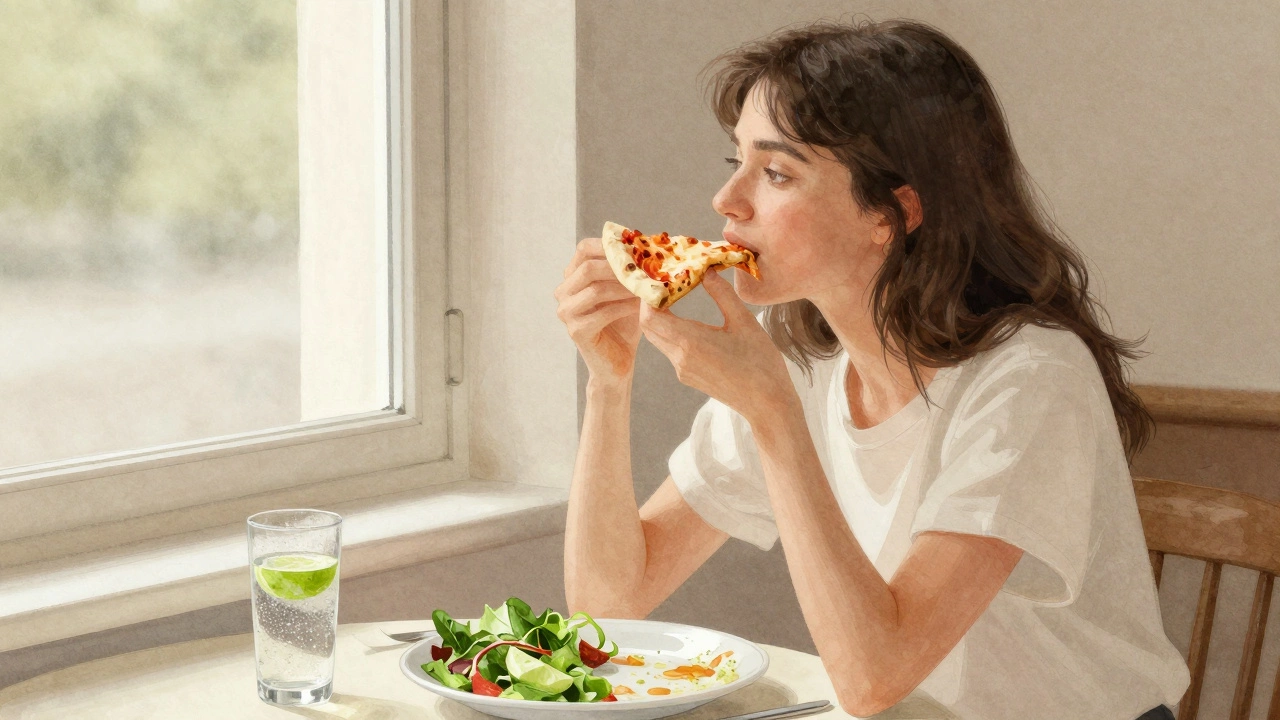
Have fries with a side of roasted vegetables. Eat ice cream after a bowl of fruit. Have a slice of pizza with a big green salad. Add a glass of sparkling water with lime.
This isn’t about "making it healthy." It’s about creating contrast. The crisp greens make the fries taste richer. The cold fruit makes the ice cream feel like a treat, not a binge.
It also helps your body process the food better. A little fiber, protein, or water slows down digestion. You won’t crash as hard. You’ll feel more balanced.
Let go of the all-or-nothing mindset
You’re not a bad person because you ate pizza last night. You’re not a failure because you had cookies after dinner. You’re a human being who likes flavor, comfort, and pleasure.
There’s no such thing as "perfect eating." There’s just eating that feels good in your body and your mind.
One day of indulgence doesn’t undo weeks of good habits. And one day of restraint doesn’t make you a saint.
What matters is consistency over time-not perfection in a single meal.
If you eat junk once a week and feel great afterward? That’s a win. If you eat it every day and feel awful? That’s a signal to adjust-not to quit.
Track how you feel, not just what you eat
Keep a simple journal. Not a calorie count. Just three things:
- What did you eat?
- How did you feel right after?
- How did you feel the next day?
After a few weeks, patterns emerge.
You might notice: "I love the cheeseburger, but I feel sluggish for two days." Or: "The chips make me crave more, but the dark chocolate satisfies me without the crash."
That’s your data. That’s your power. You don’t need a diet plan-you need to know yourself.
Use that knowledge to choose foods that make you feel good, not just ones that taste good in the moment.
It’s not about willpower. It’s about alignment.
You don’t need more discipline. You need better alignment.
When your food choices match how you want to feel-energized, calm, confident-you stop fighting yourself.
That’s why some people eat junk every day and feel fine. They’ve made peace with it. They don’t see it as a moral issue. They just eat it, enjoy it, and move on.
Others avoid it completely-and still feel obsessed.
The difference isn’t willpower. It’s mindset.
So next time you reach for that bag of chips, ask yourself: "Do I want this because I’m hungry-or because I’m tired, lonely, or overwhelmed?"
If it’s hunger? Eat it. Savor it. Let it be okay.
If it’s something else? Maybe you need a walk. A hug. A nap. A song. Something that actually fills the real hole.
You’re allowed to enjoy food. You’re allowed to crave it. You’re allowed to eat it without apology.
But you’re also allowed to choose what makes you feel your best.
That’s not restriction. That’s freedom.