
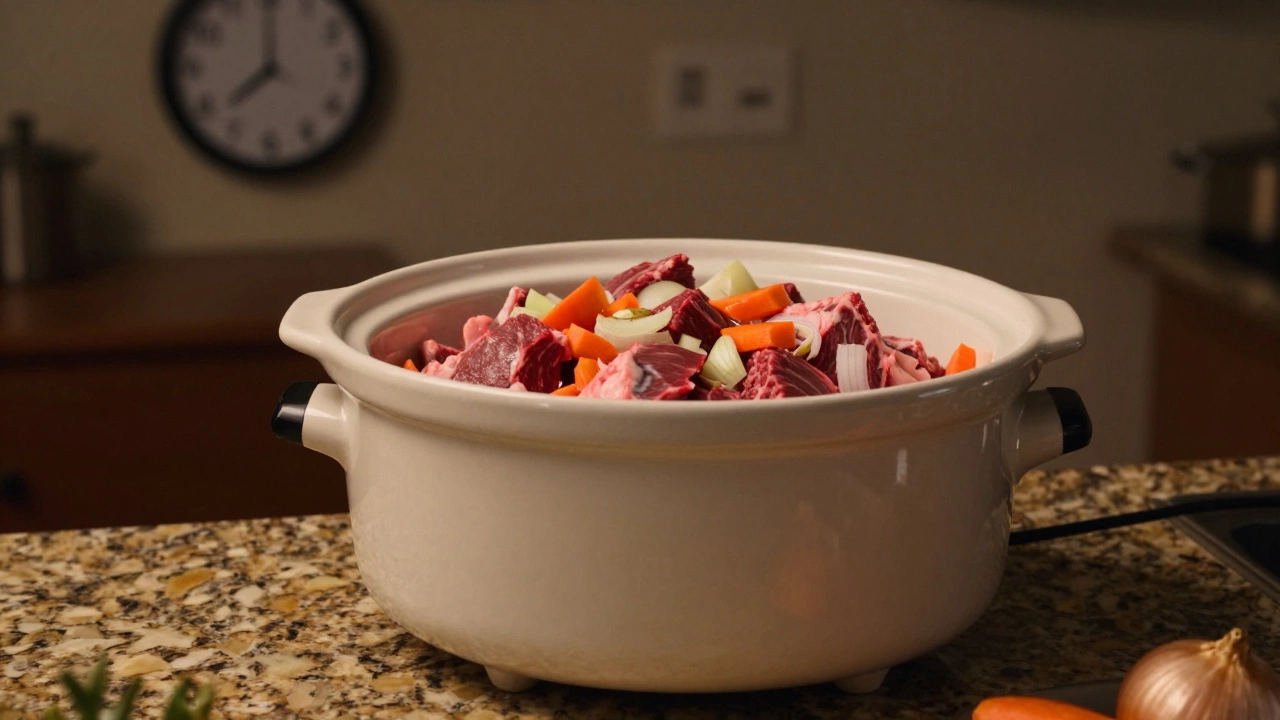
Slow Cooker Safety Timer
Enter the time you placed raw meat into the unplugged slow cooker to see current safety status.
You’ve got the pot ready. The veggies are chopped. But then life happens-a phone call, a sudden errand, or just that urge to watch one more episode of your favorite show. You toss the raw chicken or beef into the crockpot is an electric appliance designed for unattended cooking at low temperatures over long periods. and walk away. How long is too long before you actually hit "Low" or "High"?
The short answer is: not very long. If you leave raw meat sitting in a cold slow cooker at room temperature, you are playing Russian roulette with bacteria. The USDA and food safety experts agree on a strict window: **two hours**. After that, the risk of foodborne illness spikes dramatically.
The Danger Zone: Why Time Matters More Than You Think
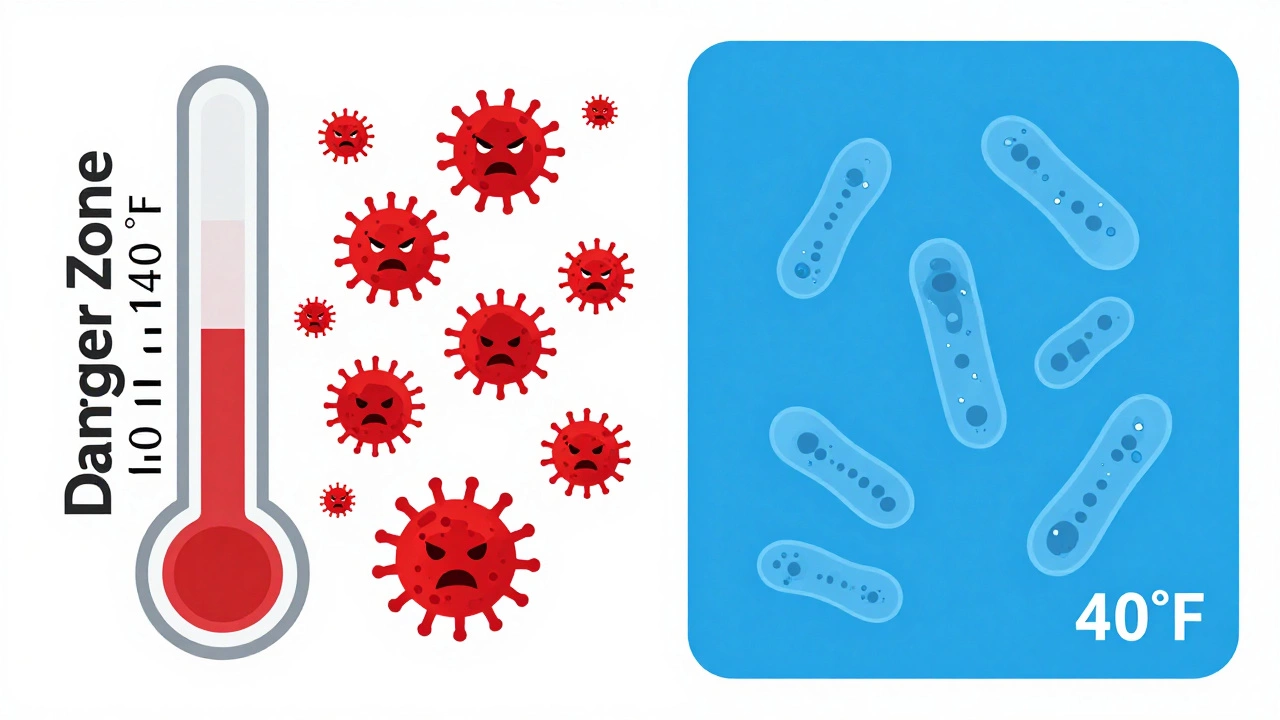
To understand why you can’t just let meat marinate in the pot all morning, you need to know about the Temperature Danger Zone. This is the range between 40°F (4°C) and 140°F (60°C). In this sweet spot, bacteria like Salmonella, E. coli, and Campylobacter don’t just survive-they multiply. They can double in number every 20 minutes under ideal conditions.
When you put raw meat into a cold crockpot, it sits right in the middle of this danger zone. A typical kitchen is around 70°F (21°C), which is perfect for bacterial growth. Even if the meat feels cool to the touch, the surface is warming up. Once the internal temperature of the meat hits that 40°F threshold, the clock starts ticking fast. By the two-hour mark, you could have millions of additional bacteria cells compared to when you started.
It’s not just about taste. These bacteria produce toxins that heat doesn’t always destroy. So even if you cook the meat thoroughly later, those pre-formed toxins might still make you sick. That stomach ache after Sunday dinner isn’t worth the convenience of prepping early.
Room Temperature vs. Refrigerated Prep
Here is where things get tricky. Many people think, "Well, I’ll just assemble everything in the fridge." This is a much safer strategy, but it has its own limits. If you place the raw meat and vegetables into the slow cooker insert and keep the whole thing in the refrigerator, you buy yourself more time-but not infinite time.
In the fridge (below 40°F / 4°C), bacterial growth slows down significantly but doesn’t stop completely. You can safely store assembled raw ingredients in the fridge for up to 24 hours before cooking. However, there are caveats:
- Vegetable Texture: Onions, peppers, and tomatoes will release water and become mushy if they sit in salt or acid overnight. Your chili might end up watery, and your stew might lack bite.
- Meat Quality: Acidic marinades (like vinegar or lemon juice) can start "cooking" the meat chemically, changing its texture before heat is even applied.
- Cross-Contamination: Ensure the lid is tight. Raw meat juices dripping onto other foods in your fridge is a major hazard.
If you plan to cook tomorrow, assemble tonight. Keep it covered and refrigerated. When you’re ready to cook, simply plug it in and go. Just don’t leave the assembled pot on the counter while you run errands.
The Myth of "Bringing Meat to Room Temp"
Some chefs argue that letting meat sit out for 30-60 minutes before cooking helps it brown better or cook more evenly. While this might be true for a steak in a cast-iron skillet, it is dangerous advice for slow cooking. Slow cookers rely on gradual heat penetration. Starting with cold meat from the fridge is standard practice for these appliances. The difference in tenderness between fridge-cold and room-temp meat in a 8-hour braise is negligible, but the food safety risk is real.
Stick to the rule: Cold meat goes into the pot. The pot goes on the heat. No waiting period on the benchtop.
What About Frozen Meat?
This is a common question. Can you throw frozen meat into the crockpot? Technically, yes, but it’s risky. When you add a large block of frozen meat to a small amount of liquid, the entire pot stays below 140°F for a longer period as the meat thaws. This extends the time the surrounding liquid and any other ingredients spend in the danger zone.
The USDA recommends thawing meat in the refrigerator before slow cooking. If you must use frozen meat, ensure there is enough liquid to cover it, and consider using the "High" setting initially to bring the temperature up faster. However, for best results and safety, thawing in the fridge overnight is the gold standard.
Signs Your Meat Has Gone Bad
If you accidentally left the meat in the crockpot for three hours before remembering to turn it on, do not eat it. Discard it. But how do you know if it’s bad if you’re unsure of the timeline? Trust your senses, but remember that some pathogens are odorless and invisible.
- Smell: Fresh meat has a mild, metallic scent. Spoiled meat smells sour, ammonia-like, or distinctly rotten. If it makes you hesitate, throw it out.
- Texture: Slimy or sticky meat is a sign of bacterial slime. Fresh meat should feel moist but not tacky.
- Color: Darkening is normal due to oxidation, but gray, green, or iridescent hues indicate spoilage.
Don’t gamble with your health. When in doubt, throw it out. It’s cheaper than a hospital visit.
Best Practices for Safe Slow Cooking
Let’s wrap this up with actionable steps to keep your family safe while enjoying the convenience of your slow cooker.
- Prep Close to Cook Time: Chop veggies and season meat no more than 2 hours before you plan to start cooking.
- Refrigerate Assembled Pots: If you’re prepping ahead, assemble in the fridge, not on the counter.
- Keep the Lid On: Once cooking starts, avoid lifting the lid. Each time you open it, you lose 20+ minutes of heat and drop the temperature, potentially re-entering the danger zone.
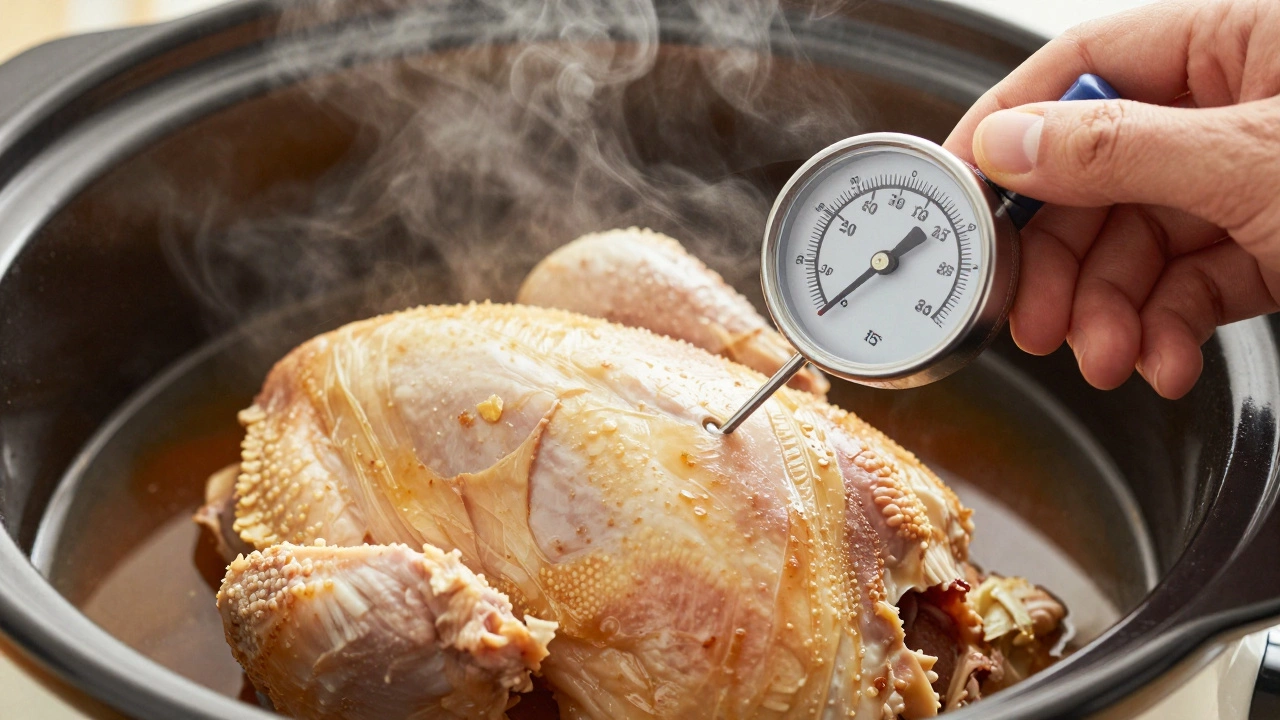
- Use a Thermometer: Invest in a cheap instant-read thermometer. Check that poultry reaches 165°F (74°C), ground meats 160°F (71°C), and beef/pork/lamb 145°F (63°C) with a rest time.
- Clean Thoroughly: Wash the crockpot insert, lid, and utensils with hot soapy water after each use to prevent cross-contamination.
Slow cooking is meant to be easy, but "easy" shouldn’t mean "unsafe." By respecting the two-hour rule and keeping your ingredients cold until the heat turns on, you ensure that your meal is delicious, tender, and most importantly, safe to eat.
Can I leave raw meat in the crockpot overnight before cooking?
No, you should not leave raw meat in the crockpot on the counter overnight. Bacteria multiply rapidly at room temperature. If you want to prep ahead, assemble the ingredients in the slow cooker insert and place the entire unit in the refrigerator. It is safe to store there for up to 24 hours before cooking.
Is it safe to cook frozen meat directly in a slow cooker?
It is generally not recommended. Frozen meat keeps the contents of the slow cooker in the "danger zone" (40°F-140°F) for too long as it thaws, allowing bacteria to grow. For best safety and texture, thaw meat in the refrigerator before adding it to the slow cooker.
How long can cooked meat sit in a crockpot?
Cooked meat can safely remain in a slow cooker on the "Warm" setting for 1 to 2 hours. After that, the quality degrades, and the risk of bacterial growth increases if the temperature drops below 140°F. For longer holding times, transfer portions to shallow containers and refrigerate.
What happens if I leave meat out for more than 2 hours?
If raw meat sits out for more than 2 hours (or 1 hour if the ambient temperature is above 90°F/32°C), harmful bacteria may have produced toxins that cooking cannot destroy. The safest action is to discard the meat to avoid foodborne illness.
Does marinating meat in the crockpot insert count towards the 2-hour limit?
Yes. If the crockpot is unplugged and sitting at room temperature, the 2-hour limit applies regardless of whether the meat is in marinade. To marinate safely, do so in a sealed container in the refrigerator, then transfer to the crockpot immediately before turning it on.