
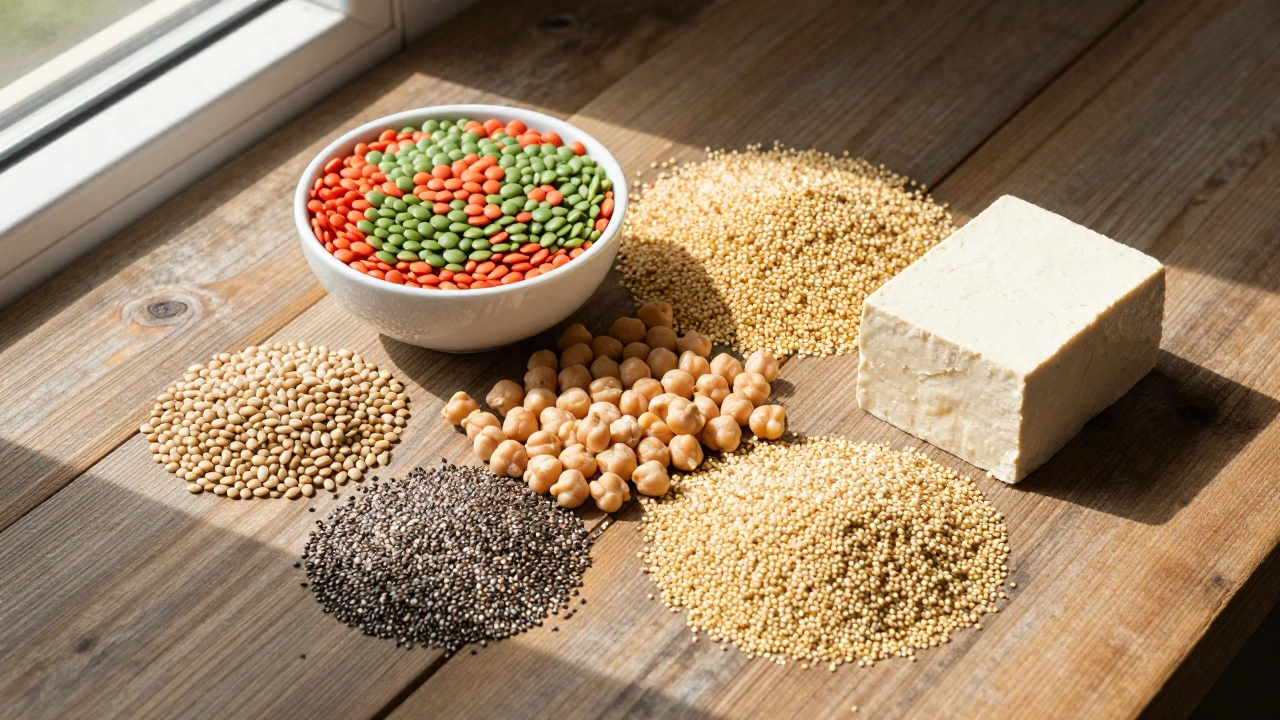
Vegetarian Protein Daily Planner
| Food Item | Protein/100g | Amount (g) | Total |
|---|---|---|---|
| Tofu (Firm) | 13g | 0g | |
| Lentils (Cooked) | 9g | 0g | |
| Greek Yogurt | 10g | 0g | |
| Eggs | 13g | 0g | |
| Quinoa (Cooked) | 4.4g | 0g | |
| Hemp Seeds | 31g | 0g | |
| Seitan | 25g | 0g |
Quick Tip:
Mix complete (eggs, tofu) and incomplete (lentils, quinoa) proteins throughout your day to ensure a full amino acid profile.
Quick Summary of Protein Wins
- Legumes: Lentils, chickpeas, and black beans are the heavy hitters for budget-friendly protein.
- Soy-Based: Tofu, tempeh, and edamame provide complete proteins with all essential amino acids.
- Dairy & Eggs: Greek yogurt, cottage cheese, and eggs are the most bioavailable sources for lacto-ovo vegetarians.
- Nuts & Seeds: Hemp seeds, chia seeds, and almonds add protein and healthy fats to any meal.
- Ancient Grains: Quinoa and farro offer more protein than white rice or pasta.
The Power of Soy and Legumes
If you want the most bang for your buck, start with the legume family. Tofu is a versatile soy-based curd made by coagulating soy milk and pressing the resulting curds into solid blocks. It is essentially a blank canvas that absorbs whatever flavor you throw at it. For a real protein boost, try firm tofu, which provides about 10 grams of protein per 100 grams. If you find tofu too bland, look for Tempeh, which is a fermented soy product that has a firmer, nuttier texture and usually more protein than tofu. Because it's fermented, it's also a bit easier on the gut for some people.
Then there are the beans. Lentils are a powerhouse, offering roughly 18 grams of protein per cooked cup. They don't require soaking like some other dried beans, making them a fast win for soups or "Bolognese" style pasta sauces. Chickpeas (or garbanzo beans) are just as vital. Whether you're roasting them for a crunchy snack or blending them into hummus, they provide a steady stream of amino acids and plenty of fiber to keep your blood sugar stable.
Dairy and Eggs: The Nutrient Dense Heavyweights
For those who aren't vegan, animal-based vegetarian options are the easiest way to hit high protein targets because they are "complete" proteins. This means they contain all nine essential amino acids your body can't make on its own. Greek Yogurt is a standout here. Unlike regular yogurt, the straining process removes the liquid whey, leaving a thicker product with nearly double the protein. A single serving can easily hit 15-20 grams.
Eggs are often called the gold standard of protein because their biological value is so high. One large egg gives you about 6 grams of protein. If you're watching calories but want the protein, swapping a few whole eggs for egg whites is a classic athlete's trick. Cottage cheese is another sleeper hit; it's packed with casein protein, which digests slowly and keeps you full for hours, making it a perfect midnight snack or breakfast base.
Grains and Seeds That Do More Than Fill You Up
Most people think of grains as just carbs, but some are secretly protein goldmines. Quinoa is the most famous example. It's a pseudo-cereal that provides a complete protein profile, making it a superior swap for white rice. If you're looking for something heartier, try farro or spelt, which have a chewy texture and a higher protein count than standard wheat berries.
Don't overlook the small stuff. Seeds are incredibly dense. Hemp Seeds (or hemp hearts) are a nutritional miracle, containing about 10 grams of protein in just three tablespoons. They have a mild, nutty flavor that disappears into smoothies or oatmeal. Chia seeds and Flaxseeds aren't as high in total protein, but they provide Omega-3 fatty acids that support brain health and reduce inflammation, which is critical if you're exercising heavily.
| Food Item | Protein (g) | Protein Type | Key Benefit |
|---|---|---|---|
| Tofu (Firm) | 10-15 | Complete | Low calorie, versatile |
| Lentils (Cooked) | 9 | Incomplete | High fiber, iron-rich |
| Greek Yogurt | 10 | Complete | Probiotics, high calcium |
| Eggs | 13 | Complete | Highest bioavailability |
| Quinoa (Cooked) | 4.4 | Complete | Gluten-free grain swap |
| Hemp Seeds | 31 | Complete | Omega-3 powerhouse |
How to Build a Balanced Plate
Since many plant proteins are "incomplete," you'll often hear about "protein complementing." You don't need to obsess over this at every single meal, but over the course of a day, you want to mix your sources. A classic example is rice and beans. Rice is low in lysine but high in methionine; beans are high in lysine but low in methionine. Together, they create a full amino acid profile.
To make vegetarian protein sources work for you, focus on the "Protein + Fiber + Fat" formula. If you just eat a bowl of lentils, you might feel bloated. But if you pair lentils with a scoop of Greek yogurt (protein/fat) and some sautéed spinach (fiber), you create a meal that sustains your energy. A practical tip for beginners: start your day with a high-protein breakfast. Swap your morning toast for a tofu scramble or cottage cheese topped with berries. It prevents the mid-morning crash and reduces sugar cravings in the afternoon.
Common Pitfalls and How to Avoid Them
One big mistake people make is relying too heavily on "fake meats." While processed plant-based burgers are convenient, they often come with massive amounts of sodium and saturated fats from coconut oil. Use them as a treat, not a staple. Instead, lean on whole foods like edamame or seitan. Seitan is a meat substitute made from wheat gluten, the main protein in wheat. It has a texture remarkably similar to chicken or beef and is incredibly high in protein, but be careful if you have a gluten sensitivity.
Another trap is neglecting the calorie-to-protein ratio. Almonds are healthy and have protein, but you'd have to eat a massive amount of them to get 30 grams of protein-and you'd consume a thousand calories in the process. Use nuts and seeds as "boosters" rather than your primary protein source. For the bulk of your intake, stick to the lower-calorie options like tofu, egg whites, or legumes.
Do I need to eat a "complete protein" at every meal?
No, you don't. Your body maintains a pool of amino acids throughout the day. As long as you eat a variety of protein sources-like grains, legumes, nuts, and seeds-over 24 hours, your liver will assemble the complete proteins your body needs.
Which vegetarian protein is best for muscle growth?
For muscle hypertrophy, you want a combination of high leucine (an amino acid that triggers muscle protein synthesis) and high bioavailability. Seitan, Greek yogurt, and eggs are excellent. If you're vegan, a blend of pea and rice protein is a great supplement to hit those targets.
How can I stop legumes from causing bloating?
Rinse canned beans thoroughly and soak dried beans overnight with a splash of apple cider vinegar. Cooking them slowly and introducing them into your diet gradually allows your gut microbiome to adapt to the increased fiber.
Is tofu safe to eat every day?
Yes, for most people. Tofu contains isoflavones, which are plant estrogens. Modern research shows that moderate consumption of soy does not negatively impact hormone levels in men or women and is actually linked to a lower risk of certain cancers.
What is the highest protein vegetable?
While not a "vegetable" in the culinary sense, spinach and broccoli provide small amounts of protein. However, the real winners are legumes (peas, beans) and soy products. If you want protein in a green veggie, go for steamed edamame or sautéed kale.
Next Steps for Your Protein Journey
If you're just starting out, don't try to change your entire pantry overnight. Start by replacing one ingredient per meal. Swap your white rice for quinoa. Swap your afternoon chips for roasted chickpeas. Once those become habits, start experimenting with the more "advanced" proteins like tempeh or seitan.
For those struggling to hit very high targets (like athletes), consider a clean protein powder. Look for a blend of pea and brown rice protein to ensure you're getting a full amino acid profile without the digestive distress some people get from whey. Keep it simple, keep it varied, and focus on whole foods first.