

Gluten-Free Potato Chip Checker
Is Your Chip Flavor Gluten-Free?
Enter the chip flavor to see if it's likely gluten-free. Remember: even "plain" chips can contain hidden gluten.
Ever grabbed a bag of potato chips thinking they’re harmless, only to wonder later if they might mess up your gluten-free diet? You’re not alone. Millions of people avoid gluten for health reasons - whether it’s celiac disease, a sensitivity, or just a lifestyle choice - and snacks like potato chips seem like a safe bet. But appearances can be deceiving. Not all potato chips are gluten-free, and the difference isn’t always obvious.
Plain potato chips are usually gluten-free
At their core, potato chips are simple: potatoes, oil, and salt. Potatoes are naturally gluten-free. So are most vegetable oils and plain salt. That means the most basic, unflavored potato chips - the kind you find in the bulk bin or the plain salted bag - are almost always safe. Brands like Lay’s Classic, Ruffles Original, and Utz Original are listed as gluten-free by their manufacturers and don’t contain any wheat, barley, or rye ingredients.
But here’s the catch: just because the ingredients look safe doesn’t mean the product is guaranteed gluten-free. Cross-contamination during manufacturing is a real risk. If a factory makes both regular chips and flavored chips that contain gluten (like barbecue or sour cream & onion), shared equipment can leave behind traces. For people with celiac disease, even 20 parts per million of gluten - the legal limit for a “gluten-free” label in the U.S. - can cause damage. So if you’re highly sensitive, you need more than just a clean ingredient list.
Flavored chips are where things get tricky
Flavored potato chips are the biggest source of hidden gluten. Why? Because flavorings often contain malt vinegar, wheat starch, or modified food starch derived from wheat. Malt vinegar, for example, comes from barley, which is a gluten-containing grain. You’ll find it in many barbecue, sour cream & onion, and dill pickle flavors.
Take a look at the ingredient list on a bag of Lay’s BBQ chips. It says: “potatoes, vegetable oil, sugar, salt, corn starch, maltodextrin (made from corn), tomato powder, onion powder, garlic powder, spices, natural flavors, malt vinegar, paprika extract.” Malt vinegar? That’s barley. Even though it’s listed as “natural flavors,” if it’s derived from wheat or barley, it must be declared under U.S. FDA rules. If you see “malt,” “barley,” or “wheat” anywhere on the list, skip it.
Some brands use “vinegar” without specifying the source. That’s a red flag. Unless it says “distilled vinegar” or “cider vinegar,” assume it could be malt vinegar. Distilled vinegar is made from gluten-containing grains but is processed to remove gluten proteins - most celiac organizations consider it safe. But if the label doesn’t say what kind of vinegar it is, you can’t be sure.
Look for the “gluten-free” label
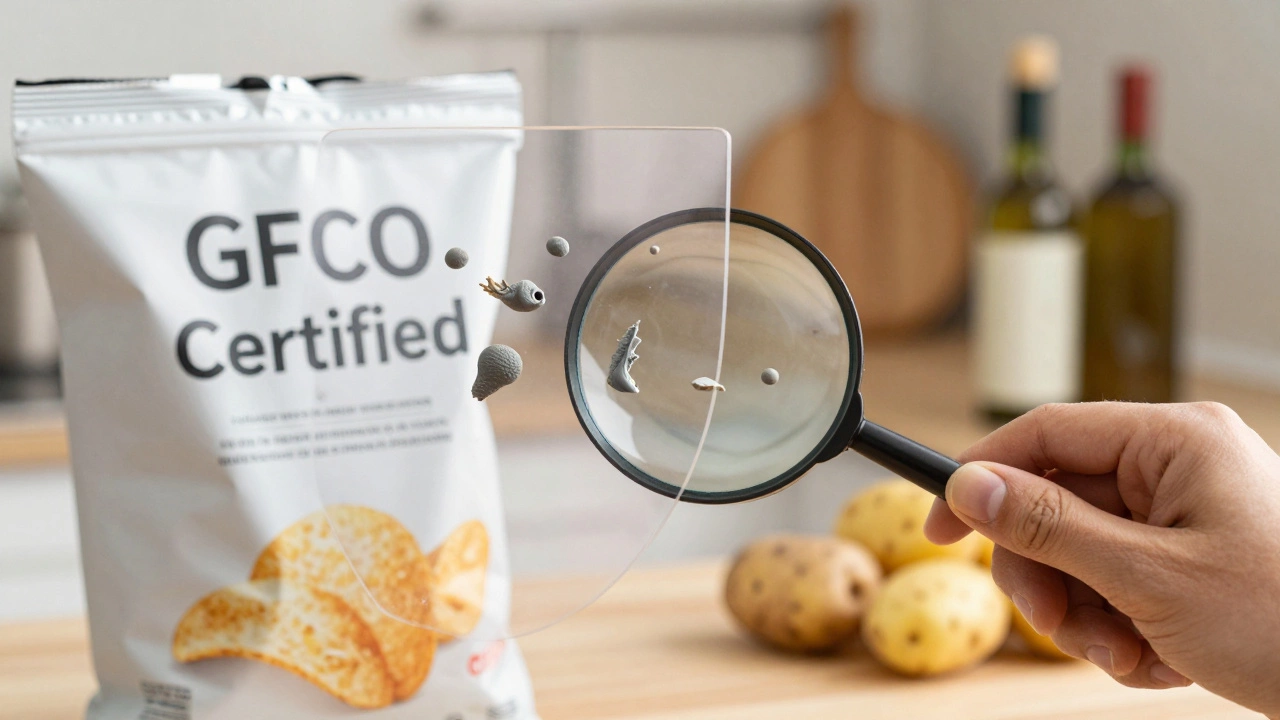
The safest way to know if a chip is safe is to look for a “gluten-free” certification on the package. That means the product has been tested and meets strict standards - usually under 10 ppm of gluten, which is stricter than the FDA’s 20 ppm limit. Brands like Kettle Brand, Enjoy Life, and The Good Crisp Company carry third-party certifications from organizations like GFCO (Gluten-Free Certification Organization) or NSF.
Don’t assume “natural” or “organic” means gluten-free. Those terms have nothing to do with gluten. A bag of organic potato chips can still contain wheat-derived flavorings. Always read the label, even if the brand is usually safe. Recipes and ingredients change without notice.
Store brands and generic chips: proceed with caution
Generic or store-brand potato chips are often made in the same facilities as branded products - but they don’t always have the same testing or labeling standards. A Walmart Great Value or Target Market Pantry bag might have the same ingredients as Lay’s, but without the gluten-free certification, you’re taking a risk.
Some store brands do list gluten-free status on their website or customer service line. If you’re unsure, call the manufacturer. Ask: “Is this product made on shared equipment with gluten-containing products?” and “Do you test for gluten?” Most companies will answer honestly. If they say “we don’t test,” walk away.
What about kettle-cooked or thick-cut chips?
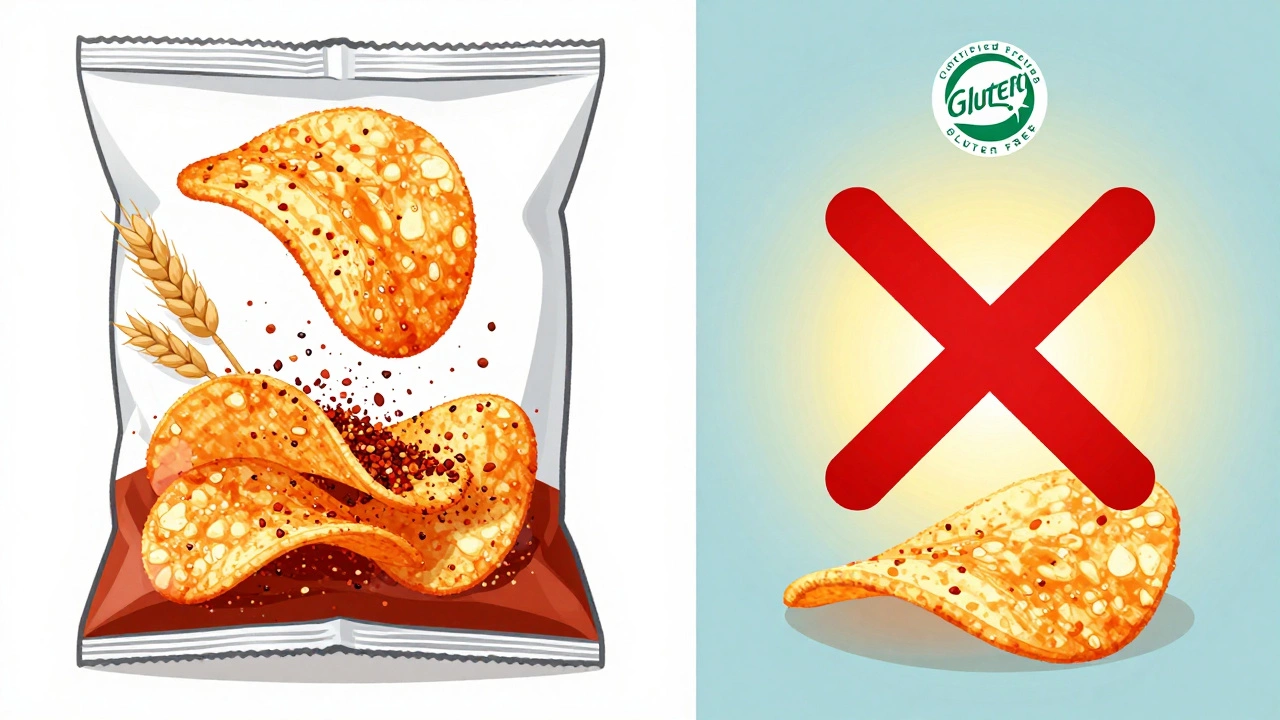
Thicker chips, like kettle-cooked or hand-cut varieties, aren’t inherently safer or riskier. The cooking method doesn’t affect gluten content. It’s still the seasoning and processing that matter. Kettle Brand’s sea salt chips are certified gluten-free. But their dill pickle flavor? Contains malt vinegar. So even within the same brand, one flavor is safe and another isn’t.
Restaurant and deli chips: high risk
If you’re eating out, avoid chips unless you’re sure of the source. Many restaurants fry their chips in the same oil as breaded items - chicken tenders, mozzarella sticks, or onion rings. Even if the chips themselves are gluten-free, the oil is contaminated. Some places, like fast-food chains, use seasoning blends that include wheat flour as an anti-caking agent.
Chipotle’s chips are gluten-free and fried in a dedicated fryer, but most others aren’t. If you’re dining out, ask: “Are your chips fried in a dedicated fryer?” and “Do you use any gluten-containing seasonings?” If they hesitate or say “probably,” it’s not worth it.
Top gluten-free chip brands you can trust
Here are a few brands that consistently test and label their chips as gluten-free:
- Kettle Brand - Most flavors are certified gluten-free. Check the bag - some are not.
- Enjoy Life - Made in a dedicated gluten-free facility. Great for severe allergies.
- The Good Crisp Company - All products are certified gluten-free and non-GMO.
- Utz Original - Plain salted chips are gluten-free and tested.
- Miss Vickie’s Original - No gluten ingredients, but check for cross-contamination notes.
Always double-check the packaging. Brands change recipes, and what was safe last year might not be this year.
What to do if you’re unsure
If you can’t find a label, can’t call the company, or just want to play it safe - skip the chips. There are plenty of other gluten-free snacks that are easier to verify: popcorn, rice cakes, roasted chickpeas, or plain nuts. You don’t have to give up crunchy snacks - you just need to be more selective.
Keep a list of trusted brands in your phone. Take a photo of the back of a bag that’s safe. That way, next time you’re in the store, you know exactly what to grab. It saves time, stress, and potential reactions.
Gluten-free isn’t always healthy
Just because potato chips are gluten-free doesn’t mean they’re good for you. They’re still fried, high in sodium, and low in nutrients. If you’re eating them for health reasons, not just cravings, consider baked chips, air-popped popcorn, or roasted vegetables as alternatives. A gluten-free diet isn’t a free pass to eat processed junk - it’s about choosing real, whole foods when you can.
Final takeaway
Potato chips aren’t automatically gluten-free. Plain, unflavored chips from trusted brands are usually safe. Flavored chips? Read the label like a detective. Look for malt, barley, wheat, or unverified vinegar. Choose certified gluten-free when you can. And when in doubt, don’t eat it. Your gut will thank you.