
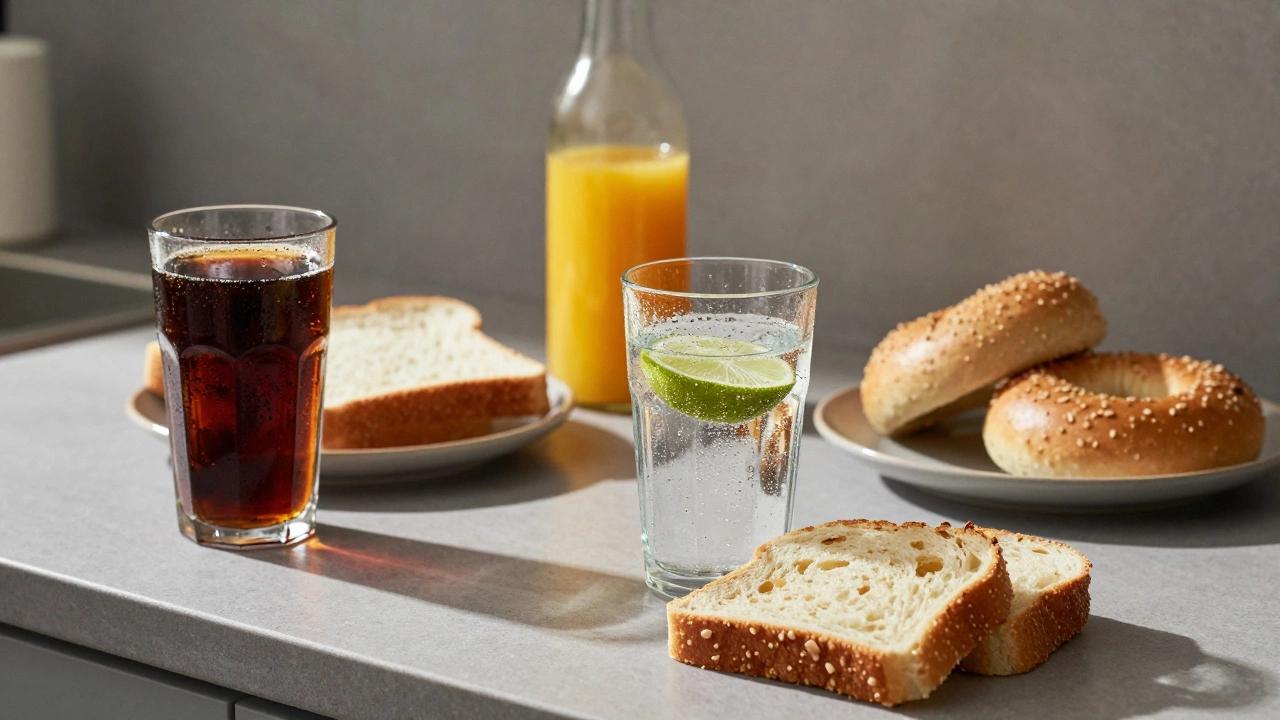
If you're trying to keep your carbs low, some foods sneak up on you-even if they seem healthy. You might cut out bread and pasta, but still be eating sugar, grains, or starchy veggies without realizing it. And that’s why your progress stalls. This isn’t about perfection. It’s about knowing what’s actually working against you.
1. Sugary Drinks
Soda, fruit juice, sweetened coffee, and energy drinks are the biggest carb traps out there. A single 375ml can of soda has about 40 grams of sugar. That’s more than the daily carb limit for some people on a strict low carb plan. Even 100% fruit juice? It’s just sugar with vitamins. Orange juice has 25 grams of carbs per cup. No fiber to slow it down. No fullness. Just a sugar rush and crash. If you’re drinking it, you’re not eating it-you’re pouring carbs into your body. Swap it for sparkling water with lime, unsweetened tea, or just plain water. Your blood sugar will thank you.
2. White Bread and Refined Grains
White bread, bagels, crackers, and even whole wheat pasta are made from finely ground flour. That means they break down into glucose fast-faster than table sugar in some cases. One slice of white bread has 15 grams of net carbs. Two slices? That’s half your daily carb budget on a 20-gram plan. Whole grain doesn’t make it okay. The fiber doesn’t cancel out the carb load. You’ll spike insulin, feel hungry again in an hour, and crave more. If you’re craving something chewy or toasty, try almond flour toast or coconut flour wraps. They’re low carb, filling, and taste just fine.
3. Starchy Vegetables
Carrots, peas, corn, potatoes, and even sweet potatoes are vegetables-but they’re also starch bombs. One medium potato has 37 grams of carbs. A cup of corn? 41 grams. That’s more than a whole bag of chips. You’re not eating them for fiber or nutrients-you’re eating them because they’re labeled “healthy.” But on a low carb diet, they’re like dessert. Broccoli, spinach, zucchini, and cauliflower are your friends. They’re low in carbs, high in volume, and fill you up without the spike. Swap mashed potatoes for mashed cauliflower. It’s not magic. It’s just smarter.
4. Flavored Yogurts and Sweetened Dairy
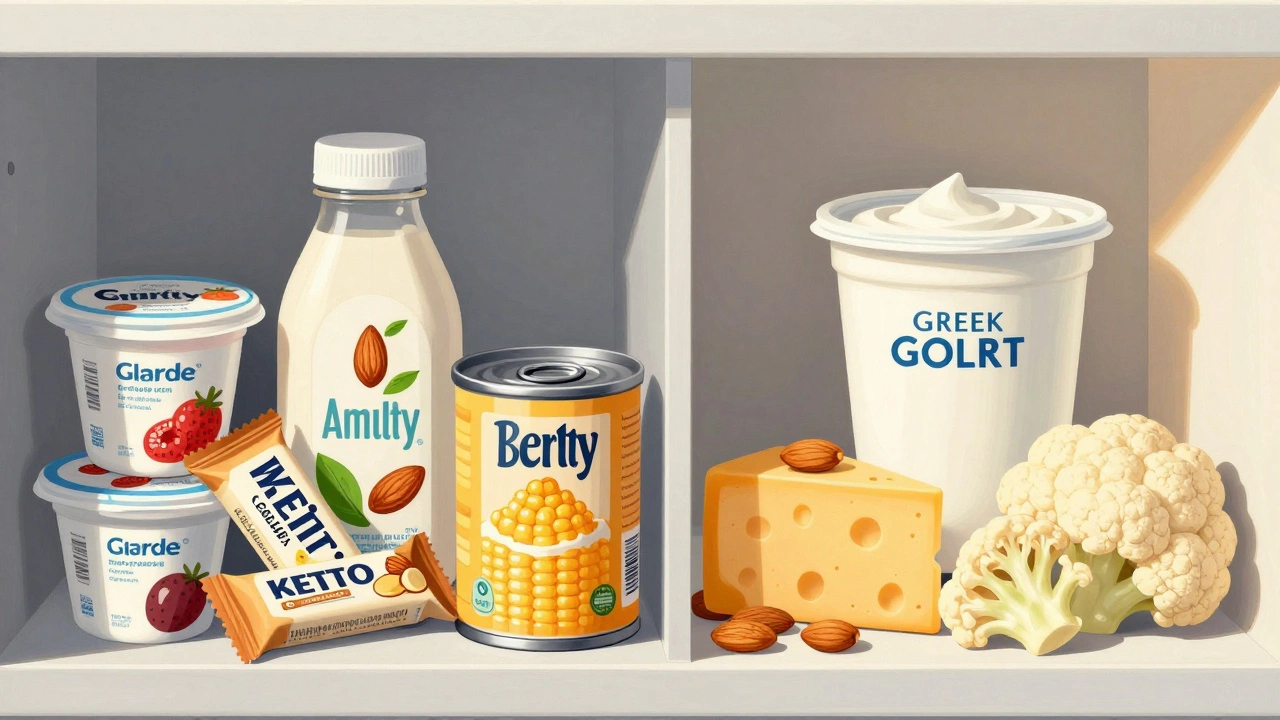
Plain Greek yogurt? Great. Strawberry-flavored yogurt? 20+ grams of sugar per cup. Even “low fat” versions are loaded with added sugar to make up for the flavor. Same goes for sweetened almond milk, coconut milk, or oat milk. Many brands add cane sugar, tapioca syrup, or fruit concentrate. Check the label. If sugar is listed in the first three ingredients, put it back. Choose unsweetened versions and add your own berries if you want sweetness. A few raspberries give you flavor, fiber, and under 5 grams of net carbs. You don’t need the sugar. Your taste buds will adjust in a week.
5. Processed Low Carb Snacks
Those “keto” bars, cookies, and chips? They’re marketing, not nutrition. They often use maltitol, erythritol, or other sugar alcohols that still spike insulin in some people. A bar might say “only 3g net carbs,” but if it has 15g of sugar alcohols, your body might still react. And they’re loaded with industrial oils, preservatives, and artificial flavors. You’re trading one processed food for another. Real food doesn’t come in a wrapper with a nutrition label you need a PhD to read. Stick to nuts, cheese, hard-boiled eggs, or avocado slices. They’re simple. They work. And they actually nourish you.
Why This Matters More Than You Think
Low carb isn’t just about weight loss. It’s about energy, focus, and reducing cravings. When you eat high-carb foods, your blood sugar spikes and crashes. That’s why you feel tired after lunch. That’s why you snack at 3 p.m. That’s why you wake up hungry. Avoiding these five foods isn’t about restriction. It’s about breaking the cycle. You’re not giving up food-you’re choosing better fuel. Your brain works better. Your mood steadies. Your hunger fades. That’s the real win.
What to Eat Instead
Swap the bad with these real-food options:
- Instead of soda → sparkling water with lemon
- Instead of white bread → almond flour bread or lettuce wraps
- Instead of potatoes → roasted Brussels sprouts or cauliflower mash
- Instead of flavored yogurt → plain full-fat yogurt with chia seeds and a few blueberries
- Instead of keto bars → a handful of macadamia nuts or a slice of cheese
You don’t need to be perfect. But if you avoid these five things consistently, you’ll see results faster than you expect.
Common Mistakes People Make
People think they’re doing low carb right because they skip bread. But they’re drinking fruit smoothies for breakfast, snacking on trail mix with dried cranberries, and having oatmeal with almond milk. All of those add up. You can’t out-exercise a bad diet. You can’t out-supplement a sugar habit. The truth is simple: if it came from a plant and was sweet, it probably has carbs. And if it came in a package with a label that says “low carb,” read the ingredients like your health depends on it-because it does.
Real Talk: How Long Until You Notice a Difference?
Most people feel better within 3-5 days of cutting out sugar and refined carbs. Less brain fog. Better sleep. Fewer cravings. After two weeks, your body starts burning fat for fuel instead of sugar. That’s when the weight loss kicks in-not because you’re starving, but because you’re no longer flooding your system with carbs that turn to fat. It’s not a diet. It’s a reset.
Can I still eat fruit on a low carb diet?
Yes-but pick wisely. Berries like raspberries, blackberries, and strawberries are low in sugar and high in fiber. A half-cup of raspberries has about 3g net carbs. Avoid bananas, grapes, mangoes, and pineapples-they’re sugar bombs. Stick to small portions and eat them with fat or protein to slow the sugar release.
Is alcohol allowed on a low carb diet?
Some types are okay in moderation. Dry wine (like Sauvignon Blanc or Pinot Noir), pure spirits (vodka, gin, whiskey), and sugar-free mixers are the best choices. Beer and sweet cocktails? Avoid them. A pint of beer can have 15g carbs. A margarita? Up to 30g. Alcohol also lowers your willpower, making you more likely to snack on carbs later.
What if I accidentally eat something high in carbs?
Don’t panic. One slip won’t ruin your progress. Just get back on track with your next meal. Drink water, eat protein and healthy fats, and avoid trying to “burn off” the carbs with exercise. Your body will reset within 24-48 hours. Consistency over time matters more than perfection.
Are all sugars bad on a low carb diet?
Natural sugars in whole foods like dairy and berries are fine in small amounts. Added sugars-whether from cane, honey, maple syrup, or agave-are the problem. They’re concentrated, lack fiber, and spike insulin. Honey isn’t healthier than sugar. It’s just a different kind of sugar. Treat it the same way.
How do I know if I’m eating too many carbs?
Signs include constant hunger, energy crashes after meals, brain fog, sugar cravings, and slow weight loss. If you’re eating under 50g of net carbs per day and still seeing these symptoms, you might be consuming hidden carbs. Check sauces, dressings, and processed foods-they’re full of sugar you don’t see.
Final Thought: It’s Not About Deprivation
You’re not giving up flavor. You’re trading fake satisfaction for real nourishment. The foods to avoid aren’t evil-they’re just not helpful for your goals. Focus on what you can eat: eggs, meat, fish, leafy greens, nuts, cheese, olive oil, and avocado. That’s your foundation. Everything else is noise. Keep it simple. Stay consistent. The results aren’t magic. They’re just math.