
Healthy Swap Finder
Swap Your Way to Better Health
Select a food category you want to improve to see the risks and the best healthy replacements.
The Culprit
Common Examples:
Main Concern:
The Healthy Swap
Better Alternative:
Primary Benefit:
Click a category above to start improving your diet!
Most of us have been told to "eat more greens" or "drink more water," but we rarely talk about what we actually need to stop putting in our mouths. Adding a handful of spinach to your smoothie is great, but if you're still eating things that trigger systemic inflammation or spike your insulin into the stratosphere, you're basically trying to bail out a boat with a spoon while there's a giant hole in the hull. To see a real shift in your energy and weight, you have to stop the damage first.
If you want to reclaim your health, the biggest culprit is added sugar, which is any sugar added to food during processing or preparation, distinct from naturally occurring sugars in fruit. This isn't about the occasional piece of fruit. We're talking about the high-fructose corn syrup and sucrose that hide in everything from your "healthy" yogurt to your pasta sauce. When you consume these in high amounts, your liver gets overwhelmed, leading to fatty liver disease and a constant cycle of energy crashes.
The Sugar Trap and Why It's Hard to Stop
Have you ever noticed how one cookie makes you want five more? That's because sugar triggers the same reward system in your brain as certain addictive drugs. It floods your system with dopamine, making you crave more. But the physical cost is higher. When you eat refined sugar, your pancreas pumps out insulin to manage the glucose. Over time, your cells stop responding to that insulin-a state known as insulin resistance. This is the direct path to type 2 diabetes.
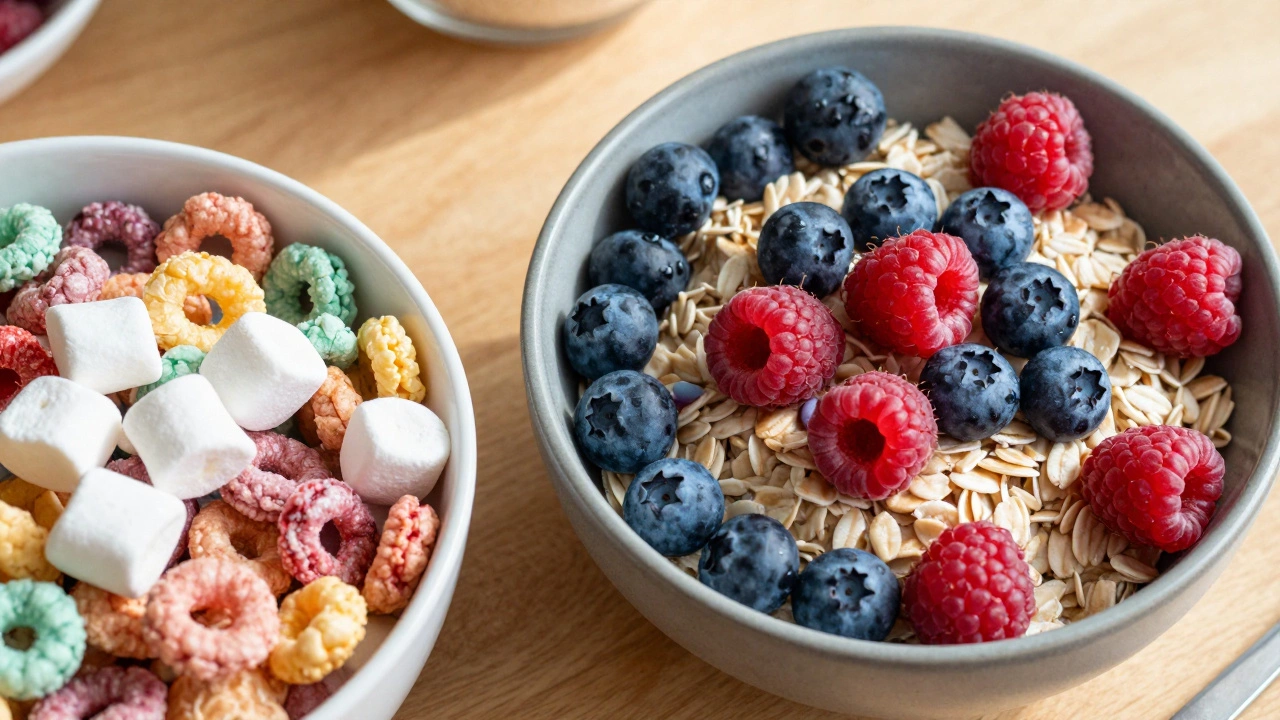
A good rule of thumb is to check the label for any word ending in "ose," like maltose or dextrose. If a product has more than 5 grams of added sugar per serving, it's usually a trigger food. Try swapping your morning sweetened cereal for steel-cut oats with a few berries. You'll find that by day four or five, the berries actually taste sweeter because your taste buds are resetting.
Next up are ultra-processed meats. These are meat products that have been transformed through multiple industrial steps, often containing chemical preservatives, nitrates, and excessive sodium. Think of hot dogs, deli meats, and some commercial sausages. While meat itself is a protein source, these specific versions are stripped of nutrients and loaded with additives that irritate the gut lining.
The Hidden Dangers of Processed Meats
The real issue here isn't just the calories; it's the nitrates. Nitrates are used to keep meats looking pink and shelf-stable, but once they hit your stomach, they can turn into nitrosamines, which are linked to an increased risk of colorectal cancer. According to the World Health Organization, processed meats are classified as Group 1 carcinogens. That's a heavy label for something as simple as a slice of ham.
Beyond the cancer risk, the sodium levels are insane. A single hot dog can contain nearly half your daily recommended salt intake. This causes your body to hold onto water and puts massive pressure on your arteries, leading to high blood pressure. If you love the convenience of deli meat, try roasting a chicken on Sunday and slicing it up for the week. It takes twenty minutes of effort but saves you from a cocktail of preservatives.
Finally, we have to talk about refined seed oils. These are highly processed vegetable oils like soybean, corn, and cottonseed oil, extracted using chemical solvents and high heat. You'll find these in almost every restaurant fryer and in most store-bought salad dressings. They are rich in Omega-6 fatty acids, which are essential in small doses but dangerous in the amounts we eat today.
The Inflammation Engine
Our bodies need a balance between Omega-3 and Omega-6. In a traditional diet, that ratio was about 1:1. Today, because of these seed oils, many of us are at a ratio of 15:1. This imbalance creates a pro-inflammatory environment in the body. This doesn't mean you'll get a fever, but rather a "slow burn" of inflammation that shows up as joint pain, brain fog, and skin breakouts.
These oils are also unstable. Because they are polyunsaturated, they oxidize easily when exposed to heat. When you eat oxidized oils, they create free radicals that damage your cell membranes. Switching to extra virgin olive oil or avocado oil is a game changer. These are more stable and provide the healthy fats your brain actually needs to function.
Comparing the Culprits
| Food to Quit | Main Problem | Better Alternative | Primary Benefit |
|---|---|---|---|
| Added Sugar | Insulin Resistance | Whole Fruits / Berries | Sustained Energy |
| Processed Meats | Nitrates & Sodium | Fresh Chicken / Fish | Heart Health |
| Refined Seed Oils | Chronic Inflammation | Extra Virgin Olive Oil | Brain & Joint Support |
How to Actually Make the Switch
Knowing what to quit is the easy part; actually doing it is where most people fail. The mistake is trying to overhaul your entire kitchen in one afternoon. That leads to burnout and a massive binge on a Friday night. Instead, use the "crowding out" method. Don't focus on what you can't have; focus on filling your plate with so many nutrient-dense foods that there's simply no room left for the junk.
Start by replacing one thing a week. Maybe this week you replace the soda with sparkling water. Next week, you swap the deli turkey for sliced roast beef you cooked yourself. By the time a month passes, your palate will have changed. You'll find that processed foods start to taste artificially sweet or overly salty, which is a sign that your biology is returning to its natural state.
Another pro tip is to clean out your pantry. If the refined seed oil is in the cupboard, you'll use it. If it's not there, you'll reach for the olive oil. Your environment dictates your behavior more than your willpower does. Make the healthy choice the easiest choice by removing the friction.

The Ripple Effect on Your Health
When you quit these three categories, you aren't just avoiding bad ingredients; you're changing your internal chemistry. Within two weeks of cutting added sugar, most people report a disappearance of the "3 PM slump." This happens because your blood sugar is no longer swinging wildly, giving your brain a steady stream of fuel.
Cutting processed meats often leads to less bloating and better digestion. Without the synthetic nitrates and excessive salt, your gut microbiome can start to heal, and your kidneys don't have to work overtime to flush out excess sodium. You might even notice your skin clearing up and your morning puffiness disappearing.
Replacing seed oils with stable fats helps the brain. Your brain is about 60% fat, and the quality of the fats you eat determines the quality of your cell membranes. By reducing the Omega-6 load, you lower the systemic inflammation that often manifests as mood swings or cognitive fatigue. You're essentially upgrading the hardware of your body.
Can I still eat fruit if I'm quitting sugar?
Yes. There is a massive difference between fructose in a whole apple and sucrose in a soda. Whole fruits come with fiber, which slows down the absorption of sugar into your bloodstream. This prevents the insulin spike that causes fat storage and crashes. Stick to whole fruits and avoid fruit juices, which are essentially sugar water without the fiber.
Are all vegetable oils bad?
Not all, but many are. Oils like soybean, corn, safflower, and sunflower are typically highly refined using chemicals like hexane and high heat. However, oils pressed naturally (like cold-pressed olive oil or avocado oil) are much healthier. The key is to avoid "vegetable oil" as a generic term on a label, as this is usually a blend of the cheapest, most inflammatory seed oils.
Is bacon a processed meat?
Generally, yes. Most commercial bacon is cured with nitrates and smoked with chemicals to preserve color and flavor. If you enjoy bacon, look for "nitrate-free" or "unprocessed" versions from organic farms. These use natural celery powder or sea salt for curing, which is much easier on your system than synthetic nitrates.
Will I feel tired if I quit sugar suddenly?
You might experience what people call the "sugar detox" for a few days. This can include mild headaches, irritability, and cravings. This happens because your brain is used to a high-dopamine hit. To minimize this, increase your intake of healthy fats and proteins, which keep you full and stabilize your mood while your body adjusts to burning fat for fuel instead of glucose.
What's the best way to cook without seed oils?
For low-to-medium heat (like sautéing), use extra virgin olive oil. For high-heat cooking (like searing steak or roasting vegetables), use avocado oil or grass-fed butter (ghee). Avocado oil has one of the highest smoke points, meaning it won't break down and become toxic at high temperatures, making it a safe and healthy choice for most kitchen tasks.